
A nitrous oxide informed consent must outline the sedation procedure, expected benefits, and potential risks including respiratory depression, vitamin B12 deficiency, and post-operative nausea. You’ll need to acknowledge safety protocols, alternative treatment options, and any medical conditions that could affect eligibility. The form should document your understanding of maintaining proper mask positioning and continuous vital sign monitoring. Thorough documentation confirms you’re fully informed about this sedation method. Let’s delve into the specific components in detail.
Understanding Nitrous Oxide Sedation

While nitrous oxide sedation has been used safely for over 150 years, understanding its precise administration and effects is crucial for both practitioners and patients. You’ll receive a carefully calibrated mixture of nitrous oxide and oxygen (30-50%) through a mask or nosepiece, with effects beginning within 3-5 minutes. Patient cooperation is essential, as you’ll need to maintain proper mask positioning throughout the procedure. Dental offices utilizing nitrous oxide must maintain high-pressure line connections through periodic leak testing.
The process requires continuous assessment of your vital signs, including heart rate, blood pressure, and oxygen saturation. Your healthcare provider will adjust the gas ratio to achieve ideal sedation while maintaining safety. Once your procedure is complete, you’ll receive pure oxygen to flush the nitrous oxide from your system, allowing for quick recovery. The patient may experience warm tingling sensations during the sedation process. Most patients can safely drive themselves home after just 15-30 minutes of recovery time.
The method’s effectiveness spans across multiple medical disciplines, from dentistry to emergency medicine.
Key Benefits and Expected Outcomes
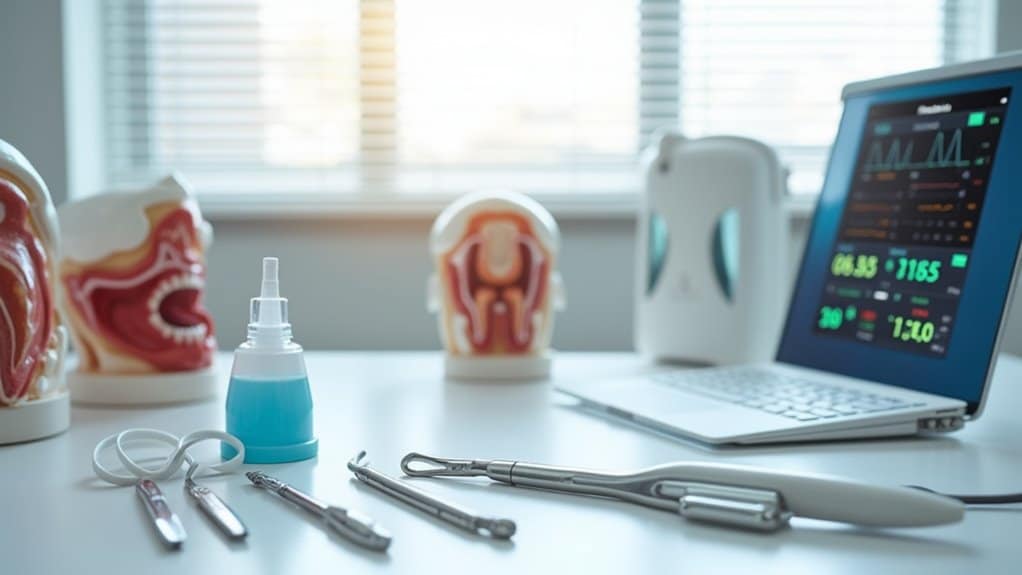
Nitrous oxide’s two primary benefits include rapid anxiety reduction and effective pain control during dental procedures. The gas is mixed with oxygen and creates a euphoric, relaxed state. You’ll experience immediate relief from dental anxiety while maintaining consciousness, and the gas helps minimize discomfort by raising your pain threshold. The gas allows you to remain conscious and communicate throughout your procedure. The sedation is delivered through a nose mask that allows precise control of the gas flow. After treatment, you’ll recover quickly as the effects wear off within minutes of discontinuing the gas, allowing you to drive home safely and resume normal activities.
Anxiety and Pain Control
As a cornerstone of modern procedural sedation, N₂O delivers rapid-onset anxiety relief and effective pain control through its unique pharmacodynamic profile. You’ll experience quick-acting euphoric effects while maintaining consciousness, making it ideal for general medical applications ranging from dental procedures to childbirth. Common medical applications include using it as a medical anaesthetic.
The gas proves particularly valuable in emergency use benefits, offering potent analgesia without significant respiratory depression. During administration, it’s critical to avoid driving for 30 minutes after inhalation, as cognitive impairment can persist briefly.
When you receive N₂O, you’ll benefit from its non-inferior efficacy compared to benzodiazepines, but with clearer post-procedural cognition. The 50% oxygen mixture guarantees optimal safety while delivering consistent anxiety reduction. Your cardiovascular stability remains protected through compensatory sympathetic activation, and you’ll maintain the ability to communicate effectively during procedures.
The rapid onset and offset characteristics mean you’ll recover quickly, with minimal residual sedation effects.
Fast Recovery After Treatment
Beyond its sedative properties, rapid metabolization stands as one of nitrous oxide’s most valuable clinical advantages. The medication clearance occurs within minutes after treatment cessation, as your body efficiently eliminates the gas through normal breathing. You’ll receive pure oxygen immediately after the procedure, which accelerates the elimination process. Local anesthetics complement nitrous oxide to provide comprehensive comfort during dental procedures. Patients often experience a sense of calmness and relaxation during their treatment.
Unlike other sedation methods, you won’t experience prolonged drowsiness or impairment. You’ll maintain the ability to drive yourself home and resume normal activities immediately after your appointment. The rapid recovery means no mandatory observation period is necessary. The patient comfort prioritized approach ensures a pleasant and stress-free experience throughout the process. Any minimal side effects, such as mild dizziness or tingling sensations, resolve quickly as the gas leaves your system. This swift return to baseline cognitive function makes nitrous oxide particularly suitable for patients with busy schedules or time-sensitive commitments.
Potential Risks and Side Effects
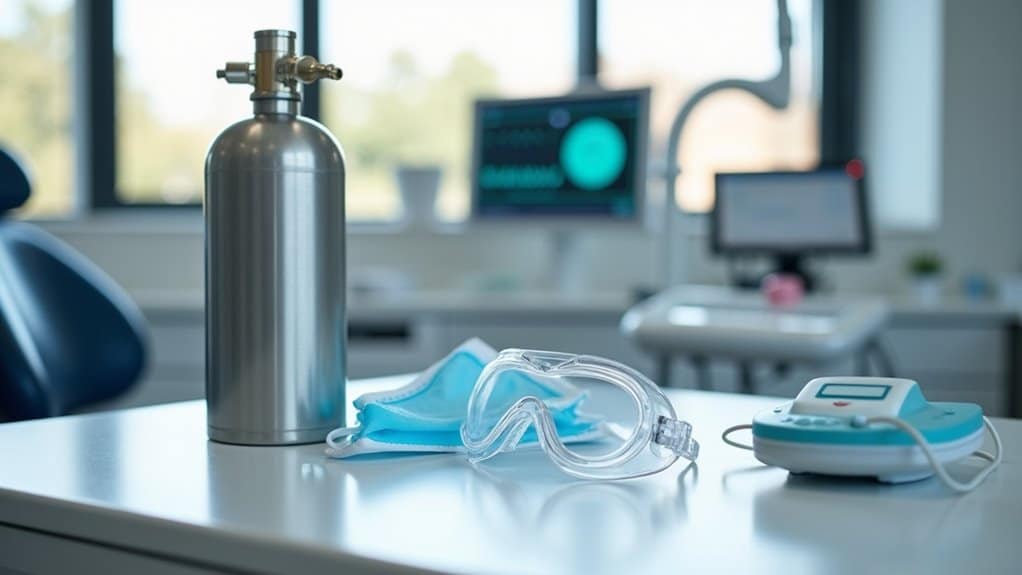
Understanding the risks and side effects of nitrous oxide administration requires careful consideration, as both short-term and long-term complications can occur. When evaluating risk mitigation strategies and long-term usage considerations, several key factors warrant attention:
- Respiratory depression risks increase markedly when combined with other sedatives or medications, potentially leading to serious complications. Common reactions include excessive sweating and shivering during administration.
- Vitamin B12 deficiency may develop with repeated exposure, causing megaloblastic anemia and neurological symptoms
- Post-operative nausea and vomiting (PONV) commonly occur, requiring monitoring and management
- Diffusion hypoxia can develop immediately after discontinuation, necessitating supplemental oxygen
- Vulnerable populations, including pregnant women and elderly patients, face heightened risks and require extra precautions
These factors underscore the importance of thorough pre-treatment assessment and appropriate patient selection to minimize adverse outcomes. Patients may experience temporary effects like dizziness and fatigue immediately after the procedure, though these symptoms typically resolve quickly.
Safety Protocols and Monitoring Requirements
Safety protocols and monitoring requirements lay down critical operational frameworks for nitrous oxide administration in clinical settings. You’ll need to understand rigorous gas handling procedures and waste management protocols that guarantee both patient and staff safety.
| Safety Element | Required Actions |
|---|---|
| Gas Scavenging | Maintain >95% removal efficiency; confirm system functionality daily |
| Room Ventilation | Monitor air exchange rates; uphold OSHA compliance |
| Equipment Checks | Verify pin-index safety systems; calibrate oxygen analyzers |
During administration, you must continuously monitor important signs, including SpO2, blood pressure, and ECG. Your facility’s anesthetic machines require fail-safe mechanisms and in-line oxygen analyzers with audible alarms. Post-procedure, you’ll need to assess patients for proper recovery, especially monitoring oxygen saturation and neurological status while maintaining detailed documentation of all safety measures.
Alternative Treatment Options
Several traditional sedation alternatives to nitrous oxide are available for your dental anxiety management, including oral conscious sedation, IV sedation, and localized anesthetic injections.
You’ll find that oral sedation offers a moderate to deep level of relaxation with extended recovery time, while IV sedation provides rapid, adjustable effects under specialized supervision. Local anesthetic is often combined with sedation to ensure complete comfort during treatment. Oral conscious sedation helps manage anxiety through a prescribed pill taken before your appointment.
For patients seeking non-pharmacological options, you can investigate natural approaches such as hypnosis, behavioral techniques, and guided breathing exercises that effectively reduce anxiety without medication.
Traditional Sedation Methods Available
Modern dentistry offers five primary sedation alternatives to nitrous oxide, each customized to specific patient needs and anxiety levels. Your dentist will evaluate your medical history, anxiety level, and procedure complexity to recommend the most suitable choice.
Oral sedation uses prescribed medications like benzodiazepines, providing moderate relaxation while maintaining consciousness.
Intravenous (IV) sedation delivers medication directly into your bloodstream, offering precise control and deeper sedation levels.
Intramuscular sedation involves injections into large muscle groups for gradual sedative release.
General anesthesia provides complete unconsciousness, typically reserved for complex surgical procedures.
Combination sedation methods blend different techniques for ideal comfort and control during specific dental procedures.
These options vary in onset time, duration, and recovery requirements, allowing for personalized treatment approaches based on your unique circumstances.
Natural Anxiety Management Approaches
Beyond traditional sedation methods, natural anxiety management techniques offer effective alternatives for managing dental-related stress and fear. You’ll find several evidence-based approaches that can help reduce anxiety before and during dental procedures. Deep breathing techniques and guided imagery exercises serve as fundamental tools for maintaining composure in the dental chair.
| Anxiety Management Method | Patient Benefit |
|---|---|
| Progressive Relaxation | Reduces muscle tension |
| Mindfulness Meditation | Increases present-moment focus |
| Aromatherapy | Promotes calming environment |
| Music/Audio Therapy | Provides active distraction |
| Communication Strategy | Guarantees personalized support |
These natural approaches can be used independently or in combination with traditional sedation methods. Your dental team will work with you to develop a customized anxiety management plan that addresses your specific concerns and comfort needs during treatment.
Patient Eligibility and Restrictions
Patient safety protocols require careful screening and assessment before administering nitrous oxide sedation. Your medical history considerations and potential contraindications must be thoroughly evaluated to safeguard safe administration. Critical factors include recent medication use, existing health conditions, and planned concurrent sedatives.
Foremost trimester pregnancy, severe cardiac disease, or critical illness represent absolute contraindications. Upper respiratory infections, recent maxillofacial surgeries, and psychotropic medication use require careful evaluation. Vitamin B12 deficiency, pernicious anemia, and methylenetetrahydrofolate reductase deficiency must be ruled out. Combination with other drugs requires advanced monitoring protocols and supplementary safety measures. Maximum concentration shouldn’t exceed 70%, with typical administration remaining below 50% for ideal safety.
These guidelines safeguard your safety while maintaining the effectiveness of nitrous oxide sedation during dental procedures.
Legal Documentation Requirements
Legal compliance in nitrous oxide administration demands scrupulous documentation that meets state-specific requirements and professional standards. Your dentist’s oversight must include detailed consent documentation covering key procedural elements.
| Documentation Element | Requirement | Verification |
|---|---|---|
| Patient Details | Full identification | Staff check |
| Treatment Plan | Procedure specifics | Dentist review |
| Consent Signatures | Patient/guardian | Witness needed |
You’ll need properly executed forms retained according to state regulations, with clear documentation of the informed consent discussion’s date, time, and content. For repeated procedures, you’ll require revalidation of consent if your health status changes. The documentation must verify that qualified personnel will administer the sedation and that you’ve received extensive information in your primary language about risks, alternatives, and costs.
Frequently Asked Questions
How Long Before Driving Can I Resume Normal Activities After Treatment?
You can typically resume normal activities within 15-30 minutes after nitrous oxide treatment. The reasonable recovery period is brief, as the gas leaves your system quickly.
You’ll need to stay at the dental office for a short monitoring period to verify potential side effects like dizziness or lightheadedness have subsided. While most patients can drive immediately after treatment, it’s best to wait 15 minutes to confirm you’re fully alert before operating a vehicle.
Can I Eat or Drink Before Receiving Nitrous Oxide Sedation?
While light fasting is recommended, you don’t need to follow strict dietary restrictions before receiving nitrous oxide sedation. You can eat a light meal 2-3 hours before your appointment. However, avoid heavy meals immediately prior to treatment.
If you’re particularly concerned about nausea, you may choose to fast for 4-6 hours beforehand. Always inform your dentist about when you last ate or drank before the procedure begins.
Will Insurance Cover the Cost of Nitrous Oxide Sedation?
Your dental insurance likely won’t cover nitrous oxide sedation, as most plans classify it as an elective procedure. You’ll need to verify specific insurance coverage details with your provider, but typically, you’ll be responsible for the full cost out-of-pocket.
Many dental offices offer flexible provider payment options, including financing plans or credit cards, to help manage these expenses. It’s best to discuss costs and payment arrangements with your dentist’s office before treatment.
How Many Times Can I Safely Receive Nitrous Oxide in One Year?
You should limit your nitrous oxide exposure based on recommended dosage frequency, which varies depending on your medical needs and health status. While there’s no strict annual limit, you’ll want to maintain at least 2-3 weeks between exposures to minimize potential long-term risks.
If you require frequent sedation, your healthcare provider should evaluate alternative options, as repeated exposure can affect B12 metabolism and potentially impact your neurological health.
Can I Request to Stop the Nitrous Oxide During the Procedure?
Yes, you can request to stop nitrous oxide at any point during your dental procedure. Since you’ll remain conscious throughout treatment, you can communicate with your dentist if you’re experiencing discomfort or want to pause the sedation.
Your dental team will immediately adjust or terminate the gas flow upon your request. It’s best to discuss nitrous oxide duration and your preferences with your dentist before beginning treatment to guarantee clear communication.