To establish safe nitrous oxide standards, you’ll need to maintain N₂O concentrations below 70% while ensuring minimum oxygen levels of 30%. You must implement continuous monitoring through pulse oximetry and capnography, utilizing calibrated infrared spectroscopy devices with validated ranges. Install fail-safe mechanisms that automatically cut off gas flow if oxygen levels drop below thresholds. Proper compliance with OSHA/NIOSH guidelines requires supplementary safety protocols to fully protect staff and patients.
Maximum Safe Concentration Thresholds
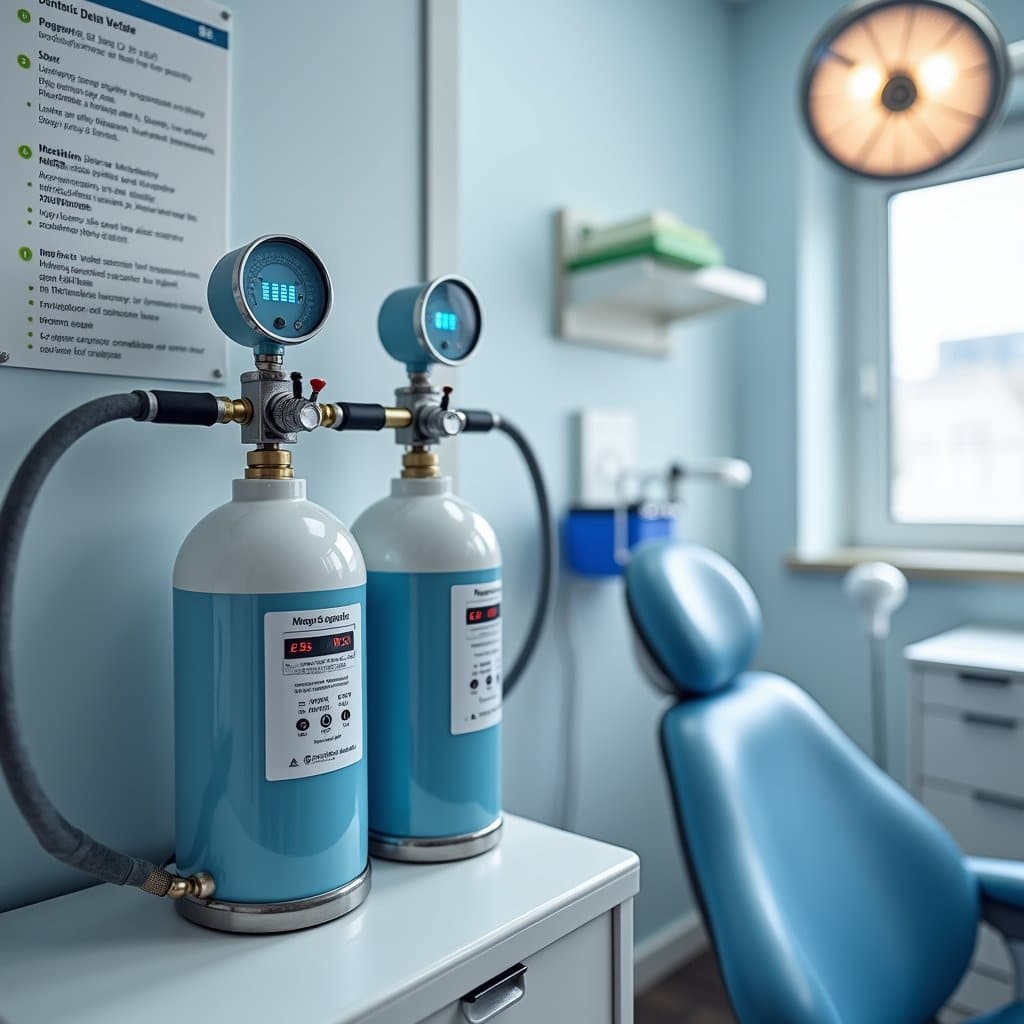
While nitrous oxide provides effective sedation in clinical settings, absolute adherence to maximum concentration thresholds is indispensable for patient safety. You’ll need to maintain nitrous oxide levels at or below 70% to guarantee adequate oxygen delivery and minimize complications. Based on extensive research analyzing 7,802 pediatric cases, nitrous oxide sedation has demonstrated an excellent safety profile when proper concentration protocols are followed. The gas’s sweet faint odor makes it readily detectable if there are any leaks in the delivery system. Proper concentration management requires maintaining a minimum of 30% oxygen in the mixture at all times. Modern delivery systems are specifically designed to prevent exceeding these maximum thresholds for patient protection.
For dynamic dosage adjustments, you can safely decrease nitrous oxide levels rapidly without gradual weaning if needed. Though nitrous oxide’s MAC is 105%, you must cap administration at 70-75% to prioritize oxygen safety margins. When working with concentrations below 25%, you’ll find these are generally non-hazardous when correctly mixed with oxygen. Keep in mind that continuous monitoring of oxygen levels is pivotal to prevent accidental hypoxia during administration.
Essential Monitoring Equipment and Protocols
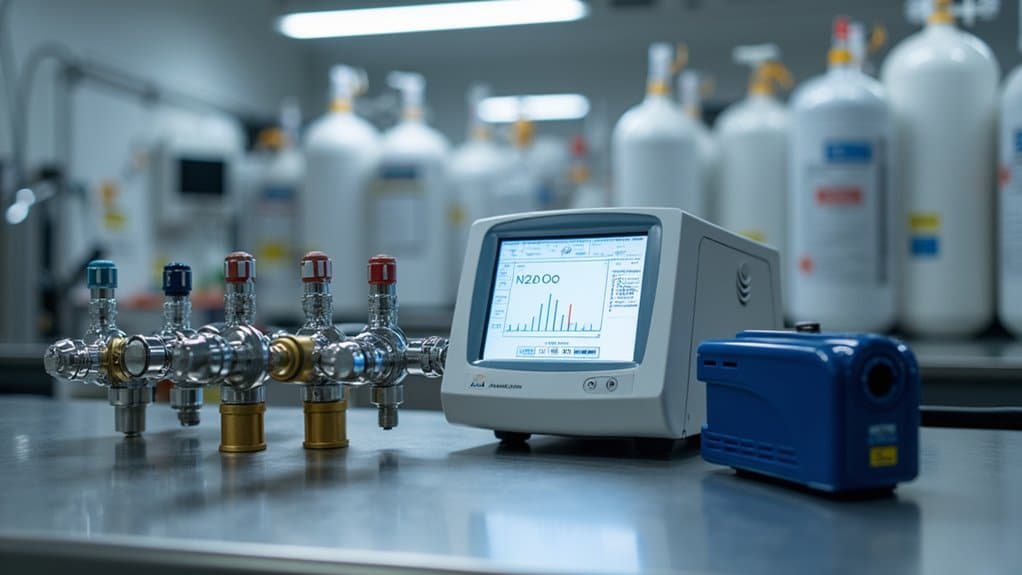
Proper monitoring equipment and protocols set the foundation for safe nitrous oxide administration. You’ll need to implement thorough alarm system integration that includes audio-visual alerts for gas leaks and improper mixtures.
Continuous monitoring feedback through pulse oximetry and capnography guarantees real-time tracking of patient oxygenation and ventilation.
Your monitoring setup must include calibrated infrared spectroscopy devices with validated ranges of 12.5-500 ppm and quantitative detection limits of 2 µg. You’re required to maintain ASA-compliant protocols, including pre-administration system checks and line-of-sight patient observation.
Install fail-safe mechanisms that automatically cut off gas flow if oxygen levels drop below thresholds. Regular validation using SRM 1718 standards ensures your equipment maintains precision metrics within CV2 values of 0.135-0.080 across operational ranges.
Clinical Safety Mechanisms for Gas Delivery
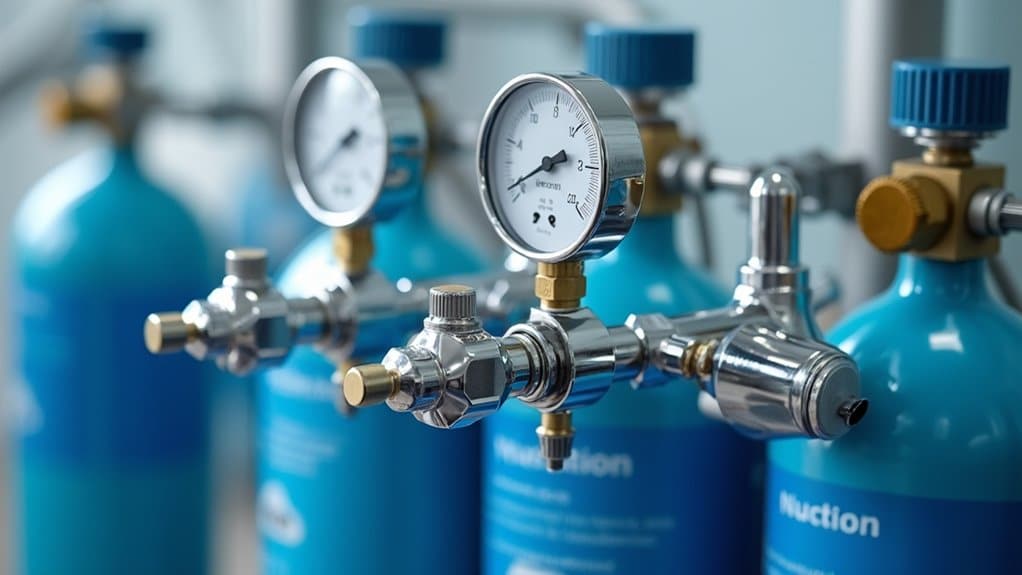
Building upon established monitoring protocols, clinical safety mechanisms form multiple layers of protection during nitrous oxide delivery.
You’ll find critical gas safety optimization features like the pin-index system preventing incorrect cylinder connections and diameter-index restrictions ensuring proper tubing compatibility. Real-time mixture monitoring maintains the maximum 70% N₂O concentration while guaranteeing at least 30% oxygen flow.
Your delivery system’s fail-safes automatically halt N₂O flow if oxygen delivery stops, while pressure regulators maintain consistent gas ratios. You must verify these mechanisms during pre-procedure checks, including testing auditory and visual alerts that signal flow abnormalities.
When operating the equipment, you’re required to follow strict ADA guidelines and maintain emergency response readiness through annual certification and documented safety protocols.
Occupational Exposure Limits and Controls
Understanding exposure limits for nitrous oxide requires an extensive grasp of varied international standards. While NIOSH recommends a 25 ppm TWA, the UK’s HSE sets limits at 100 ppm over 8 hours.
You’ll need to implement administrative controls to prevent nitrous oxide abuse risks, particularly in dental settings where exposures can exceed 1,000 ppm without proper scavenging.
You must guarantee your facility maintains scavenging systems that achieve at least 70% gas removal efficiency. Regular monitoring through air sampling and B12 level tracking helps verify control effectiveness. You’ll need to conduct workplace surveys and maintain thorough training programs for staff.
Preventing Health Risks in Healthcare Settings
Three critical components form the foundation of health risk prevention when administering nitrous oxide in healthcare settings: concentration management, ventilation control, and patient-specific risk assessment.
To maintain procedural competence, you’ll need to guarantee proper mixture ratios while providing thorough patient education about potential risks.
| Safety Component | Required Action |
|---|---|
| Concentration | Maintain ≤70% N₂O with ≥30% oxygen |
| Ventilation | Guarantee 10-12 air exchanges/hour |
| Monitoring | Track SPO₂ ≥95% and respiratory rate |
| Risk Assessment | Screen for cobalamin/folate disorders |
You must implement continuous airway assessment and maintain scavenging systems that reduce ambient N₂O by >70%. For patients with MTHFR deficiency or pernicious anemia, consider alternative sedation methods. Always keep emergency oxygen readily available and position scavenging ports strategically to capture waste gases efficiently.
Equipment Maintenance and Verification Steps
Rigorous equipment maintenance and verification protocols serve as the cornerstone of safe nitrous oxide administration in healthcare settings. You’ll need to implement a thorough daily inspection routine that includes checking connection integrity, hose conditions, and scavenger system functionality. Service technician qualifications must meet industry standards for performing monthly leak tests and quarterly system evaluations.
Your leak detection training should emphasize using soapy water solutions to identify compromised connections and following strict documentation procedures. You’re required to maintain detailed logs of all maintenance activities, including ambient gas level measurements and alarm system calibrations. When levels exceed 25 ppm, you must initiate immediate corrective actions and verify remediation through follow-up testing.
Regular validation of gas mixture ratios and pressure alarm thresholds ensures consistent compliance with OSHA/NIOSH guidelines.
Regulatory Guidelines for Mixed Gas Administration
Building upon proper equipment maintenance practices, strict regulatory guidelines govern the administration of nitrous oxide and oxygen mixtures in clinical settings. You’ll need to maintain a minimum 30% oxygen concentration while never exceeding 70% nitrous oxide during primary agent use. Continuous gas monitoring systems must verify compliance with the 25 ppm TWA exposure limit set by NIOSH.
Your facility must conduct environmental impact assessments and implement transportation safety considerations, particularly when storing quantities exceeding regulatory thresholds (50 tonnes EU, 4.5 tonnes US). You’re required to maintain detailed documentation, including MSDS and safety reports, while ensuring proper ventilation systems and scavenging devices are operational.
For confined spaces, you must enforce augmented monitoring protocols and maintain emergency oxygen supplies readily available.
Best Practices for Personnel Protection
When working with nitrous oxide and oxygen mixtures, you’ll need to follow strict protective equipment protocols, including the use of chemical-resistant gloves and appropriate respirators based on exposure risk assessments.
You must implement regular exposure monitoring through air sampling and maintain records of time-weighted averages to guarantee compliance with NIOSH and ACGIH limits.
Your emergency response procedures should include clear evacuation protocols, immediate access to breathing apparatus, and established decontamination steps for personnel exposure incidents.
Protective Equipment Requirements
Personnel safety during nitrous oxide and oxygen mixture handling requires three essential protective equipment categories: respiratory protection, hand/skin protection, and eye/face protection.
You’ll need air-purifying respirators when exposure exceeds ACGIH TLV of 50 ppm TWA or NIOSH REL of 25 ppm TWA. Guarantee proper respirator fit through regular testing and verify workplace signage requirements are met.
Your hand protection must include chemical-resistant gloves with monitored material integrity, and you’ll need to wash hands after glove removal. For eye safety, wear ANSI Z87.1-compliant goggles during cylinder handling, and use face shields when working with pressurized systems. Anti-fog coatings and replaceable cushions strengthen goggle effectiveness in humid conditions.
Exposure Monitoring Protocols
To guarantee safe handling of nitrous oxide and oxygen mixtures, you’ll need to implement thorough exposure monitoring protocols that align with established safety limits. Deploy continuous air sampling equipment to track concentration levels and verify they remain below NIOSH’s recommended 25 ppm TWA over 10-hour periods.
Conduct regular environmental impact assessments through real-time gas analyzers that monitor both nitrous oxide and oxygen levels. You’ll need to maintain oxygen concentrations above 20% while keeping nitrous oxide below 75%. Install personal monitoring devices for staff to measure cumulative exposure, and confirm mixing ratios using dual analyzers. Document all readings in daily exposure logs, including TWA values and peak concentrations. When exposure spikes occur, don’t exceed the ceiling limit of 30 ppm, and immediately adjust ventilation systems to restore safe atmospheric conditions.
Emergency Response Procedures
Building upon exposure monitoring practices, an all-encompassing emergency response plan safeguards personnel during nitrous oxide incidents. You’ll need to implement thorough personnel training programs that cover immediate evacuation protocols, respiratory support techniques, and emergency communication procedures.
Your facility’s ventilation system design must accommodate rapid isolation of contaminated areas while maintaining fresh air circulation in safe zones.
- Guarantee regular emergency drills that test your staff’s readiness to deploy PPE and activate oxygen reserve systems
- Establish clear communication channels with primary responders, including detailed facility layouts and gas concentration data
- Maintain documented procedures for administering 100% oxygen therapy and initiating CPR when necessary
- Conduct post-incident system purging and equipment inspections to verify operational safety before resuming normal activities
Quality Assurance in Gas Mixture Preparation
You’ll need to implement rigorous calibration protocols using CEAS and gravimetric standards to validate nitrous oxide-oxygen mixture concentrations in accordance with NIST requirements.
Your tank verification systems must incorporate homogeneity analysis to confirm consistent concentrations across all cylinders while adhering to the mandated 50:50 ratio specifications.
Regular stability testing through certified gas vendors guarantees long-term mixture integrity and compliance with EIGA safety guidelines.
Calibration And Testing Protocols
Rigorous calibration and testing protocols form the cornerstone of safe nitrous oxide and oxygen mixture preparation. You’ll need to conduct regular gas purity audits and obtain independent calibration validation to maintain strict compliance with EPA protocols. Your testing must verify that mixture concentrations remain within ±5% O2 concentration at the standard 50/50 ratio.
Validate mixer functionality during installation, ensuring O2 pressure doesn’t exceed N2O by more than 15 psi
Monitor cylinder pressures before and after use while documenting all calibration data
Use manufacturer-certified converter efficiency gases for accurate concentration verification
Implement continuous monitoring through capnography and oxygen saturation checks during administration
Follow equipment recertification schedules based on usage frequency, and immediately address any deviations from established safety parameters to maintain ideal mixture integrity.
Tank Verification Systems
Every tank verification system requires thorough testing and certification protocols to guarantee medical gas mixture safety. You’ll need ASSE 6030-certified technicians to conduct independent verifications, ensuring your facility meets NFPA 99 standards. Through personnel education and proper facility infrastructure upgrades, you can maintain wide-ranging verification processes that include standing pressure tests, cross-connection checks, and particulates analysis. MGPHO corporate members provide professional inspection oversight to ensure all safety standards are met. A dedicated team delivers fast turnaround times for all certification needs.
Your verification system must integrate real-time monitoring capabilities with exhaustive documentation procedures. Per NFPA requirements, you must have separate verification contractors perform testing from those who did the installation. You’re required to implement strict quality control measures, including regular purge tests and alarm system validations. To maintain compliance, you’ll need to schedule annual verifications and maintain detailed records of all testing procedures.
Emergency Response and Safety Procedures
Broad emergency response and safety procedures form the foundation of nitrous oxide handling protocols. You’ll need to implement controlled ventilation requirements and establish periodic staff training to guarantee immediate response capabilities during emergencies.
When handling nitrous oxide mixtures, your facility must maintain strict compliance with safety protocols designed to prevent and manage potential incidents.
Activate emergency ventilation systems and shut off gas supply immediately upon detecting leaks. Deploy appropriate PPE including chemical-resistant gloves and respirators in high-exposure scenarios. Utilize absorbent materials for containment following established spill response protocols. Monitor oxygen concentrations continuously with calibrated analyzers and alarms.
Your emergency procedures must integrate with existing safety systems, including pin-index mechanisms and oxygen proportioning devices, while maintaining OSHA-compliant scavenging systems to protect staff and patients during routine operations and emergencies.
Frequently Asked Questions
How Long Should Patients Fast Before Receiving Nitrous Oxide-Oxygen Sedation?
You don’t need mandatory fasting before nitrous oxide-oxygen sedation in most cases. However, you should follow these guidelines: consume only light meals up to 2 hours before the procedure, and clear liquids up to 1 hour prior.
When monitoring patient hydration, you’ll want to guarantee comfort while maintaining safety. If you have a history of vomiting or anticipate escalating sedation, you’ll need to discuss specific fasting requirements with your healthcare provider.
Can Pregnant Healthcare Workers Safely Work in Areas Using Nitrous Oxide?
While you can work in areas using nitrous oxide during pregnancy, you’ll need to carefully evaluate exposure risks. You should minimize direct contact and guarantee proper ventilation requirements are met through scavenging systems and demand-valve equipment.
It’s best to consult your healthcare provider and employer about specific accommodations. Consider requesting temporary reassignment if exposure controls aren’t adequate or if you’re concerned about prolonged exposure during pregnancy.
What Color Coding System Is Used for Nitrous Oxide-Oxygen Mixture Tanks?
You’ll find that color coded tank labeling varies by region. In the US, nitrous oxide-oxygen mixtures use a combination of light blue (nitrous) and green (oxygen) stripes or bands.
Under ISO/EN standards, you’ll see white (oxygen) and blue (nitrous) markings instead. These standardized gas mixture ratios are clearly identified through sequential color stripes on the cylinder.
Always verify both the colors and accompanying labels before use.
How Often Should Nitrous Oxide Delivery Systems Be Calibrated?
You’ll need to perform regular system calibration of your nitrous oxide delivery systems based on the specific analyzer type you’re using. For chromatography systems, calibrate every 30-45 minutes during operation.
FTIR analyzers require calibration every 20 days, while CRDS/ICOS systems need it every 11-13 days. Proper gas mixture monitoring also requires precision checks every 2 weeks and quarterly accuracy audits with three-point calibration for ideal performance.
What Strategies Help Calm Anxious Patients During Nitrous Oxide Administration?
To calm your anxiety during nitrous oxide administration, you’ll benefit from maintaining positive patient-provider rapport through clear communication and reassurance.
Your provider will explain each step, demonstrate the nasal mask, and describe expected sensations beforehand. They’ll provide distractions like music, stress balls, or guided imagery during treatment.
You’ll also learn breathing techniques while the provider adjusts gas levels based on your comfort, ensuring a controlled, relaxed experience.