
Several dangerous myths about Suboxone can prevent people from accessing life-saving treatment. You should know that Suboxone isn’t “just trading one addiction for another” it’s a legitimate medical intervention with strong scientific support. When properly prescribed, it reduces overdose risk by up to 76% and helps patients maintain long-term recovery. While Suboxone does carry some risks, its ceiling effect and naloxone component make it distinctly safer than full opioids. Understanding the facts about medication-assisted treatment can transform your perspective on recovery options.
The Truth About Recovery and Medication-Assisted Treatment

While many myths persist about medication-assisted treatment (MAT), scientific evidence consistently demonstrates its effectiveness as a legitimate path to recovery from opioid use disorder. Research shows that patients receiving MAT are 4.44 times more likely to remain in treatment and demonstrate 33% fewer opioid-positive tests. Research particularly supports buprenorphine and methadone as effective first-line treatments for reducing overdose risk.
The data reveals significant outcomes, with a 76% reduction in overdose risk at three months and 59% at twelve months of continuous treatment. Despite these proven benefits, reducing treatment biases remains indispensable, as only 23% of publicly funded programs offer MAT medications. Like other chronic relapsing conditions, OUD requires ongoing management and support through evidence-based treatments.
Enhancing treatment accessibility is critical, considering that while 3.7% of individuals needed treatment in 2022, only 25.1% received medication support. These statistics underscore MAT’s role as an evidence-based recovery approach that saves lives.
Understanding Suboxone’s Safety Profile
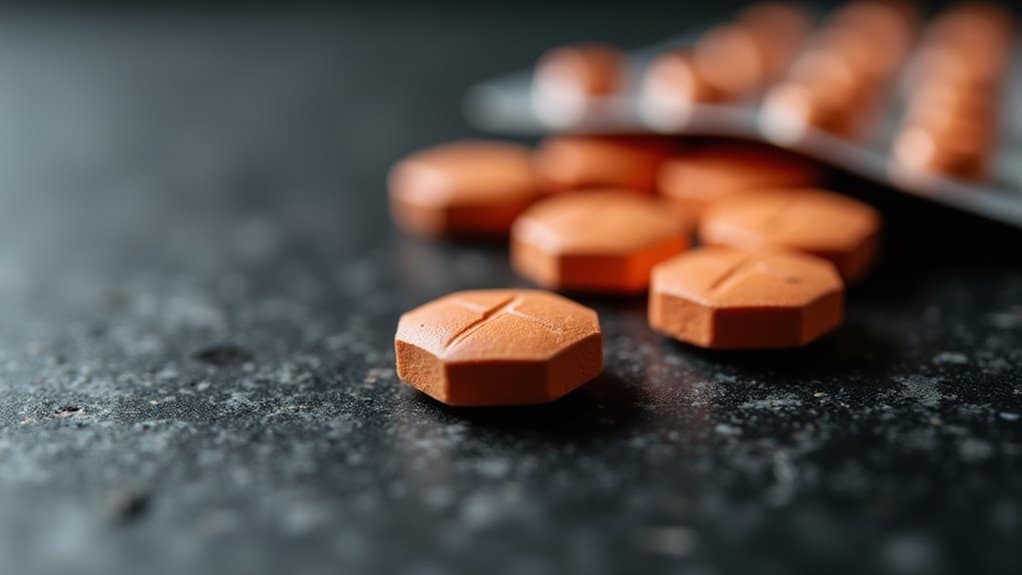
Suboxone’s thorough safety profile sets a new standard in medication-assisted treatment for opioid use disorder. As a partial opioid agonist, buprenorphine formulations offer significant advantages over full agonists like methadone, including a unique ceiling effect that limits respiratory depression and reduces overdose risk. When administered properly, counseling and therapy must accompany Suboxone treatment for optimal results.
You’ll find that Suboxone combines buprenorphine with naloxone, creating a built-in deterrent against misuse while maintaining high patient acceptability. Research demonstrates superior outcomes, with subcutaneous forms achieving 35.1% opioid-negative urine samples compared to 28.4% with sublingual versions. Based on clinical trials, neither delivery method showed concerning safety issues, with injection site reactions occurring in less than 23% of patients and none being severe.
While you should be aware of potential drug interactions, particularly with benzodiazepines or alcohol, Suboxone’s safety features enable at-home administration without daily clinic visits. This convenience, coupled with proven efficacy, supports sustained engagement in recovery programs.
Breaking Down the Addiction Replacement Theory
A pervasive and harmful myth continues to undermine effective opioid treatment: the false notion that Medication-Assisted Treatment (MAT) with Suboxone simply replaces one addiction with another.
The science firmly contradicts this medication stigma. Suboxone functions as a partial opioid agonist, providing controlled stability without the intense euphoria of illicit opioids. Criminal activity decreases among patients in stable Suboxone treatment programs. Similar to front-line treatments for chronic medical conditions, Suboxone represents a legitimate medical intervention. You’ll find it’s more comparable to insulin for diabetes – a medication for chronic treatment management of a medical condition. The addition of naloxone blocks euphoria and helps prevent misuse of the medication.
When you look at the evidence, MAT drastically outperforms abstinence-only approaches. While 90% of patients relapse within a year without medication support, Suboxone treatment considerably reduces overdose risks and enables functional recovery. It’s not about trading addictions; it’s about utilizing proven medical interventions to restore stability and support long-term healing.
Debunking Common Misconceptions About Overdose Risk
Despite widespread misconceptions about Suboxone’s safety profile, the medication carries specific overdose risks that require careful understanding. While Suboxone’s buprenorphine component has a ceiling effect that limits respiratory depression, it doesn’t make overdose impossible. You’re particularly vulnerable if you combine Suboxone with alcohol or benzodiazepines, as these substances can bypass the ceiling effect’s protective mechanisms. Shallow breathing can be a critical warning sign of an overdose.
Misconceptions about overdose prevalence often overlook that Suboxone-related deaths account for just 2.2% of total overdose fatalities, markedly lower than other opioids. However, you shouldn’t dismiss the risks entirely. The presence of naloxone in Suboxone doesn’t guarantee complete safety, especially with oral consumption. Nearly 93 percent of deaths involving buprenorphine included at least one other drug, highlighting the dangers of polysubstance use. If you’re not opioid-tolerant or you’re mixing substances, you’re facing increased overdose risks despite the medication’s built-in safeguards. The sublingual film medication is designed for daily use in treating opioid addiction as part of a comprehensive treatment plan.
The Real Facts About Suboxone’s Abuse Potential
While only 4% of Suboxone misusers seek euphoric effects, most illicit use stems from attempts at self-treatment or withdrawal management without proper medical supervision. Research shows non-metropolitan residents have a higher likelihood of misusing buprenorphine compared to those in urban areas. Taking Suboxone as prescribed can help reduce withdrawal symptoms while managing opioid addiction recovery. You’ll find that Suboxone’s built-in naloxone component and ceiling effect substantially limit its abuse potential compared to other opioids. Understanding these risk patterns helps healthcare providers implement effective monitoring strategies, including regular check-ins and prescription tracking, to prevent diversion while ensuring patients receive appropriate care. The medication’s composition of 80% buprenorphine further ensures its effectiveness while maintaining safety.
Understanding Diversion Risk Factors
Several important risk factors drive Suboxone diversion, creating a complex interplay between systemic barriers, economic pressures, and patient-specific vulnerabilities. Even stringent control measures can’t fully prevent diversion when provider incentives prioritize dispensing over patient needs and treatment access remains limited.
You’ll find that specific patient factors greatly increase diversion risk: growing up with one or no parents (4x higher risk), intranasal drug use history (5.6x higher risk), and suicidal ideation (2.6x higher risk). Economic pressures also play a pivotal role when preferred opioids become unavailable or too expensive, individuals may turn to Suboxone as a more affordable alternative. Treatment barriers, including long wait times and inadequate coverage, further compound these risks by forcing patients to seek alternatives through unofficial channels.
Built-In Abuse Deterrents
Because misconceptions about Suboxone’s abuse potential continue to circulate widely, understanding its built-in protective features remains essential for both patients and providers. The medication’s sophisticated design incorporates multiple safeguards through partial agonism dynamics and withdrawal precipitating mechanisms. The success of abuse-deterrent formulations in reducing prescription opioid misuse has made medications like Suboxone increasingly important in addressing the opioid crisis.
Suboxone has demonstrated remarkable effectiveness by easing withdrawal symptoms while preventing complete opioid effects, making it a valuable tool in addiction treatment.
Key protective features include:
- Naloxone’s strategic inclusion triggers immediate withdrawal if misused through injection or snorting, while remaining inactive when taken as prescribed orally
- Buprenorphine’s ceiling effect caps euphoric potential regardless of dose escalation, fundamentally limiting abuse potential
- The medication’s prolonged 24-48 hour duration maintains steady therapeutic levels while reducing opportunities for misuse
These pharmaceutical engineering advances create a sturdy foundation for safer opioid treatment, though it’s pivotal to understand these features work ideally only when the medication is used as prescribed under proper medical supervision.
Monitoring Prevents Misuse
Despite widespread concerns about Suboxone’s abuse potential, current evidence demonstrates that proper monitoring and treatment access substantially reduce misuse risks. Research shows that patients receiving structured treatment have 60% lower odds of misuse compared to untreated individuals.
While dose monitoring is crucial, it’s essential to understand that successful treatment requires a more extensive approach. Evidence shows that maintaining doses of 16mg or higher significantly improves treatment retention during the first month. You’ll need care that addresses co-occurring conditions like mental illness and substance use disorders, not just medication tracking. Early stabilization on appropriate doses (≥16mg) reduces dropout rates, while slower stabilization often leads to increased illicit opioid use.
However, access barriers persist, especially in rural areas where misuse risks are higher. The data suggests that improving treatment availability and integrated care approaches are more effective at preventing misuse than dose restrictions alone.
Managing Withdrawal: Separating Fact From Fiction
Myths about opioid withdrawal can lead to dangerous decisions that put lives at risk. When bridging withdrawal gaps, it’s imperative to understand that Suboxone (buprenorphine) effectively manages moderate-to-severe symptoms while optimizing medication usage through proper timing and dosing.
Research shows you’re 1.8 times more likely to stay in treatment with Suboxone compared to non-medicated approaches. Here are critical facts about withdrawal management:
- You must be opioid-free for 12-24 hours before starting treatment
- Early withdrawal symptoms require medical supervision to prevent complications
- Without medication-assisted treatment, you face considerably higher relapse and overdose risks
Don’t let misinformation about withdrawal derail your recovery. Proper medical supervision and evidence-based treatment with Suboxone provides your best chance at managing withdrawal symptoms safely and effectively.
Prescription Access and Treatment Barriers
Although Suboxone represents a proven, life-saving treatment for opioid use disorder, significant barriers continue to limit access for those who need it most. Shockingly, only 20% of individuals who need treatment receive adequate care, with pharmacy regulations and healthcare provider barriers creating substantial roadblocks.
You’ll find that one in five Medicaid-participating pharmacies refuse to dispense buprenorphine, despite stocking other opioids. These restrictions disproportionately affect Black individuals and low-income populations, while rural communities often lack access entirely.
Prior authorization requirements and conflicting state-level policies further complicate access, even when prescribers authorize appropriate dosages.
Despite recent policy improvements like X-waiver modifications, systemic barriers persist. Research shows increased access reduces overdose deaths by 3-6%, making these obstacles particularly concerning for public health.
The Science Behind Suboxone’s Effectiveness
While misinformation about Suboxone treatment continues to circulate, scientific evidence firmly establishes its effectiveness through rigorous clinical studies and decades of real-world data. Research demonstrates Suboxone’s success through dosage optimization and treatment personalization, leading to substantially better outcomes compared to placebo treatments.
Despite persistent myths, extensive scientific research and clinical evidence validate Suboxone’s effectiveness when properly administered and personalized for each patient.
Clinical studies consistently show:
- Patients receiving proper Suboxone dosing achieve 75% one-year retention rates versus zero retention in placebo groups
- When dosed at 16mg or higher, Suboxone matches methadone’s effectiveness while offering enhanced safety through its unique ceiling effect
- Long-term studies reveal Suboxone patients are four times more likely to maintain sobriety and show negative opioid screens compared to untreated individuals
These findings underscore Suboxone’s indispensable role in evidence-based addiction treatment when properly prescribed and monitored.
Social Stigma and Evidence-Based Treatment
Despite overwhelming scientific evidence supporting Suboxone’s effectiveness, pervasive social stigma continues to create significant barriers to evidence-based treatment for opioid use disorder.
You’ll encounter misconceptions rooted in outdated beliefs rather than medical science. Healthcare providers may hesitate to prescribe Suboxone due to insufficient provider education or personal biases, while systematic barriers like prescription caps and prior authorization requirements further limit access. People receiving Suboxone treatment often face rejection from recovery communities that mistakenly view them as “not truly sober.”
The reality is clear: Suboxone isn’t simply “replacing one addiction with another.” It’s a medically proven treatment for a chronic condition, similar to insulin for diabetes. Understanding these facts is vital for dismantling harmful stigmas that prevent people from accessing life-saving care.
Navigating Treatment Options and Recovery Paths
When you’re exploring treatment options for opioid use disorder, research clearly shows that medication-assisted treatment like Suboxone provides superior outcomes compared to non-medication approaches, with studies demonstrating 75% one-year retention rates versus 0% for placebo.
You’ll find that evidence-based care combines appropriate medication dosing with behavioral support, as patients maintaining both components show considerably better long-term sobriety and employment outcomes.
Your recovery goals should account for the strong scientific evidence that longer treatment durations (beyond 180 days) correlate with dramatically lower overdose rates and higher sustained abstinence.
Exploring Evidence-Based Care
Evidence-based care for Suboxone treatment demands careful attention to initiation timing, precise dosing protocols, and individualized supervision strategies. When you’re considering treatment, understanding the science-backed approaches will help you avoid dangerous misconceptions about this life-saving medication.
Key evidence-based protocols include:
- Waiting 48-72 hours after long-acting opioids and shorter periods for short-acting opioids before commencing Suboxone
- Starting with 2-4mg doses and gradually increasing to maintenance levels of 16mg daily
- Following individualized dosing considerations rather than rigid, one-size-fits-all approaches
You’ll find that flexible administration approaches allow for personalized care while maintaining safety standards. Research shows that supervised initiation followed by carefully monitored shifts to take-home doses provides the best outcomes, especially when combined with proper dose titration and regular assessment of your stability.
Managing Recovery Goals
A successful recovery expedition requires understanding the full spectrum of treatment options and establishing realistic goals for long-term stability. Your treatment path should align with evidence-based chronic disease management, where medication can play a crucial role in daily routine maintenance.
Don’t let misconceptions about “real recovery” derail your progress. Suboxone’s pharmacological properties support personalized relapse prevention by providing stable opioid receptor coverage while minimizing withdrawal risks. You’ll find that outpatient programs offer flexible dosing schedules that accommodate work and family commitments while integrating essential counseling support.
Remember that recovery timelines vary, and stepped care models allow you to move between treatment intensities as needed. Work with your provider to develop realistic goals that balance medication management with behavioral therapy for holistic healing.
Frequently Asked Questions
Can Suboxone Affect Fertility or Pregnancy Outcomes?
While you’re on Suboxone, there’s no strong evidence that it directly impacts fertility, though you might experience monthly menstrual cycle changes. You should discuss potential contraceptive interactions with your doctor.
Current research doesn’t show increased risks for miscarriage or birth defects compared to the general population. However, if you’re male, you may experience testosterone suppression and reduced libido. It’s vital to maintain regular medical supervision during conception attempts and pregnancy.
How Long Does Suboxone Stay Detectable in Drug Tests?
Your Suboxone detection time varies by test method. In urine drug test detection, you’ll typically test positive for 6-7 days, with peak levels occurring 2-4 days after use.
Blood drug level monitoring shows shorter windows of 1-3 days, peaking within 1-4 hours post-dose. Saliva tests detect use for 3-5 days, while hair tests can show evidence for up to 90 days. Your metabolism, dosage, and liver function affect these timeframes.
Does Suboxone Interact With Common Antidepressants or Anxiety Medications?
Yes, Suboxone can interact with several common mental health medications. While SSRIs are generally safe when properly prescribed, you’ll need careful monitoring for potential long-term side effects.
However, benzodiazepines like Xanax or Ativan can be dangerous when combined with Suboxone, increasing your risk of severe withdrawal symptoms and respiratory depression. Your doctor should supervise any antidepressant or anxiety medication use, as some combinations may require dose adjustments or alternative treatments.
Can Dental Procedures Be Safely Performed While Taking Suboxone?
Yes, you can safely undergo dental procedures while taking Suboxone, but you’ll need to inform your dentist about your medication. Most routine dental work poses no direct interference, though proper dental anesthesia dosage may need adjustment.
Be aware of potential oral health complications from long-term Suboxone use, including enamel erosion. Your dentist will craft a customized treatment plan, and you should maintain regular check-ups to monitor your oral health closely.
What Happens if You Need Surgery While on Suboxone Treatment?
If you’re on Suboxone and need surgery, handling surgical pain requires careful planning. You’ll need to inform your surgical team about your Suboxone treatment well in advance.
Managing Suboxone dosage may involve adjusting or temporarily stopping your medication under medical supervision. Your doctors will create a specialized pain management plan, possibly using regional anesthesia or non-opioid medications.
You’ll need close monitoring during recovery, and your care team will coordinate to guarantee safe, effective pain control.