
When you enter a natural environment, your autonomic nervous system shifts from sympathetic to parasympathetic dominance within two to five minutes. This change halts cortisol release through HPA axis downregulation while reducing heart rate and blood pressure as catecholamine output ceases. Your prefrontal cortex decreases rumination patterns while parasympathetic activation restores immune and digestive functions. Negative emotional states, including anxiety, depression, and tension, diminish rapidly as your body reallocates resources from survival mode to restorative processes. The mechanisms underlying these measurable changes reveal why specific environmental features accelerate recovery.
The Biological Foundation: How Your Nervous System Responds to Nature
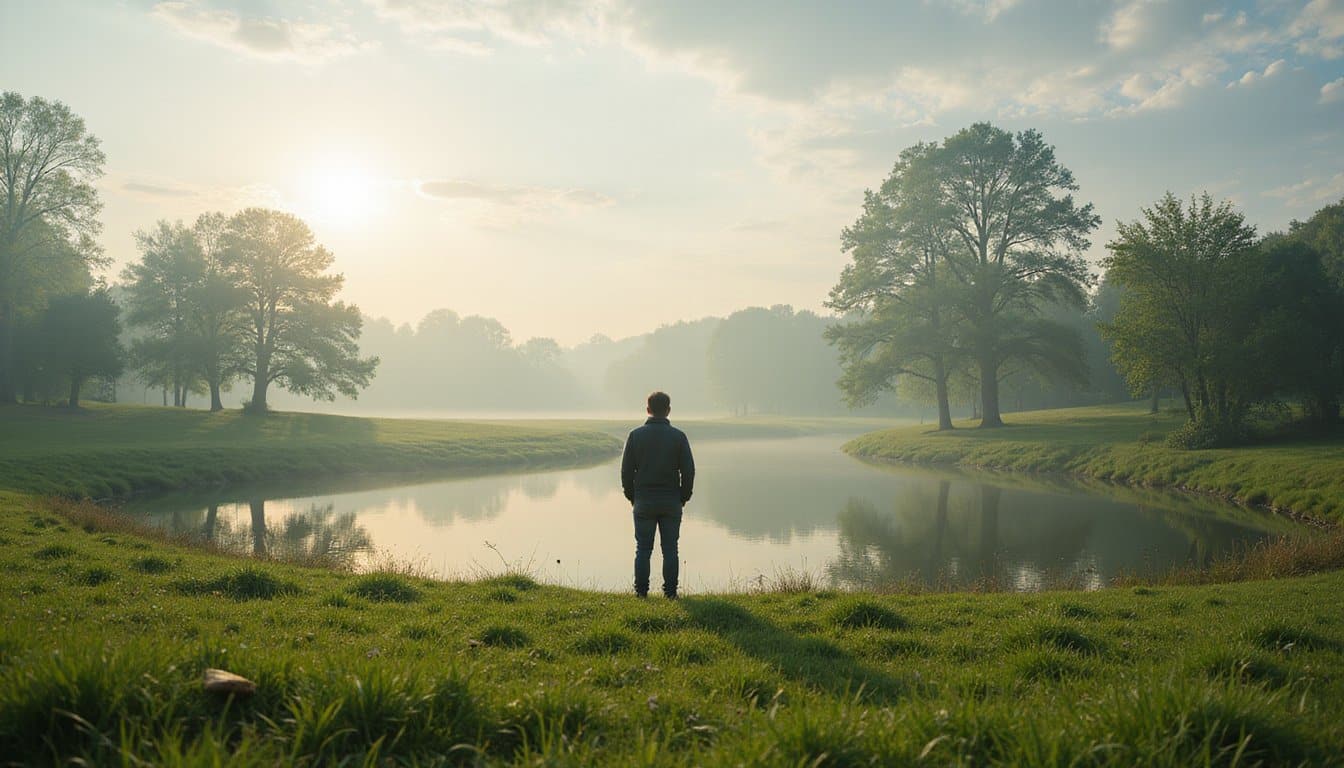
When acute stress strikes, your sympathetic nervous system (SNS) activates within milliseconds, triggering a cascade of physiological changes that prepare you for immediate action. Your amygdala heightens threat detection while your prefrontal cortex attempts to modulate autonomic balance. Chronic SNS dominance reduces this frontal regulation, elevating baseline arousal and diminishing emotional resilience.
Natural environments shift this pattern by activating your parasympathetic nervous system (PNS). Brain region dynamics show decreased subgenual prefrontal cortex activity, reducing rumination, while your pregenual anterior cingulate cortex dampens amygdala reactivity. Brainstem nuclei, the nucleus tractus solitarii and nucleus ambiguus, enhance vagal output, increasing heart rate variability. These cortisol immune interactions facilitate faster hormonal recalibration, enabling efficient stress recovery through measurable autonomic flexibility. This physiological advantage emerges specifically during the recovery period, when parasympathetic activity remains significantly elevated following exposure to natural scenes compared to built environments. Research demonstrates that 71% of individuals exhibit this physiological adjustment effect, where their autonomic nervous system values shift toward optimal levels after nature exposure.
Immediate Physiological Changes: What Happens in the First Minutes
Within minutes of entering a natural environment, your autonomic nervous system initiates a measurable shift from sympathetic dominance to parasympathetic activation, triggering an immediate cascade of restorative changes. Your heart rate and blood pressure begin to decline as catecholamine output ceases and vasoconstriction reverses, redirecting blood flow from skeletal muscles to visceral organs. Simultaneously, your HPA axis activity diminishes, halting cortisol release and enabling the restoration of immune and digestive functions suppressed during the stress response. The parasympathetic nervous system acts as a brake on stress, counteracting the sympathetic system’s earlier acceleration of physiological arousal. This recovery occurs as an involuntary reaction to the natural visual and sensory information your body processes, requiring no conscious effort or intention on your part. These physiological changes work in tandem with psychological recovery, which involves a positive shift in your emotional state as the stress response subsides.
Nervous System Activation Shift
What triggers the cascade of physiological changes that marks the shift from stress to recovery? Your autonomic nervous system executes a rapid switch from sympathetic (SNS) to parasympathetic (PNS) dominance. Within minutes of stressor removal, your SNS activity downregulates, reducing norepinephrine and epinephrine release. Simultaneously, PNS activation increases, restoring vagally mediated heart rate variability (vmHRV) to baseline or higher levels. This shift represents autonomic rebalancing, your locus coeruleus slows its arousal output, sensory sharpening diminishes, and hypervigilance dissolves. The parasympathetic state reallocates resources toward digestion, immune function, and calm alertness. Nature exposure accelerates this movement compared to urban environments. As PNS dominance establishes, you’ll experience improved emotional regulation and restored cognitive performance, marking successful autonomic recovery from acute stress. The speed of vmHRV restoration varies between individuals, with fast restoration of resting levels indicating more adaptive physiological recovery from stressful events.
Cardiovascular and Hormonal Response
Your cardiovascular system responds instantaneously to stress perception, triggering a cascade of hemodynamic changes that redirect physiological resources in the direction of immediate survival. Within seconds, your heart rate accelerates and blood pressure augments through vasoconstriction and increased cardiac output. Blood flow shifts preferentially toward skeletal muscles while digestive organs receive reduced perfusion, a hallmark of fight-or-flight activation. Your pupils dilate during this response, enhancing visual perception to better detect threats in your environment.
Simultaneously, your sympathetic-adrenal-medullary system releases catecholamines (epinephrine and norepinephrine), sharpening alertness and decision-making capacity. The hypothalamic-pituitary-adrenal axis follows with cortisol secretion, sustaining energy mobilization for survival through blood sugar modulation, glycogenolysis releases glucose while insulin suppression maintains elevated circulating levels. Fatty acids enter circulation, providing supplementary metabolic fuel. These coordinated cardiovascular and hormonal responses peak within minutes, then gradually decline as parasympathetic mechanisms restore homeostatic baseline after stressor removal.
Emotional and Psychological Shifts During Nature Exposure

When you enter a natural environment, your negative emotional states, depression, anxiety, tension, and anger begin to diminish within minutes, as measured by standardized psychological scales like the Profile of Mood States (POMS). Simultaneously, you’ll experience a measurable increase in positive affect, including heightened vigor and energy levels that contrast sharply with the fatigue common in built environments. This rapid emotional shift occurs through your innate affinity for natural settings, triggering immediate reductions in stress markers while activating psychological restoration pathways that urban environments fail to provide. Forest bathing practices have demonstrated these effects particularly well, with participants reporting significant reductions in hostility and depressive feelings after exposure to forest environments. These psychological benefits manifest through enhanced parasympathetic activation, which supports your body’s natural recovery processes following acute stress exposure. The restorative impact varies depending on spatial naturalness and composition, with different plant communities producing distinctive levels of psychological restoration.
Negative Emotions Fade Quickly
One of nature’s most rapid therapeutic effects involves the swift dissolution of negative emotional states. When you’re exposed to natural environments, you’ll experience measurable decreases in depression, anxiety, confusion, and fatigue within just 10, 15 minutes. This occurs through parasympathetic nervous system activation, which dampens your stress response while promoting restoration of calm.
Your emotional recovery manifests through:
- Reduced cortisol levels and lowered heart rate, indicating decreased physiological stress
- Improved POMS and STAI scores, reflecting diminished negative mood and anxiety states
- Enhanced attention restoration, reducing mental fatigue while supporting improved emotional resilience
These changes aren’t merely subjective; they’re confirmed through physiological markers including heart rate variability, blood pressure, and muscle tension measurements. Nature exposure particularly enhances stress recovery by increasing parasympathetic activation while reducing sympathetic nervous system activity during the recovery period following acute stressors. Even virtual nature exposure produces comparable stress-reducing effects, demonstrating nature’s consistent therapeutic impact.
Positive Affect Rises Naturally
Beyond the rapid dissipation of stress and negative emotions, nature exposure triggers measurable increases in positive affect, a shift documented through meta-analytic evidence showing a standardized mean difference of 0.61 (95% CI 0.41, 0.81). You’ll experience elevated heightened enjoyment, energy, and psychological well-being compared to built environments. This occurs through multiple pathways: cortisol reduction, parasympathetic nervous system activation, and altered brain activity in regions governing emotion regulation. Cognitive performance improves simultaneously, with working memory showing marked gains. You’ll notice enhanced increased creativity and calmness during exposure, while connectedness to nature correlates directly with increased life satisfaction. These effects manifest after both passive viewing and active engagement, with even brief exposures producing immediate emotional shifts. The physiological mechanism involves decreased heart rate and muscle tension, creating conditions for sustained positive affect. Research demonstrates that 120 minutes weekly in natural environments can significantly improve overall health and well-being across all demographics. Reflecting on nature can foster appreciation and positive emotions that extend beyond the immediate exposure period.
The Role of Evolution in Stress Recovery Through Natural Environments
- Physiological markers (cortisol, blood pressure, heart rate) decrease measurably when you’re exposed to natural versus urban scenes
- Cognitive restoration occurs through effortless fascination with natural cues, reducing mental fatigue
- Emotional states move in the direction of positive affect, facilitating resource acquisition behaviors
- Parasympathetic nervous system activation is triggered immediately upon viewing natural stimuli, initiating the body’s relaxation response
- Non-green natural environments like deserts can produce significant stress reduction effects, suggesting factors beyond traditional green-space theories contribute to nature’s health benefits
These unlearned responses emerged because natural environments provided critical survival cues, safety, nourishment, and refuge, creating directional selection for stress-recovery mechanisms.
From Allostatic Load to Homeostasis: Understanding Chronic Stress Relief

While evolutionary adaptations prime your body to recover from acute threats in natural settings, modern life subjects you to a fundamentally different challenge: unrelenting stress that persists far beyond any single encounter. This chronic activation creates allostatic load, cumulative physiological damage from dysregulated cortisol, adrenaline, and inflammatory mediators. When stress responses fail to terminate, your HPA axis remains overactive, driving cardiovascular disease, metabolic dysfunction, and structural brain changes in the hippocampus and prefrontal cortex.
Recovery targets homeostasis: restoring baseline function through normalized blood pressure, heart rate variability, and neuroendocrine rhythms. Biochemical markers of recovery include cortisol normalization and reduced inflammatory cytokines, while neurological signatures of resilience manifest as dendritic regeneration and synaptic plasticity. Evidence-based interventions, mindfulness, exposure to natural environments, and autonomic regulation techniques facilitate this shift from pathological overload to adaptive stability.
Measurable Outcomes: Tracking Recovery Across Body Systems
Recovery isn’t abstract, it leaves quantifiable signatures across every major physiological system, and measuring these markers transforms subjective feelings of relief into objective diagnostic data. You’ll observe cardiovascular shifts through HRV increases (RMSSD values), blood pressure reductions, and decreased heart rate. Your autonomic nervous system shows recovery via declining electrodermal activity (microsiemens) and reduced EMG readings. Respiratory rate drops markedly (p = 0.00), indicating parasympathetic dominance.
Key diagnostic indicators include:
- Cortisol decline reflecting lowered HPA axis activation and endocrine rhythms normalization
- Immune modulation through reduced inflammatory markers like CRP
- Psychological restoration measured via Perceived Restorativeness Scale scores and validated mood assessments
These biomarkers, tracked through wearables and lab protocols, provide statistical validation (p < 0.05) that your body’s shifting from allostatic load back to homeostatic balance.
Applying Stress Recovery Theory in Daily Life and Design
In workspaces, integrate potted plants, aquariums, or nature views to buffer job stress and bolster cognitive performance. Walking meetings in green areas amplify attention and productivity. Biophilic urban planning extends these principles community-wide: pocket parks, greenways, and school playground greening function as preventive public health interventions, particularly addressing environmental justice by expanding restorative access in disadvantaged neighborhoods.
Frequently Asked Questions
Can Artificial Nature Images or Sounds Provide the Same Stress Recovery Benefits?
You’ll experience genuine stress reduction efficacy from artificial nature images and sounds, though they’re slightly less potent than direct outdoor exposure. Nature stimuli replication through immersive formats, VR environments, 360° videos with audio, triggers measurable parasympathetic activation, lowering your cortisol and heart rate. You’ll gain maximum benefits when you use multisensory, high-immersion content rather than static images alone. The physiological markers confirm real stress recovery, but effectiveness depends on exposure duration and stimulus variation.
How Does SRT Apply to People Who Grew up in Urban Environments?
If you grew up in urban environments, you’ll still benefit from SRT, though your response may differ from nature-oriented individuals. Your prior exposure shapes restorative experiences; limited childhood nature contact can reduce recovery magnitude. However, neighborhood green space availability directly predicts your stress reduction outcomes regardless of background. Urban life challenges like noise pollution and poor access create disparities; you’ll experience fewer restorative benefits without nearby quality green spaces, elevating your baseline stress levels compared to residents with proximate natural areas.
What Is the Minimum Effective Dose of Nature Exposure for Recovery?
You’ll achieve measurable stress recovery with just 10, 20 minutes of nature engagement duration, though perceived restorativeness increases significantly at 20, 30 minutes when cortisol and alpha-amylase markers show peak reduction. Your physiological systems respond differently across exposure lengths: 10 minutes lowers acute stress, while 30+ minutes triggers dose-response benefits for depression and hypertension. You’ll optimize efficiency by accumulating 120 weekly minutes through brief, frequent sessions rather than single extended exposures.
Does Weather or Season Affect Stress Recovery Outcomes in Natural Settings?
Yes, seasonal variations and weather patterns substantially affect your stress recovery outcomes in natural settings. You’ll experience stronger physiological benefits during spring and summer when vegetation is lush and conditions are comfortable. Adverse weather, rain, extreme temperatures, or limited sunlight, can diminish restorative effects by reducing exposure duration and comfort. However, most studies don’t control for these variables, creating heterogeneity in outcomes. You should consider ideal weather conditions when planning nature-based stress recovery interventions for maximum effectiveness.
Can Indoor Plants Replicate the Physiological Benefits of Outdoor Nature Exposure?
Indoor plants can’t fully replicate outdoor nature’s physiological benefits, though they’ll deliver measurable stress reduction. You’ll experience lower diastolic blood pressure (−2.5 mmHg) and reduced cortisol, but outdoor exposure consistently produces stronger autonomic nervous system recovery. Plant photosynthesis and natural lighting conditions outdoors create synergistic effects you won’t achieve indoors. However, when you’re denied outdoor access, indoor plants serve as an effective adjunct intervention, providing partial replication of nature’s restorative physiological response through parasympathetic activation.