
In 2025, you’ll encounter nitrous oxide patient education through advanced digital platforms and strict safety protocols. Your healthcare provider will use interactive tools, virtual simulations, and real-time monitoring to guarantee your understanding of both medical benefits and risks. You’ll receive thorough screening, personalized digital resources, and clear documentation of informed consent. Modern patient education emphasizes the distinction between clinical applications and recreational misuse dangers. This evolving approach integrates multiple safeguards to shield your wellbeing.
Understanding Medical vs. Recreational Applications

While nitrous oxide serves essential medical purposes in clinical settings, its growing recreational misuse presents a stark contrast in applications and risks. You’ll find legitimate uses primarily in surgical procedures, dental operations, and pain management, where trained professionals carefully control dosage and administration. Emergency medical services increasingly rely on portable nitrous oxide systems for field applications. The medical gas achieves pain relief through its ability to deliver fast and efficient analgesia. The mid-1800s history shows nitrous oxide’s longstanding safety record in professional medical settings. These medical applications offer proven benefits with minimal side effects when properly monitored.
However, you need to understand that recreational use, often driven by social media trends, carries serious health risks including neurological damage and vitamin B12 deficiencies. Through community education programs and recreational stigma reduction efforts, healthcare providers are working to help patients distinguish between safe medical uses and dangerous recreational experimentation. The market’s growth to $2.37 billion by 2025 reflects its expanding medical value, while simultaneously highlighting the need for stronger recreational use prevention.
Key Safety Protocols for Patient Protection
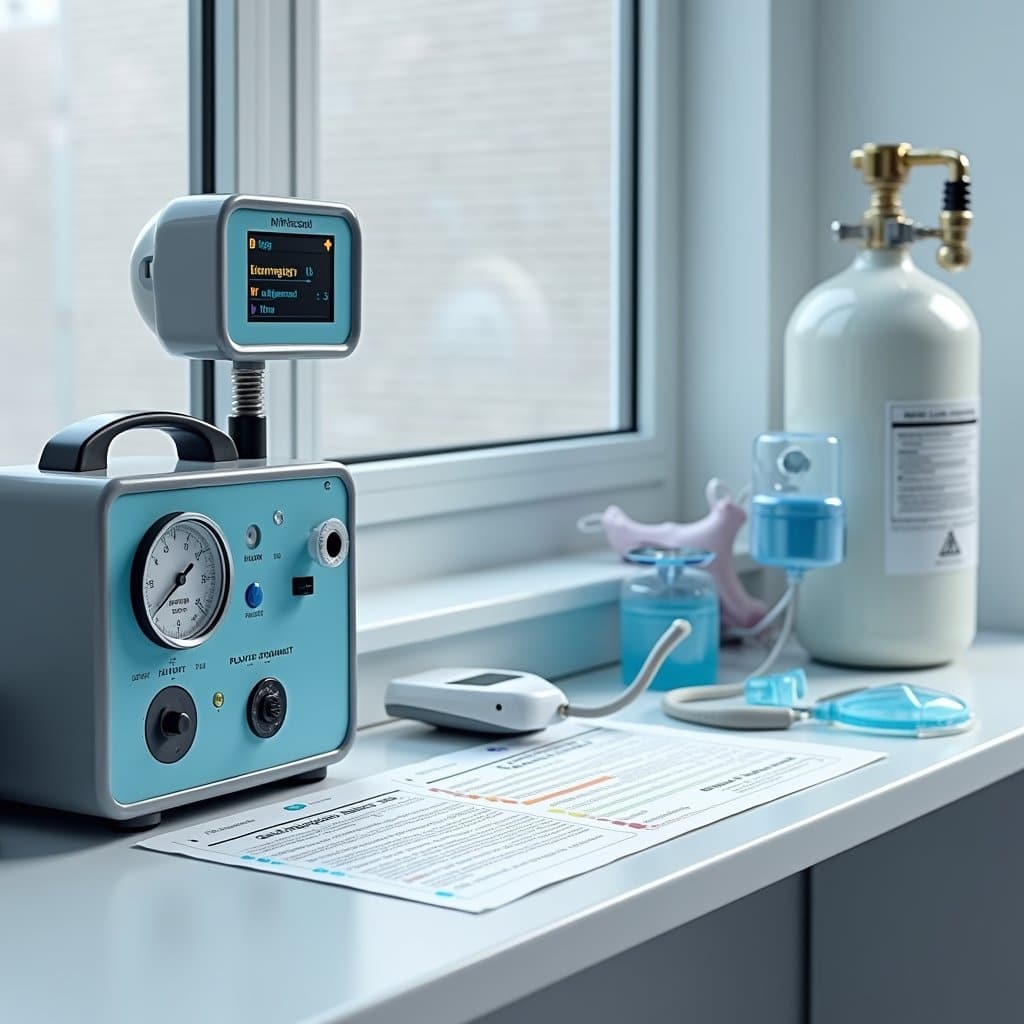
Pre-procedure safety screening guarantees you’ll undergo thorough evaluation for risk factors like cobalamin deficiency and neurological conditions before receiving nitrous oxide sedation.
Your safety during administration depends on rigorous equipment monitoring standards, including continuous checks of oxygen concentration, pressure gauges, and flowmeters. Modern delivery systems are designed with maximum nitrous limits of 70% to ensure patient safety. Staff use specialized gas detection monitors to maintain nitrous oxide levels within safe occupational limits. Modern facilities increasingly rely on regional techniques as an environmentally conscious alternative to nitrous oxide sedation.
In the event of complications, established emergency response protocols guide healthcare providers through immediate interventions, including post-procedure oxygenation and adverse effect documentation.
Pre-Procedure Safety Screening
Before administering nitrous oxide sedation, thorough safety screening protocols must be implemented to safeguard patients from potential adverse effects. Your electronic patient history must undergo extensive review, with particular focus on comorbidity identification that could increase risks during sedation.
- You’ll need to be at least 3 years old due to respiratory and developmental considerations
- Your medical history will be evaluated for neurological disorders, vitamin B12 deficiency, and chronic respiratory conditions
- Previous nitrous oxide exposure must be documented to assess neurotoxicity risks
- If you’re of child-bearing age, pregnancy status will be verified due to potential fetal risks
- Your diet and medical history will be screened for cobalamin deficiency, especially if you follow a vegan diet or have pernicious anemia
These screenings guarantee safe administration and minimize potential complications during your procedure.
Equipment Monitoring Standards
Following patient screening, rigorous equipment monitoring standards protect your safety during nitrous oxide administration. Medical facilities maintain strict sensor recalibration protocols to guarantee accurate gas measurements, with NDIR and IR sensors requiring quarterly to annual testing based on manufacturer specifications. Given its historical role in medical anesthesia, nitrous oxide requires careful dosage control through calibrated delivery systems. Dental auxiliary staff must complete thorough training to assist with monitoring equipment and patient vital signs. Proper understanding of safety protocols requires completion of comprehensive modules prior to hands-on clinical work.
Your treatment room’s monitoring system includes multiple safeguards: flow meters verify proper oxygen/nitrous oxide ratios (21-50% N2O), while pressure sensors detect line issues instantly. Digital displays provide real-time gas concentration data, and ambient interference mitigation prevents false readings from CO2 or other gases. The scavenging system captures >99.9% of exhaled gases, maintaining room concentrations below NIOSH limits of 25 ppm. Audio-visual alarms and emergency shutoffs activate immediately if any parameters fall outside safe ranges, securing your protection throughout the procedure.
Emergency Response Protocols
While receiving nitrous oxide sedation, your safety depends on thorough emergency response protocols that activate instantly if complications arise. Healthcare facilities maintain strict gas concentration monitoring systems and conduct environmental impact assessments to safeguard your protection. The program’s NHS England support ensures standardized safety protocols across healthcare facilities. Staff members undergo mandatory training in emergency procedures and coordinate closely with local authorities to handle any incidents effectively.
- Immediate oxygen therapy administration if you experience any adverse reactions
- Rapid ventilation systems activation to control gas levels in treatment areas
- Continuous vital signs monitoring with instant alert mechanisms
- Quick-response isolation protocols to prevent exposure spread
- Inclusive decontamination procedures following any incidents
These protocols integrate with broader safety systems, guaranteeing you’re protected by multiple layers of emergency preparedness. Your healthcare team maintains constant readiness through regular drills and scenario-based training, ensuring swift response to any complications.
Modern Training Requirements for Healthcare Providers

Modern healthcare providers now complete their nitrous oxide training through integrated hybrid programs that combine online modules with hands-on clinical practice. You’ll find these programs utilize advanced simulation technology and virtual case studies to guarantee competency in equipment operation, patient monitoring, and emergency response protocols. The comprehensive training includes pre-clinical coursework assignments that must be completed before any hands-on sessions. Training now incorporates light oral sedation protocols alongside nitrous oxide administration techniques.
Providers must understand how to administer proper gas and oxygen mixtures to ensure patients remain calm without being fully sedated. Your certification requirements include updated safety protocol training that specifically addresses fail-safe mechanisms, positive pressure respiration techniques, and real-time patient monitoring systems.
Hybrid Learning Takes Hold
Recent shifts in healthcare education have catalyzed a fundamental transformation in the direction of hybrid learning models, combining traditional in-person instruction with digital platforms. You’ll find evidence-based practices now integrated through blended approaches that optimize both clinical proficiency and technological competence. With ongoing learner support, you’re equipped to master nitrous oxide administration through personalized pathways that adapt to your specific needs. Healthcare providers must develop data analytics expertise to effectively interpret patient outcomes and trends.
Access real-time collaboration with specialists through telehealth platforms. Clinical decision-making skills are enhanced through immediate real-world application. Engage in asynchronous learning modules for flexible skill development. Practice hands-on scenarios combined with digital simulations. Utilize microlearning formats for quick procedural updates. Participate in cross-disciplinary training through virtual environments.
This integrated approach guarantees you’ll maintain continuous professional development while meeting evolving healthcare demands, particularly in specialized procedures like nitrous oxide administration.
Clinical Competency Through Technology
Building on the hybrid learning foundation, technological advancements have established new standards for clinical competency in nitrous oxide administration. You’ll find that digital certification tracking systems now verify your 12-hour training requirements while safeguarding equipment guarantees hands-on proficiency.
Cloud-based platforms integrate personalized patient engagement through interactive modules and video tutorials.
Modern competency assessment combines instructor-led video sessions with real-time monitoring tools, enhancing your ability to track critical signs and maintain precise nitrous/oxygen ratios. Digital checklists and automated flow controls support telehealth implementation, allowing remote expert consultation during complex cases.
Through e-records and digital logbooks, you’ll document patient histories and maintain ongoing certification validation, upholding compliance with evolving regulatory standards while maximizing clinical efficiency.
Safety Protocol Certification Updates
While healthcare providers adapt to evolving sedation practices, detailed safety protocol certification now requires structured 12-hour training programs that integrate multi-modal learning approaches. Improved auditing procedures guarantee you’ll maintain QUAD A compliance across facility classification oversight levels, including B/CM/C standards. You’ll need to complete thorough training by November 14, 2025, covering exposure monitoring, emergency response, and documentation protocols.
- Real-time air quality monitoring systems enforce 25 ppm TWA exposure thresholds
- Clinical competency verification through supervised administration of three cases
- Integration of fail-safe equipment and positive-pressure delivery devices
- Implementation of waste management protocols for canisters and tanks
- Documentation of patient eligibility and adverse event reporting systems
These requirements align with OSHA guidelines while ensuring ideal patient safety and regulatory compliance.
Essential Patient Communication Guidelines
Three fundamental principles guide effective patient communication regarding nitrous oxide sedation: transparency, comprehension verification, and individualized risk assessment.
You’ll need to prioritize empowerment through transparency by explicitly discussing benefits, risks, and alternatives with each patient. This includes clarifying misconceptions about “laughing gas” and differentiating medical use from recreational abuse. Your liability mitigation strategies must encompass detailed documentation of patient understanding and written consent.
Verify comprehension by requiring patients to demonstrate knowledge of pre-procedure protocols, expected sensations, and post-treatment guidelines. Conduct thorough assessments of medical histories, focusing on contraindications like respiratory issues or B12 deficiency. Remember to emphasize the temporariness of side effects and the importance of medical supervision throughout the process.
Technological Advances in Administration
Modern nitrous oxide administration has evolved through significant technological breakthroughs, transforming traditional sedation methods into sophisticated digital systems. You’ll find smart alarm systems monitoring your critical signs in real-time, while gas flow optimization guarantees precise control of N2O/O2 ratios. These advances prioritize both security and efficiency in your sedation experience.
Portable units now enable treatment in different settings, including mobile clinics. Digital integration automatically documents your sedation parameters and connects to health records. Advanced scavenging systems minimize environmental impact and staff exposure. Real-time monitoring equipment provides immediate alerts if adjustments are needed. Cloud-based platforms allow practitioners to track your sedation data remotely.
These technological improvements boost safety protocols while streamlining the documentation process, ensuring you receive optimal care under controlled conditions.
Risk Management and Informed Consent
Understanding your rights and risks with nitrous oxide sedation requires careful attention to legal and medical safeguards. You’ll need to review and sign detailed consent forms that outline specific benefits and potential complications, including risks of respiratory depression and vitamin B12 deficiency.
Informed consent for nitrous oxide sedation protects patients through documented risks, benefits, and potential medical complications requiring careful review.
Current utilization metrics show providers must document your complete medical history, particularly focusing on chronic conditions and substance use patterns.
Regulatory oversight mandates that you’re informed of alternative sedation alternatives if nitrous oxide is contraindicated for your situation. If you’re in a special population group – pregnant, elderly, or pediatric – you’ll face additional screening protocols.
Your provider must verify your understanding of post-procedure care requirements and maintain detailed records of your informed consent process, including any discussed contraindications or special monitoring needs.
Digital Learning and Remote Education Tools
Digital platforms have transformed how patients learn about nitrous oxide sedation, building upon traditional informed consent processes with interactive tools and personalized learning experiences. With sturdy patient privacy safeguards in place, you’ll access multimedia resources through secure portals that integrate seamlessly with existing healthcare systems. On-site installation assistance guarantees your practice can effectively implement these digital tools while maintaining compliance standards.
- AI-powered learning modules adapt to your comprehension level and risk profile
- Virtual reality simulations demonstrate procedures before your appointment
- Multi-language support automatically translates content to your preferred language
- Real-time chat features connect you with healthcare educators
- Mobile apps deliver personalized notifications and educational reminders
The platform tracks your progress through educational milestones while enabling secure communication with your care team through encrypted channels.
Regulatory Compliance and Best Practices
Strict regulatory oversight governs nitrous oxide administration in medical and dental settings. You’ll need to follow FDA warnings that prohibit recreational use while adhering to state-specific regulations for proper administration. The regulatory oversight requirements emphasize that only licensed professionals can supervise usage, with patients maintaining control of their masks during procedures.
Interdisciplinary collaboration between dentists and hygienists requires clear protocols, especially in states like Pennsylvania where hygienists can monitor administration under dental supervision. You must implement fail-safe systems that maintain minimum oxygen concentrations and establish thorough adverse event reporting procedures. Your facility’s compliance depends on proper staff training, including 12-hour certification courses and regular competency assessments. Remember to document all patient screenings, informed consent, and equipment maintenance according to current guidelines.
Therapeutic Applications and Treatment Planning
Beyond regulatory compliance, nitrous oxide offers diverse therapeutic applications across medical specialties. As therapeutic indication expansion continues, you’ll find this versatile agent being used for depression treatment, pain management, and procedural sedation. Patient selection parameters now extend beyond traditional dental applications to include treatment-resistant depression and acute pain scenarios.
You’ll experience rapid onset and offset due to low blood solubility, making it suitable for short procedures. Your spontaneous breathing remains intact, reducing the need for intensive monitoring. You’ll maintain the ability to respond to commands while experiencing analgesic effects. Your depression symptoms may improve within hours if you’re treatment-resistant. You can receive N₂O in combination with oxygen (typically 50:50) for ideal safety.
These evidence-based applications demonstrate N₂O’s evolving role in modern medical practice, particularly when conventional treatments prove insufficient.
Monitoring Systems and Quality Control
Modern monitoring systems form the cornerstone of safe nitrous oxide administration, integrating real-time detection capabilities with automated quality control measures. You’ll encounter sophisticated infrared sensors and dual-gas monitoring systems that continuously track N2O concentrations while interfacing with electronic health records for seamless documentation.
Today’s facilities prioritize environmental impact tracking and post-procedure waste management to minimize greenhouse gas emissions. You’ll find that automated alert systems instantly notify staff when gas levels exceed predetermined thresholds, while remote monitoring capabilities enable simultaneous oversight of multiple treatment areas.
These systems operate under strict OSHA-mandated exposure limits and require regular calibration to guarantee accuracy. Staff undergo rigorous certification programs and hands-on training to verify proper operation of monitoring equipment and swift response to any safety alerts.
Frequently Asked Questions
How Does Nitrous Oxide Affect Different Age Groups Differently?
Your physiological responses to nitrous oxide vary markedly by age. Children show rapid onset with pronounced behavioral changes like smiling and muscle relaxation.
Adolescents experience more intense euphoric effects and face higher addiction risks.
Adults typically require standard age-associated dosage protocols, showing moderate sedation responses.
Elderly patients often demonstrate decreased sensitivity, requiring dosage adjustments, but generally maintain better cognitive function during administration compared to younger groups.
Can Nitrous Oxide Interfere With Prescription Medications I’m Currently Taking?
You should tell your healthcare provider about all medications you’re taking, as nitrous oxide can have significant drug interactions. There are over 90 known interactions, including 27 major ones.
It’s particularly crucial to mention if you’re taking CNS depressants (like benzodiazepines or opioids), riociguat, or prilocaine. For nitrous oxide safety, your provider may need to adjust medication dosages or choose alternative treatments based on your current prescriptions.
What Are the Environmental Impacts of Medical Nitrous Oxide Use?
Medical nitrous oxide markedly impacts your ecological footprint. As a potent greenhouse gas emission source, it remains in the atmosphere for about 120 years and contributes 6% of U.S. greenhouse gases.
Hospital systems often lose up to 67% of purchased N₂O through leakage and inefficient storage. It’s also currently the most substantial ozone-depleting substance, which threatens the ozone layer’s recovery and increases UV radiation exposure risks for everyone.
How Long Should I Wait Between Multiple Nitrous Oxide Treatment Sessions?
You should wait at least 24 hours between nitrous oxide treatment sessions to follow proper dosing guidelines and minimize potential side effects.
For patients with vitamin B12 deficiency or neurological conditions, you’ll need longer intervals of 48-72 hours. Your healthcare provider will assess your specific health status, cumulative exposure levels, and any pre-existing conditions to determine a safe treatment frequency that maintains exposure within NIOSH-recommended limits.
Does Insurance Typically Cover Nitrous Oxide Sedation for Dental Procedures?
Your insurance coverage for nitrous oxide sedation varies extensively by plan and provider availability. Basic dental plans often limit payment coverage to medical necessity cases, while ample plans may offer wider coverage.
You’ll typically need documentation of anxiety or medical need, and many insurers require prior authorization. Check with your insurance provider and dentist about specific coverage terms, as you’ll likely have some out-of-pocket costs regardless.