
Safe cocaine detox should always be medically supervised, as withdrawal can cause severe depression, suicidal thoughts, and intense cravings. You’ll experience a crash within hours of your last use, with symptoms peaking at days 3-5. Medical professionals will monitor your essential signs, provide appropriate medications for symptom management, and support your mental health. Proper nutrition, hydration, and building a strong support network are important components. The following thorough guide offers everything you need for a successful recovery path.
Understanding the Dangers of Cocaine Withdrawal

While many believe cocaine withdrawal isn’t physically dangerous like alcohol or benzodiazepine withdrawal, it still presents serious health risks that shouldn’t be underestimated.
When you stop using cocaine after developing cocaine addiction, your brain chemistry undergoes significant changes that can trigger intense psychological symptoms.
Withdrawal effects often include severe depression, suicidal thoughts, extreme fatigue, increased appetite, disturbed sleep patterns, and intense drug cravings. The psychological distress can be overwhelming, leading some people to relapse or engage in risky behaviors.
Cocaine withdrawal’s psychological toll can drive desperate actions, with depression and cravings pushing users to dangerous breaking points.
Furthermore, cardiac complications can arise during withdrawal, particularly if you’ve experienced cocaine-induced cardiovascular damage. The crash phase typically begins within hours of your last dose and may peak within 2-3 days, though cravings and mood disturbances can persist for weeks.
Medically-Supervised Detox: The Safest Approach
Although cocaine withdrawal rarely causes life-threatening physical symptoms, seeking professional medical supervision during detox remains the safest and most effective approach.
Medical professionals can monitor your essential signs, manage psychological symptoms like depression and suicidal thoughts, and intervene if complications arise.
Specialized detox facilities offer structured environments where you’re removed from triggers and access to cocaine. They provide 24/7 support during the most intense withdrawal period, typically lasting 7-10 days.
These settings allow clinicians to administer medications that ease discomfort and reduce cravings when appropriate.
The psychological aspects of cocaine withdrawal often prove more challenging than physical symptoms.
In medically-supervised settings, you’ll receive immediate support for anxiety, paranoia, and mood disturbances that might otherwise lead to relapse or self-harm.
Timeline of Cocaine Withdrawal Symptoms
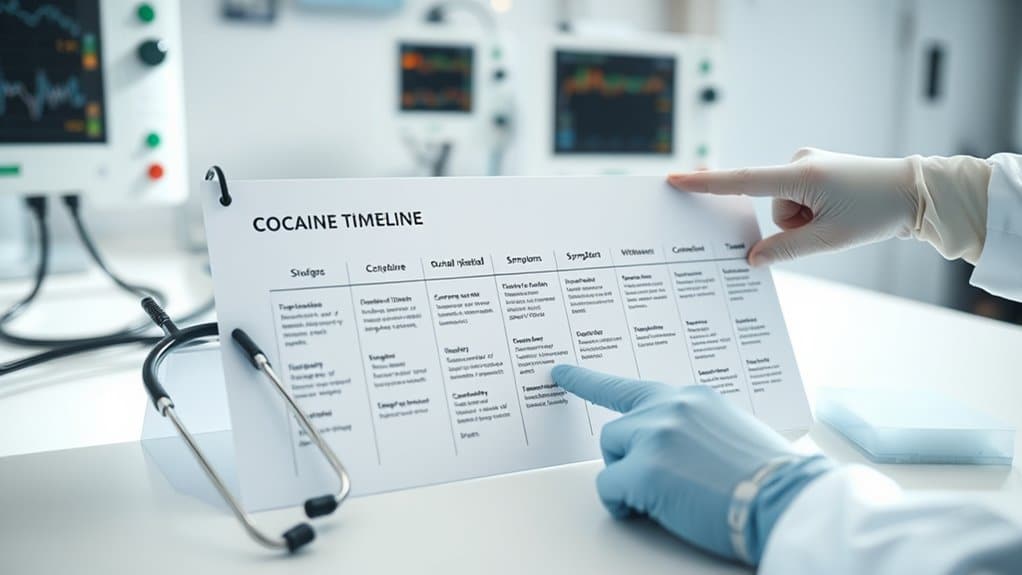
As you begin cocaine withdrawal, you’ll experience three distinct phases with predictable symptom patterns.
The acute phase typically begins within hours of your last use and peaks around days 2-3, with intense cravings, fatigue, and mood disturbances that gradually diminish over the initial week.
Your recovery path continues through post-acute withdrawal, where symptoms become more manageable, and you’ll reach crucial milestones such as improved sleep at 1-2 weeks, stabilized mood around 4 weeks, and markedly reduced cravings after 90 days of abstinence.
Acute Withdrawal Phase
Once cocaine leaves your system, the acute withdrawal phase typically begins within hours of your last use. This phase usually lasts 1-2 weeks and presents the most intense physical and psychological symptoms.
You’ll likely experience acute withdrawal symptoms including extreme fatigue, increased appetite, restlessness, and disturbed sleep patterns.
Emotional instability becomes particularly challenging during this period. You may cycle through depression, anxiety, irritability, and intense cravings for cocaine. These mood fluctuations often peak between days 3-5.
Your brain is actively working to restore normal dopamine function, which explains the emotional volatility.
Without medical supervision, this phase can be dangerous if you have underlying health conditions or severe dependency.
A structured detox program can provide medications to manage symptoms and reduce complication risks.
Post-Acute Symptom Management
While the acute phase subsides after approximately two weeks, you’ll enter what addiction specialists call the post-acute withdrawal syndrome (PAWS) period, which can persist for several months.
During this time, you may experience intermittent post-acute symptoms including depression, anxiety, sleep disturbances, and intense cravings triggered by environmental cues.
Effective management strategies include:
- Maintaining regular therapy appointments
- Participating in support groups
- Practicing stress-reduction techniques like meditation
- Following a structured sleep schedule
- Engaging in regular physical exercise
Emotional support becomes essential during this phase.
Connect with understanding friends and family or join cocaine-specific recovery communities.
Many find that cognitive behavioral therapy helps address underlying thought patterns that trigger cravings.
Keep in mind that these symptoms gradually diminish in frequency and intensity as your brain chemistry continues to normalize.
Recovery Milestone Timeline
Understanding the expected progression of your recovery path helps establish realistic expectations and reinforces your commitment to healing.
During the initial 24-72 hours, you’ll experience the most intense physical withdrawal symptoms. By days 4-7, physical symptoms typically diminish while psychological cravings intensify.
Weeks 2-4 mark a critical stabilization period when joining a support group becomes essential for emotional regulation.
At 1-3 months, your brain chemistry begins normalizing, though vulnerability to triggers remains high.
The 3-6 month recovery milestone often brings significant cognitive improvements and reduced cravings.
By 6-12 months, many experience substantial neural recovery and developed coping strategies.
Keep in mind that this timeline varies individually, your path may include both rapid progress and temporary setbacks, all similarly valid parts of healing.
Medication Options to Manage Detox Symptoms

While managing cocaine withdrawal, your doctor may prescribe medications like modafinil or disulfiram to reduce cravings and prevent relapse.
For specific symptoms, you’ll likely receive targeted treatments such as antidepressants for mood disturbances, sleep aids for insomnia, or anti-anxiety medications for psychological distress.
Your essential signs and medication responses require consistent monitoring by healthcare professionals throughout detox to guarantee safety and adjust treatment as needed.
Anti-Craving Prescriptions
How can medications effectively reduce the intense cravings that make cocaine detox so challenging? While no FDA-approved medications exist specifically for cocaine addiction, several prescription options have shown promise in clinical studies for managing cravings.
| Medication | Benefits for Cocaine Detox |
|---|---|
| Modafinil | Reduces dopamine fluctuations, minimizing cravings |
| Disulfiram | Creates aversive response, decreases usage patterns |
| Topiramate | Stabilizes glutamate activity, reducing euphoric associations |
| Baclofen | Addresses GABA deficiencies linked to withdrawal |
| Naltrexone | Blocks reward pathways, potentially reducing use impulses |
These anti-craving techniques vary in medication effectiveness depending on your unique neurochemistry. Your doctor should evaluate your medical history, concurrent conditions, and usage patterns to determine the most appropriate option. Keep in mind that medications work best as part of a thorough treatment approach that includes therapy and support.
Symptom-Specific Treatment Options
Beyond addressing cravings, an effective cocaine detox requires targeted medication strategies for the range of physical and psychological symptoms that emerge during withdrawal.
Your healthcare provider may prescribe antidepressants like SSRIs to manage depression and suicidal ideation, while benzodiazepines can temporarily alleviate anxiety and insomnia if carefully monitored.
For physical symptoms, you’ll benefit from individualized therapy that addresses specific discomforts, beta-blockers for cardiovascular issues, anti-nausea medications for gastrointestinal distress, and pain relievers for muscle aches.
Your doctor might recommend modafinil to combat extreme fatigue and nutritional supplements to restore neurotransmitter balance.
Effective symptom management isn’t one-size-fits-all; your treatment plan should adapt as your body progresses through detox, with medications adjusted based on your unique response and recovery timeline.
Medical Monitoring Requirements
Because cocaine detox affects multiple body systems simultaneously, thorough medical monitoring forms the cornerstone of safe withdrawal management.
You’ll need consistent evaluation of essential signs, including blood pressure, heart rate, temperature, and respiratory function every 4-6 hours during the acute phase.
Professional detox facilities provide 24-hour medical supervision with continuous cardiac monitoring for those with pre-existing conditions or severe withdrawal symptoms.
Your electrolyte levels, hydration status, and mental health will be regularly assessed, with appropriate interventions implemented immediately when necessary.
The intensity of monitoring typically decreases after 72 hours, though cardiovascular parameters require ongoing attention.
Keep in mind that professional medical supervision greatly reduces complications and provides immediate response to emergencies, making it the safest approach to cocaine withdrawal management.
Building Your Support System for Recovery Success
Why is social support considered a cornerstone of successful cocaine recovery? Research consistently shows that individuals with strong support networks have higher success rates and fewer relapses. Your support system provides emotional stability during the challenging detox process.
Social support isn’t just helpful, it’s essential for recovery, offering stability when the journey feels impossible.
Begin by identifying family members willing to participate in your recovery expedition. Consider therapy options like family counseling to repair relationships damaged by addiction.
Peer support through 12-step programs or specialized cocaine recovery groups offers understanding from those with similar experiences.
Establish accountability partners who’ll check in regularly and help you maintain sobriety commitments. Investigate community resources including outpatient programs and social services.
For further support, online forums provide 24/7 access to recovery communities when in-person options aren’t available.
Nutrition and Hydration During the Detox Process
While your body works to eliminate cocaine from its systems, proper nutrition and hydration become critical components of the recovery process. Your brain and body need specific nutrients to heal damaged neurotransmitter systems and restore energy levels.
| Nutrient | Function | Food Sources |
|---|---|---|
| Protein | Repairs tissue damage | Lean meats, beans, nuts |
| B Vitamins | Supports nervous system | Whole grains, eggs, leafy greens |
| Antioxidants | Reduces oxidative stress | Berries, colorful vegetables |
Focus on hydration strategies that include drinking 2-3 liters of water daily. Electrolyte-enhanced beverages can help restore balance, especially if you’re experiencing excessive sweating or gastrointestinal issues. Consider targeted nutritional supplements like omega-3s, multivitamins, and amino acid formulations, but always consult your healthcare provider before starting any supplement regimen.
Transitioning From Detox to Long-Term Treatment
Completing the detox process marks a notable milestone in your recovery path, but it represents just the beginning of effective cocaine addiction treatment.
As physical withdrawal symptoms subside, you’ll need to address the psychological aspects of addiction through structured aftercare.
Your treatment team will help develop a personalized plan that may include intensive outpatient programs, individual counseling, and group therapy options.
Personalized recovery requires tailored approaches, combining specialized programs with individual and collective healing opportunities.
Consider sober living arrangements which provide a supportive, substance-free environment while you build recovery skills.
These interim housing options offer accountability and community support critical during early recovery.
Research shows that longer engagement with treatment considerably improves outcomes.
Commit to at least 90 days of structured support, gradually moving to less intensive care as you develop coping strategies and rebuild your life without cocaine.
Frequently Asked Questions
Can I Safely Detox From Cocaine at Home?
While you can detox from cocaine at home, medical supervision is strongly recommended.
Cocaine withdrawal typically follows a timeline of intense cravings and fatigue in the initial days, followed by anxiety and irritability lasting 1-2 weeks.
Safe detox methods include staying hydrated, maintaining nutrition, and having support available.
Your symptoms aren’t usually life-threatening, but emotional distress and complications can occur.
Professional help guarantees you’ll have proper monitoring and support throughout the process.
How Much Does Professional Cocaine Detox Treatment Cost?
Professional cocaine detox treatment costs vary widely, ranging from $250-$800 per day for inpatient care and $100-$500 per session for outpatient treatment options.
Your insurance coverage may greatly reduce these expenses, as many plans now cover addiction services under essential health benefits. Contact your provider directly to verify your specific benefits.
Will My Employer Know I’m Seeking Cocaine Detox?
Your employer generally won’t know you’re seeking cocaine detox unless you tell them.
Healthcare providers must maintain detox confidentiality under HIPAA laws, which protect your medical information. If you use employer-provided insurance, only billing codes may appear on statements.
Consider using FMLA or general medical leave without specifying details. Employment privacy laws protect you from discrimination for seeking treatment.
Many treatment centers offer advice on maneuvering these concerns while maintaining your privacy.
Can I Use Cbd/Marijuana to Manage Cocaine Withdrawal Symptoms?
While some research suggests CBD benefits may include reducing anxiety or insomnia during withdrawal, there’s insufficient evidence specifically for cocaine withdrawal.
Marijuana effects could potentially worsen psychological symptoms or create dependency concerns.
You’re better off seeking medically-supervised detox where professionals can recommend evidence-based treatments for your specific symptoms.
Discuss all supplement or medication options with healthcare providers who understand your complete medical history and can safely guide your recovery path.
How Do I Explain My Detox Absence to Friends/Family?
When explaining your absence during detox, consider being selective but honest with trusted supporters. You might say you’re “taking time for health reasons” or “addressing personal wellness.”
Supporting friends can provide essential stability during recovery. Managing relationships during this time requires boundaries, share only what feels comfortable with those who demonstrate understanding.
Keep in mind that many people respect privacy around health matters, and those who truly care will focus on supporting your wellbeing rather than demanding details.