To properly adjust nitrous oxide concentrations, you’ll need to maintain levels below NIOSH’s 25 ppm TWA for 10-hour workdays while ensuring patient delivery doesn’t exceed 70% maximum concentration. You must calibrate infrared sensors and flow controllers regularly, implement real-time monitoring systems, and follow your facility’s compliance protocols. Your team should complete mandatory safety training and maintain proper documentation. The following sections detail essential protocols for ideal N₂O management and environmental impact reduction.
Safety Standards and Concentration Parameters
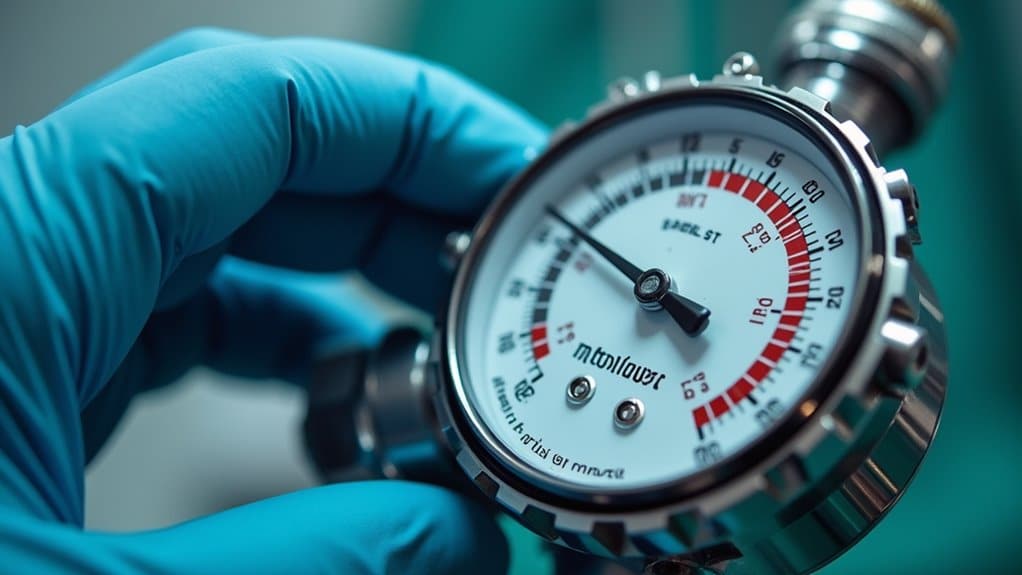
The extensive safety standards for nitrous oxide concentrations establish strict exposure thresholds across major regulatory bodies. You’ll need to comply with NIOSH’s recommended 25 ppm TWA for 10-hour workdays, while ACGIH sets a 50 ppm TWA for 8-hour shifts. Regulatory oversight varies internationally, with the UK and EU maintaining workplace exposure limits of 100 ppm. While standards help minimize risks, patient monitoring by healthcare professionals remains essential for safety.
Infrared sensors continuously monitor gas levels to ensure compliance with these crucial safety parameters. When implementing these standards, you should have your equipment meet FDA guidelines for medical gas use. You’ll find that portable systems offer better compliance with safety parameters compared to central piped systems. Portable supply systems have demonstrated successful implementation in major healthcare facilities.
To maintain proper regulatory oversight, you’ll need to conduct regular maintenance checks and verify that pin-index systems prevent incorrect gas connections. It’s critical that color-coded components and clear flowmeter displays are essential for preventing administration errors.
Equipment Calibration and Flow Rate Management
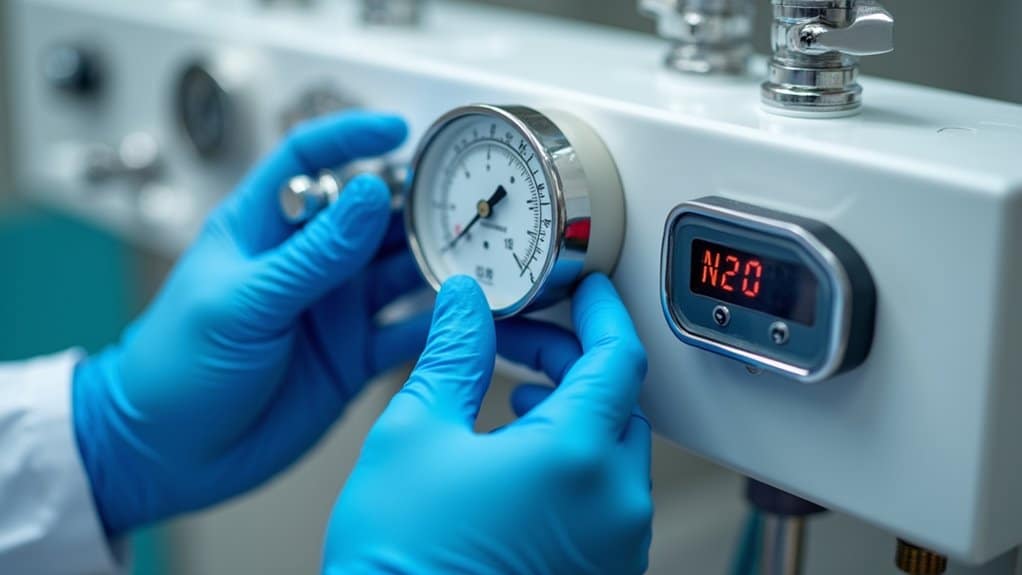
Building upon established safety standards, proper equipment calibration and flow rate management directly impact the accuracy of nitrous oxide delivery systems. You’ll need to implement sensor stability testing protocols while adhering to strict regulatory audit procedures. Regular compliance with CGMP regulations ensures all calibration processes meet FDA quality standards. The new streamlined certification process established under FDASIA helps manufacturers maintain compliant medical gas systems. A critical safety feature limits nitrous oxide to a maximum 70% concentration during delivery.
| Calibration Component | Action Required | Frequency |
|---|---|---|
| Infrared Sensors | Molecular Detection Check | Quarterly |
| Flow Controllers | Ratio Verification | Monthly |
| Pressure Systems | Leak Detection | Weekly |
You must perform post-installation calibration using predefined gases and maintain temperature control measures below 130°F. Your automated flow controllers should continuously adjust delivery rates while monitoring oxygen/nitrous oxide ratios. Real-time pressure sensors optimize flow rates dynamically, requiring regular verification through multi-point calibration processes. Remember to document all calibration activities in accordance with FDA CGMP requirements and maintain thorough audit trails for regulatory inspections.
Real-Time Monitoring and Adjustment Protocols
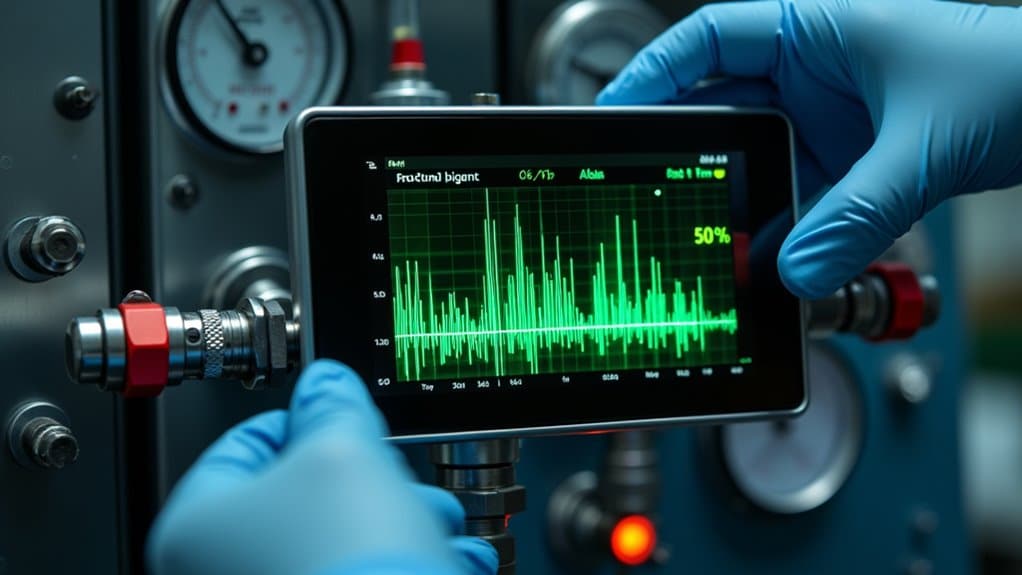
Modern real-time monitoring protocols hinge on integrated sensor networks that track nitrous oxide concentrations across multiple parameters. Through wireless data integration and remote equipment diagnostics, you’ll maintain precise control over N₂O delivery systems while ensuring patient safety. The rapid expansion of nitrous oxide, where 1 liquid gallon creates over 56 cubic feet of gas, necessitates stringent volumetric monitoring.
Long-term exposure can cause neurological deficits and cognitive impairments if gas levels are not properly monitored.
Key monitoring protocols include:
- Infrared sensors continuously sample air quality, triggering automated alerts when N₂O levels exceed 50 ppm over 15-minute intervals
- Machine learning algorithms analyze gas flow patterns and patient vitals, automatically adjusting N₂O/oxygen ratios through predictive modeling
- Cloud-based analytics aggregate facility-wide data, enabling real-time system optimization through smartphone interfaces and wall-mounted dashboards
The system incorporates automated shut-off mechanisms and color-coded status indicators, ensuring rapid response to potential gas leaks while maintaining thorough documentation for compliance requirements.
Environmental Impact and Emission Control
As healthcare facilities confront nitrous oxide’s severe environmental impact, you’ll need to implement thorough emission control strategies that address both systemic leaks and operational inefficiencies. With N₂O’s global warming potential at 273-298 times that of CO₂, your leak mitigation strategies should prioritize shifting from centralized systems to portable E-cylinders, which can dramatically reduce emissions from hundreds to single-digit mtCO₂e annually. Given its 114-year atmospheric lifetime, N₂O poses a particularly persistent threat to environmental stability that demands immediate action. Leading institutions like UCSF Health have successfully reduced their N₂O emissions by over 80% through these system changes.
You’ll need to establish all-encompassing emission tracking methods, including regular audits of supply tanks, manifolds, and pipelines. When implementing these controls, focus on decentralized delivery systems that virtually eliminate fugitive emissions. While equipment choices between disposable and reusable gear matter, addressing N₂O leakage remains your primary concern for reducing environmental impact and operational costs.
Personnel Training and Exposure Prevention
While implementing thorough nitrous oxide protocols, you’ll need to establish a multi-layered training program that addresses both clinical competency and exposure prevention. Your workforce certification requirements must align with Minnesota Board of Dentistry’s 12-hour mandate and OSHA’s annual respirator training standards. Video-based training and case study assignments are essential components of the comprehensive preparation process. This program ensures federal compliance requirements as outlined in the IU Anesthetic Gas Safety Program. Following ADA guidelines, providers can effectively combine nitrous oxide with enteral sedation methods to maximize patient comfort.
Comprehensive nitrous oxide training protocols must cover clinical skills and safety measures while meeting state board and OSHA requirements.
Ensure regulatory compliance audits by implementing:
- Pre-clinical preparation through self-study materials and completing IU’s 30-minute safety course by October 1, 2025
- Technical training on scavenging systems, ventilation controls, and gas monitoring equipment
- Supervised clinical experience with fail-safe equipment, requiring successful completion of three patient cases
You’ll need to document all training activities, maintain medical surveillance programs, and verify staff competency in PPE usage and emergency response procedures. Regular equipment inspections and hazard communication training complete your expansive personnel safety program.
Frequently Asked Questions
How Long Should Equipment Cool Down Between Consecutive Patient Treatments?
You’ll need to monitor recommended cooling times carefully between consecutive treatments. To maintain suitable equipment temperatures, allow cylinders to rest for at least 48 hours in a horizontal position if temperatures drop below -7°C. This guarantees proper gas homogenization and prevents phase separation.
You must check cylinder temperatures before reuse and invert the cylinder at least 3 times after the rewarming period to confirm safe, consistent gas delivery.
Can Nitrous Oxide Administration Affect Nearby Electronic Medical Devices?
You don’t need to worry about potential electromagnetic interference between nitrous oxide and nearby electronic medical devices. There’s no documented evidence of nitrous oxide causing device malfunctions.
However, you’ll want to guarantee proper ventilation requirements are met to prevent gas accumulation near equipment. The gas operates through mechanical components rather than electromagnetic frequencies, and medical-grade systems are specifically designed with non-reactive materials to prevent any interaction with surrounding electronics.
What Alternatives Exist for Patients With Documented Nitrous Oxide Allergies?
If you have a documented nitrous oxide allergy, you’ll find several alternative anesthetic options available. You can choose from oral sedation using benzodiazepines, IV sedation with propofol or ketamine, or local anesthetic techniques like infiltration injections.
Your provider might recommend combination therapy, pairing local anesthetics with anti-anxiety medications. For ideal patient comfort considerations, you can also incorporate behavioral strategies like guided relaxation or distraction techniques during procedures.
How Do Temperature Fluctuations Impact Nitrous Oxide Storage and Delivery Accuracy?
You’ll find that temperature fluctuations markedly affect N₂O storage and delivery through thermal expansion effects. When temperatures drop below -5.5°C, phase separation occurs, causing inconsistent gas mixtures.
You must maintain cryogenic temperature control between 32-125°F to prevent condensation and pressure variations. If you don’t control storage conditions, you’ll experience unreliable delivery as liquid N₂O settles, leading to oxygen-rich initial flow followed by potentially dangerous N₂O-rich delivery.
Are There Specific Maintenance Requirements for Pediatric Nitrous Oxide Delivery Systems?
You’ll need to follow specialized pediatric anesthesia protocols when maintaining nitrous oxide delivery systems for children. Guarantee your equipment includes properly sized masks and augmented nitrous oxide scavenging systems calibrated for lower flow rates.
You must check the pressure relief valves daily, sustain backup pediatric masks in multiple sizes, and perform monthly calibration of flow meters. Don’t forget to test emergency shutoff systems weekly and document all maintenance activities.