
For ideal nitrous oxide administration, you’ll need to maintain concentrations between 30-70%, never delivering less than 25% oxygen. Start at 30% nitrous oxide for minimal sedation, progressing to 50% for standard procedures, and up to 70% for controlled procedural sedation with proper monitoring. Target 1.1 MAC for 68% patient immobility effectiveness, or 1.2 MAC for 95% coverage. Understanding MAC values and patient-specific factors reveals critical subtleties in dosage optimization.
Understanding MAC Values and Patient Safety Thresholds
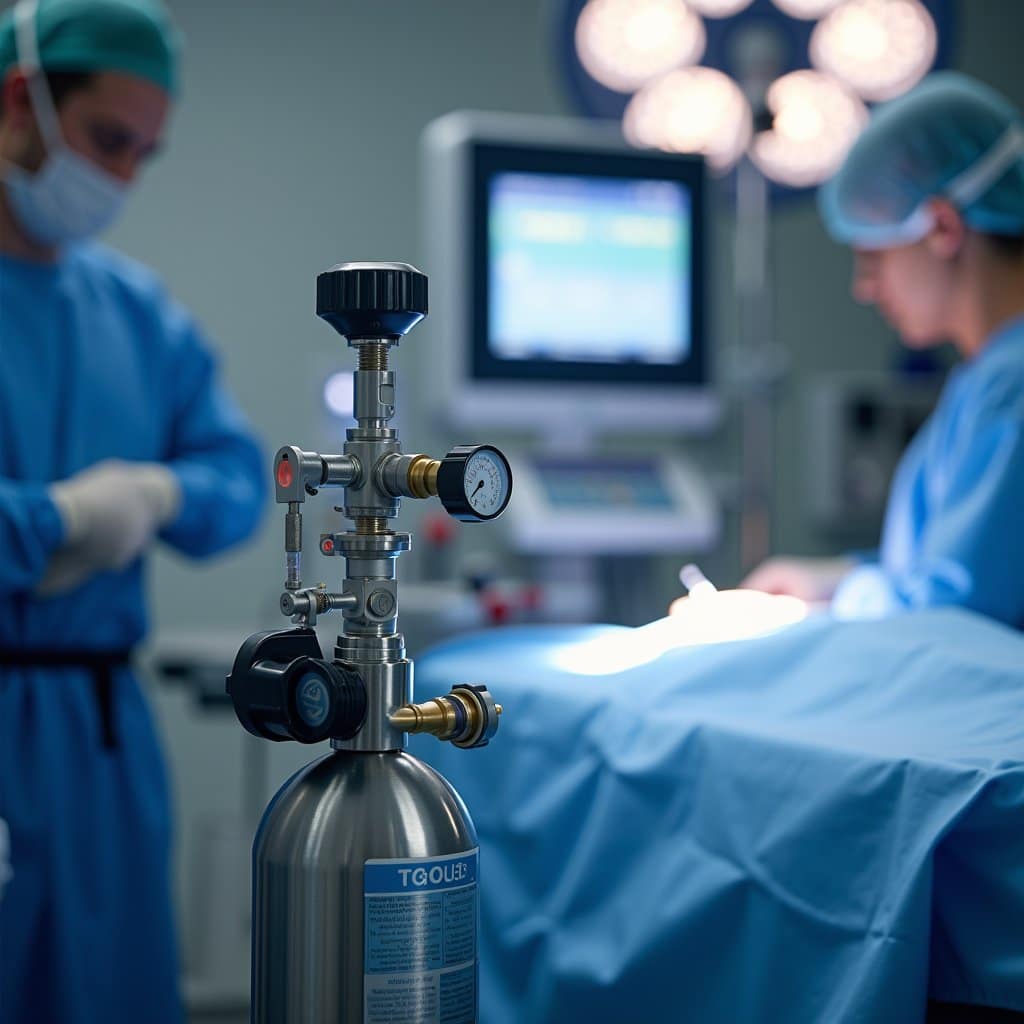
When administering nitrous oxide in clinical settings, understanding Minimum Alveolar Concentration (MAC) values is crucial for maintaining patient safety and achieving desired therapeutic effects. With a MAC value of 104%, nitrous oxide requires higher concentrations than other inhalational anesthetics for effective use. The rapid absorption through the lungs allows for quick onset times of 2-5 minutes. Patient factors like age and pregnancy can significantly alter MAC requirements throughout treatment. Temperature variations and high oxygen concentrations can impact anesthetic potency, making end-tidal monitoring essential.
You’ll need to account for equilibrium factors, allowing 15 minutes of steady alveolar concentration before evaluating MAC effectiveness. Consider ventilation implications when combining agents, as 0.5 MAC nitrous oxide plus 0.5 MAC of another agent achieves 1 MAC total effect.
For optimal safety, target 1.1 MAC to guarantee immobility in 68% of patients, or 1.2 MAC for 95% coverage. Keep in mind that MAC-awake occurs at 0.3-0.5 MAC, while MAC-BAR requires 1.7-2.0 MAC to block autonomic responses.
Pediatric Dosing Guidelines and Clinical Considerations
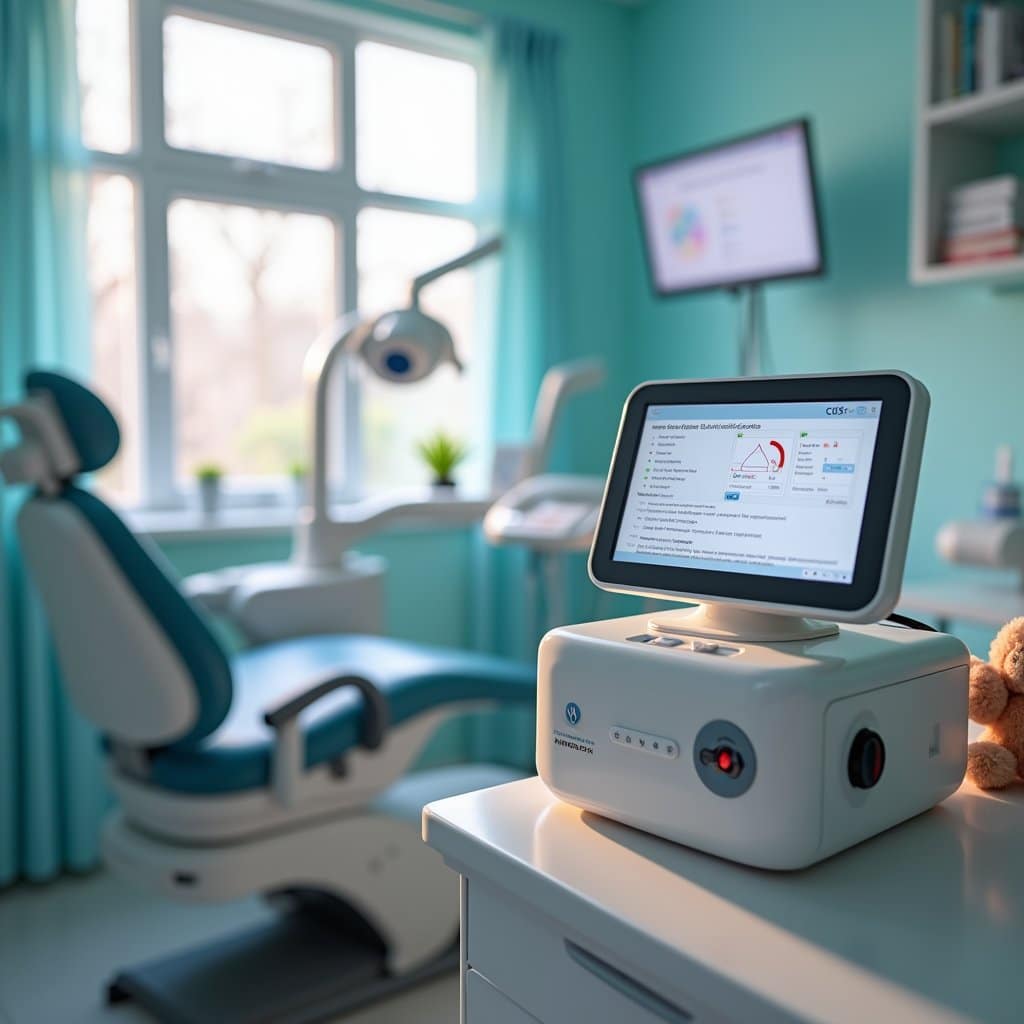
When administering nitrous oxide to pediatric patients, you’ll need to maintain concentrations between 30-50% for ideal therapeutic effect while respecting age-specific MAC values and safety thresholds.
You should initiate behavioral management techniques, such as distraction and positive reinforcement, concurrent with gas administration to improve cooperation and reduce anxiety-related complications. According to extensive research involving 7,802 pediatric cases, nitrous oxide has demonstrated an excellent safety profile when proper protocols are followed.
Your careful titration must account for the child’s age, weight, and individual response patterns, starting at lower concentrations (20-30%) for initial exposures and gradually increasing based on clinical indicators.
Safe Concentration Ranges
Three critical concentration ranges define safe nitrous oxide administration in pediatric patients. You’ll need to carefully monitor cardiovascular considerations and implement respiratory monitoring protocols while adhering to established concentration guidelines.
Start with 30% nitrous oxide/70% oxygen for initial titration, maintaining pulse oximetry throughout administration. Published data shows that adverse events rates remain similar between 50% and 70% concentrations.
Progress to ≤50% nitrous oxide for minimal sedation, which offers ideal safety while avoiding cardiovascular and respiratory depression.
Utilize up to 70% nitrous oxide/30% oxygen only during controlled procedural sedation protocols when warranted by painful procedures.
You must never deliver less than 25% oxygen during administration. While you don’t need to gradually wean patients post-procedure, you’ll require emergency preparedness measures, including readily accessible resuscitation equipment and proper staff certification in advanced airway management.
Behavioral Management Techniques
Successful behavioral management during pediatric nitrous oxide administration requires a multi-faceted approach combining clinical expertise with psychological techniques.
You’ll need to establish calming environmental cues by minimizing background noise and sudden movements while maintaining upright positioning to reduce patient anxiety. Implement distraction-based techniques such as storytelling or video viewing during the procedure, coupled with consistent positive reinforcement and reassuring verbal communication.
You should provide developmentally-appropriate explanations before starting and maintain a slow, methodical induction process.
Monitor patient responses closely while gradually titrating nitrous oxide concentrations from 30% to 50-60%. You must adapt your approach based on individual anxiety levels and previous sedation experiences. Document behavioral responses and maintain line-of-sight monitoring throughout the procedure to maintain patient comfort and safety.
Age-Specific MAC Adjustments
The generation-specific adjustment of Minimum Alveolar Concentration (MAC) requires precise understanding of pediatric physiology and developmental variations. When administering nitrous oxide to pediatric patients, you’ll need to account for age-related MAC changes and developmental stage sensitivity variations.
You’ll find that neonates and infants need higher N2O concentrations due to elevated MAC values, with requirements gradually decreasing as they grow toward adulthood.
Consider altered pharmacokinetics in premature infants, which may necessitate dosage modifications to maintain safety and efficacy.
You must adjust MAC values linearly with age progression, recognizing that adolescents will approach mature MAC levels while maintaining minimum 25% oxygen concentration.
For the best outcomes, you’ll want to integrate MAC-based dosing with continuous vital sign monitoring and consciousness assessment, particularly during procedural sedation.
Adult General Anesthesia Concentration Protocols

Modern adult general anesthesia protocols mandate precise nitrous oxide (N₂O) concentration management within a 50-70% range when combined with oxygen. You’ll need to maintain oxygen levels at 30-50% to safeguard adequate tissue oxygenation while preventing hypoxia risks. Prior to administration, implement patient preparation protocols, including thorough assessments for contraindications like B12 deficiency or recent surgeries. High-pressure connections should be tested for leaks whenever gas cylinders are changed. The rapid onset and offset of nitrous oxide makes it an ideal fast-acting agent for surgical procedures.
During administration, you must use dedicated delivery systems that prevent ratio adjustments and incorporate proper occupational exposure monitoring to maintain operator room concentrations below 25 ppm. You’ll require supplementation with other anesthetic agents, as N₂O can’t be used alone due to its limited potency.
Post-procedure, administer 100% oxygen to prevent diffusion hypoxia, and confirm patients return to baseline consciousness before discharge.
Dental Procedure Titration Standards
Precise nitrous oxide administration in dental settings requires systematic titration protocols that begin with 100% oxygen delivery for 1-2 minutes before shifting to a 20% N₂O/80% O₂ baseline ratio. During the procedure, you’ll need to maintain rigorous concentration monitoring while gradually increasing N₂O levels by 10% increments every three minutes, never exceeding 50% without specialist oversight. The nasal hood placement must be properly fitted to prevent gas leakage into the surrounding environment. Verbal communication with patients should be maintained to ensure adequate analgesia levels. Having vital signs monitoring systems in place is essential as part of standard safety protocols during N₂O-O₂ administration.
Safe nitrous oxide delivery starts with pure oxygen, then carefully transitions to precise gas mixtures under constant professional monitoring.
- You must calibrate delivery systems before each session, ensuring accurate gas ratios and proper scavenging function
- Monitor patient responses through open-ended questions, avoiding leading prompts that might influence reported symptoms
- Document titration thresholds and patient reactions for thorough patient follow up, enabling optimization of future treatments
Maintain constant vigilance of respiratory rates and early warning signs, adjusting concentrations based on real-time patient feedback and clinical indicators.
Managing Adverse Effects Through Proper Concentration Control
Through precise monitoring of N₂O percentages, you can prevent concentration-dependent complications like severe PONV and B12 inactivation by maintaining levels between 30-50% for most procedures. Patients should be monitored for excessive sweating and shivering as these are common immediate indicators that adjustments may be needed. Since this gas was discovered in 1772 by Priestly, medical professionals have refined its therapeutic use. You’ll find that managing nitrous oxide’s adverse effects begins with recognizing key early warning signs, including tachypnea, peripheral numbness, and decreased cognitive performance at concentrations above 50%. You must implement real-time gas analysis and maintain scavenging systems to guarantee concentrations stay within therapeutic ranges while minimizing occupational exposure risks.
Recognizing Early Warning Signs
Successful management of nitrous oxide administration requires vigilant monitoring for early warning signs that may indicate adverse effects or improper concentration levels. When recognizing individual sensitivities, you’ll need to watch for progressive symptoms that can signal potential complications, especially while avoiding medication interactions.
Monitor for initial neurological indicators like dizziness, headache, and nausea, which often present as the primary signs of adverse effects. Medical staff may need to provide supplemental oxygen to help clear residual nitrous oxide from the patient’s system. Pay special attention to patients experiencing uncontrolled laughter as this is a common indicator of nitrous oxide’s effects. Assess for developing CNS depression symptoms, including numbness, sedation, and declining motor coordination. Watch for cognitive impairment markers such as confusion, blurred vision, or unexpected euphoria. Regular monitoring of vitamin B12 levels is crucial as chronic exposure can lead to serious nerve damage.
You’ll need to be particularly attentive when treating vulnerable populations, including patients with vitamin B12 deficiency, mental health histories, or MTHFR deficiencies, as they’re more susceptible to adverse reactions.
Concentration-Based Risk Prevention
Building upon the early warning signs, effective concentration management serves as a primary defense against adverse effects in nitrous oxide administration. You’ll need to maintain concentrations between 30-50% for standard sedation, while guaranteeing oxygen levels remain adequate through proper ventilation techniques.
To prevent occupational exposure risks, you must keep ambient levels below 25 ppm using continuous monitoring systems. When administering nitrous oxide, start with 100% oxygen for 1-2 minutes before incrementally adding 10% nitrous oxide. Monitor the reservoir bag pulsation to confirm proper gas delivery and maintain flow rates of 5-7 L/min for adults or 3-5 L/min for children.
During procedures, you’ll need to adjust concentrations based on patient response while consistently monitoring sedation levels and respiratory rates to safeguard safety.
Synergistic Effects With Other Anesthetic Agents
When administering nitrous oxide in clinical settings, understanding its synergistic interactions with other anesthetic agents becomes crucial for ideal patient outcomes. Through multiple pharmacodynamic synergies, N₂O enhances the effectiveness of co-administered agents while potentially reducing their required dosages.
N₂O’s NMDA receptor antagonism and opioid pathway activation create powerful synergistic effects with propofol and opioids, allowing for reduced dosing of these agents while maintaining therapeutic efficacy.
The second gas effect accelerates the uptake of volatile anesthetics like isoflurane, leading to faster induction times and more predictable depth of anesthesia.
Safety considerations include monitoring for combined effects on respiratory function and ensuring appropriate oxygen supplementation post-procedure to prevent diffusion hypoxia, particularly when N₂O is used with other sedative agents.
Evidence-Based Recommendations for Different Clinical Settings
The safe administration of nitrous oxide requires specific concentration protocols customized to distinct clinical environments and patient populations. For dosage optimization in dental settings, you’ll need to maintain concentrations between 30-50% with oxygen levels never dropping below 30%. In surgical contexts, you can utilize up to 70% nitrous oxide when combining it with other anesthetic agents, though staff training requirements emphasize careful monitoring of oxygen saturation.
For pediatric cases, you should start at 10% and incrementally increase by 5% while maintaining oxygen at ≥50%. Your titration protocol must begin at 10% N2O with 90% O2, adjusting every minute as needed. Keep in mind that concentrations above 50% don’t show improved outcomes in routine procedures and may increase adverse effects.
Frequently Asked Questions
How Long Should Patients Fast Before Receiving Nitrous Oxide Administration?
You’ll find that fasting duration guidelines for nitrous oxide vary by institution. For standard patients without vomiting history, you don’t need to fast.
However, patient preparation protocols suggest light meals can be consumed up to 2 hours before the procedure for pediatric cases. If you’re at a clinic with stricter policies, you may need to follow a 4-hour NPO status.
You should always document dietary precautions for patients with previous vomiting episodes.
Can Nitrous Oxide Be Safely Used During Pregnancy?
While you can receive nitrous oxide during pregnancy, particularly during labor, strict safe administration protocols must be followed. Your healthcare provider will monitor maternal absorption rates and maintain precise gas mixtures (typically 50% nitrous oxide, 50% oxygen). You’ll need individual risk assessment, and it’s essential to use proper scavenging systems.
However, if you’re a pregnant healthcare worker, you should avoid occupational exposure due to potential risks of chronic exposure to developing fetuses.
What Are the Occupational Exposure Limits for Healthcare Staff?
You’ll need to follow several occupational exposure limits for nitrous oxide: NIOSH recommends 25 ppm TWA, ACGIH sets 50 ppm TWA, and UK HSE allows 100 ppm TWA for an 8-hour workday.
You must implement engineering controls like scavenging systems and demand valve equipment to maintain these levels.
Regular workplace monitoring through gas detection equipment is essential to verify compliance and guarantee your exposure stays within these established safety thresholds.
How Often Should Nitrous Oxide Equipment Be Calibrated and Maintained?
You’ll need to follow a strict calibration schedule for N2O equipment, requiring annual factory calibration to maintain ±5% accuracy. Guarantee you conduct regular flowmeter checks and verify oxygen failsafe mechanisms as part of your maintenance procedures.
Don’t attempt unauthorized repairs, as these void manufacturer warranties. You must document all calibration dates using CTC-applied stickers and confirm proper function through batch testing of calibration gases before use.
Does Racial or Ethnic Background Affect Individual Response to Nitrous Oxide?
Your individual response to nitrous oxide can vary based on genetic predisposition, but current research doesn’t conclusively demonstrate significant racial or ethnic differences in effectiveness.
While individual metabolism patterns may differ among populations, these variations are more likely attributed to personal physiological factors rather than ethnic background.
You’ll need to be monitored regardless of race, as response differences stem primarily from individual biochemistry and genetic markers rather than broad ethnic categories.