
If you suspect a Suboxone overdose, call 911 immediately. Check the person’s breathing and consciousness levels, then place them in the recovery position on their side. If available, administer Narcan (naloxone) and be prepared to give multiple doses every 2-3 minutes. Don’t leave them alone, and monitor crucial signs until emergency help arrives. Avoid actions like cold showers or making them walk around. Understanding the full spectrum of overdose management can mean the difference between life and death.
Recognizing Suboxone Overdose Warning Signs
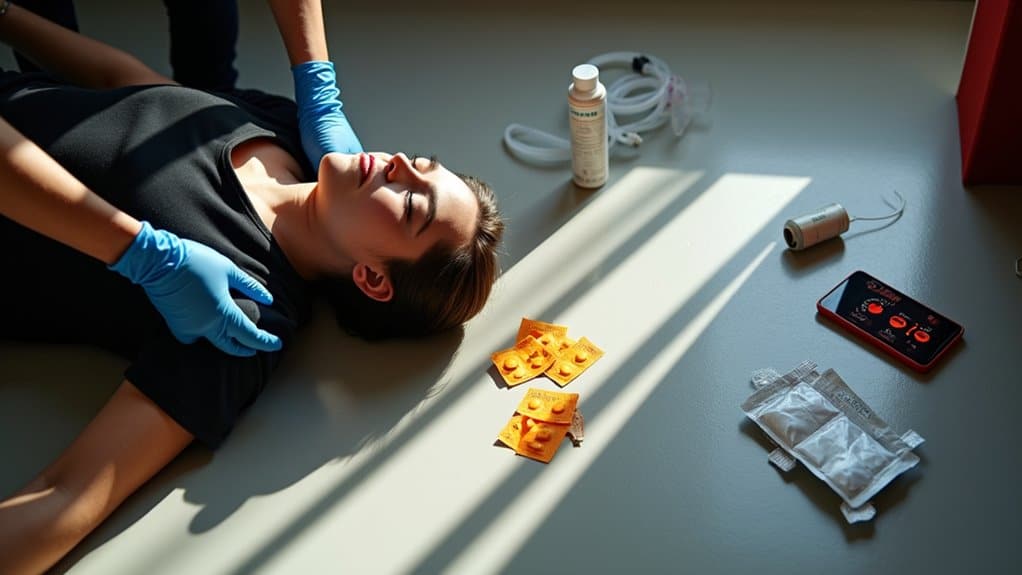
Immediate recognition of Suboxone overdose warning signs can mean the difference between life and death. You’ll need to watch for symptoms affecting multiple body systems.
Central nervous system signs include drowsiness, slurred speech, confusion, impaired consciousness, and uncoordinated movements. Physical dependence can lead to severe withdrawal effects if treatment is stopped abruptly. Gastrointestinal distress manifests through nausea, vomiting, and severe stomach pain. The body’s response is often less intense since buprenorphine’s ceiling effect limits its impact on vital functions.
Warning: Drowsiness, confusion, and impaired speech may signal Suboxone overdose, along with severe stomach distress and coordination problems.
Monitor for cardiovascular instability, which can present as dangerously low blood pressure and shock. Critical respiratory symptoms include shallow breathing and breathing suppression. The risk of overdose significantly increases when Suboxone is combined with other sedative medications.
The most severe warning signs that demand immediate emergency response are pinpoint pupils, seizures, and coma. These symptoms can rapidly progress to life-threatening complications, including respiratory failure and death. If you observe any combination of these warning signs, call emergency services immediately.
Critical First Aid Response Measures
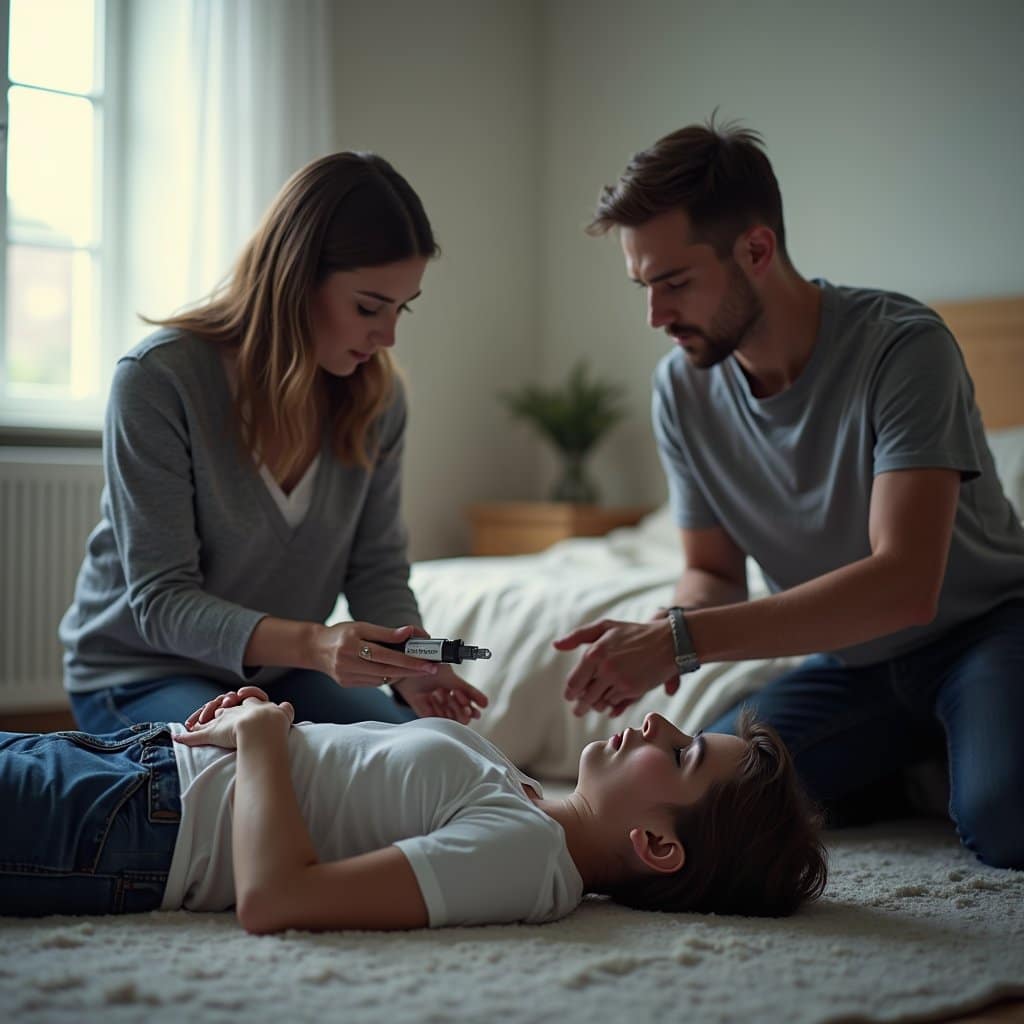
If you suspect a Suboxone overdose, you’ll need to act swiftly with life-saving interventions including immediate activation of emergency medical services and administration of naloxone if available.
You must closely monitor the person’s critical signs, particularly their respiratory rate and level of consciousness, while positioning them in the recovery position to prevent aspiration. Using cold showers or ice as interventions can be dangerous and should be avoided. Multiple doses of naloxone may be required since repeated administration is often necessary due to buprenorphine’s long half-life.
Your prompt recognition of severe distress signals including blue-tinted lips, shallow breathing, or unresponsiveness will determine the urgency and sequence of your essential first aid responses.
Immediate Life-Saving Actions
Rapid response during a Suboxone overdose can mean the difference between life and death. When you encounter someone experiencing opioid antagonist effects during medication assisted treatment, immediately assess their responsiveness by calling their name and checking for breathing patterns.
If they’re unresponsive, call 911 right away and provide your exact location. While waiting for emergency services, administer Narcan if it’s available, following the proper dosage instructions. Since Suboxone contains a partial opioid agonist, it works differently than full opioids in the body. You’ll need to monitor the person closely, as buprenorphine may require multiple doses of naloxone.
If breathing is compromised, begin rescue breathing or CPR as directed by emergency dispatchers. Look for signs of opioid overdose like blue or gray skin coloring and gasping breaths. Keep the person in a recovery position on their side and don’t leave them alone, even if they regain consciousness. Continue monitoring their breathing until medical help arrives.
Signs Of Severe Distress
Recognizing severe distress signs during a Suboxone overdose requires vigilant monitoring of multiple body systems. You’ll need to watch for vital respiratory symptoms including labored breathing, shallow respirations, or complete breathing cessation.
Monitor for neurological deterioration, which manifests as confusion, seizures, impaired coordination, or loss of consciousness. Protecting the person by turning them on their side will help prevent choking on vomit.
Pay particular attention to cardiovascular indicators like slow heart rate, low blood pressure, and signs of shock. Check for pupillary constriction and vision changes, as these are telltale signs of opioid toxicity.
Skin discoloration, especially bluish tints in lips, nail beds, and skin (cyanosis), indicates dangerous oxygen deprivation. These signs often progress rapidly and can become life-threatening within minutes, making immediate medical intervention essential.
When and How to Use Naloxone
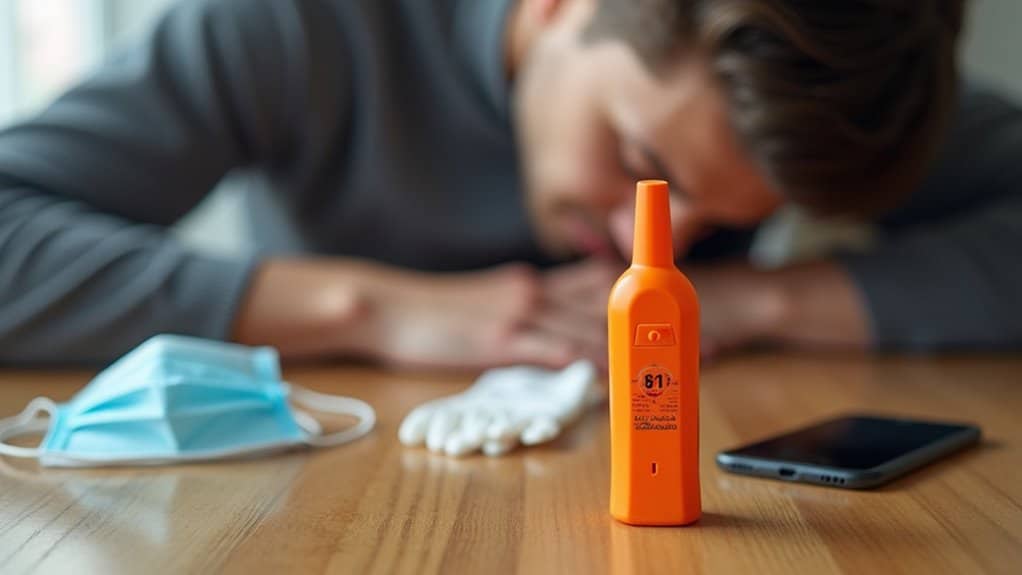
In a Suboxone overdose situation, you’ll need to administer naloxone immediately if you observe respiratory depression, unresponsiveness, or severe drowsiness. You should deliver 0.4-2 mg of naloxone via nasal spray or injection, monitoring the patient’s response and repeating the dose every 2-3 minutes if necessary.
After administering naloxone, you must call emergency services immediately, as the overdose-reversal effects can wear off before the Suboxone fully clears from the system.
Naloxone Administration Basics
Proper administration of naloxone can mean the difference between life and death during an opioid overdose emergency. You’ll need to check for key overdose signs: pale or bluish lips and fingernails, lack of response to chest stimulation, and minimal or no breathing. Don’t wait for emergency responders – administer naloxone immediately if you suspect an overdose.
For proper administration techniques, you can use FDA-approved nasal sprays or injectable forms. If there’s no response within 2-3 minutes, give a second dose. During emergency response coordination, call 911 right away and follow the operator’s instructions. You’ll need to stay with the person, as naloxone’s effects wear off in 30-90 minutes. Monitor them closely and be prepared for potential withdrawal symptoms like chills and nausea.
Overdose Response Time Window
When someone experiences a Suboxone overdose, the response time window becomes critical for effective naloxone intervention. You’ll need to ponder that naloxone remains active for only 30-90 minutes, while Suboxone’s effects can last considerably longer. The overdose risk is low compared to other opioids, but proper emergency response protocols are still essential. Watch carefully for unconscious breathing patterns, as overdose symptoms include shallow or slowed respiration requiring immediate attention.
Your dosage timing deliberations must account for several intrinsic patient factors, including liver function, metabolism rate, and existing opioid tolerance. Since Suboxone contains both buprenorphine and naloxone, you’re dealing with complex pharmacological interactions that may require repeated naloxone doses every 2-3 minutes.
Monitor the patient continuously, as re-sedation risks persist even after initial stabilization. Bear in mind that individual response varies based on prior substance use and co-ingested depressants. Don’t delay seeking emergency medical care, as professional monitoring remains essential for preventing post-naloxone complications.
Vital Medical Support and Monitoring
Medical support for Suboxone overdose requires immediate respiratory evaluation and continuous critical sign monitoring. You’ll need to check oxygen saturation levels, blood pressure, and heart rate frequently to detect cardiovascular instability or hypoxia. Watch for signs of electrolyte imbalance and metabolic acidosis, which may require prompt intervention.
Key monitoring priorities include:
- Maintaining ventilatory support through bag-valve-mask if respiratory arrest occurs
- Evaluating neurological status for confusion, drowsiness, or altered mental state
- Assessing cardiovascular stability and administering IV fluids or pressors when needed
If respiratory depression persists, you’ll need to administer naloxone in careful incremental doses of 0.4-2 mg to avoid precipitating severe withdrawal. Continue monitoring for at least 24 hours due to Suboxone’s long half-life and potential for rebound respiratory depression.
Risk Factors and Prevention Strategies
Several critical risk factors substantially increase the likelihood of Suboxone overdose, particularly when multiple factors combine. You’re at highest risk if you’re opioid-naive, elderly, or have compromised liver or kidney function. Mixing Suboxone with alcohol, benzodiazepines, or other CNS depressants dramatically escalates your overdose danger. The medication’s built-in ceiling effect makes overdose unlikely when taken as prescribed.
To prevent overdose, follow controlled prescribing practices strictly and never inject or crush the medication. If you’re over 65 or have respiratory conditions, you’ll need careful dose monitoring. Nearly all Suboxone overdoses involve at least one other drug.
Healthcare providers should screen for concurrent substance use and adjust dosing based on individual health factors. Practice safe medication disposal of unused doses to prevent misuse by others. Always maintain sublingual administration alternative routes considerably increase overdose risk.
Recovery and Aftercare Planning
A thorough recovery and aftercare plan forms the foundation of successful Suboxone overdose rehabilitation. You’ll need extensive case management support to coordinate your ongoing treatment, including medication monitoring, behavioral interventions, and holistic approaches. Since Suboxone works best with comprehensive care, behavioral therapy integration is essential for lasting recovery.
Engage in regular family counseling sessions to strengthen your support network and help loved ones understand the recovery process. Participate in evidence-based therapies like CBT and mindfulness practices to develop coping strategies and prevent relapse. Connect with peer support groups and establish emergency contacts for crisis management. Understanding that respiratory depression risks increase when mixing substances, avoid alcohol and benzodiazepines during recovery.
Your aftercare plan should integrate both clinical and community resources, combining professional medical oversight with peer support systems. Regular check-ins with healthcare providers, consistent drug screening, and participation in support groups will help maintain your recovery progress and prevent future overdose risks.
Frequently Asked Questions
How Long Does Suboxone Stay Detectable in Urine Drug Tests?
You’ll typically discover Suboxone metabolite recognition in your urine for 3-7 days following your final dosage. However, your individual suboxone recognition timeframe can fluctuate based on aspects like your metabolism, dosage, and frequency of use.
If you’re a persistent user, you might test affirmative for up to 7 days, while occasional users may clear the drug faster. Recall that universal drug panels don’t typically screen for Suboxone – you’ll require specific buprenorphine testing.
Can Pregnant Women Safely Receive Suboxone Overdose Treatment?
Yes, you can receive Suboxone overdose treatment while pregnant, but it requires immediate specialized medical attention. You’ll need thorough prenatal care requirements throughout treatment, as your care team must monitor both your recovery and potential fetal developmental risks.
Standard overdose protocols, including supportive care and careful naloxone administration, can be safely implemented during pregnancy. However, you’ll need close monitoring post-treatment to guarantee both maternal and fetal stability.
What Happens if Naloxone Is Given to Someone Not Overdosing?
If you receive naloxone without having opioids in your system, you’ll experience minimal side effects since there’s no opioid activity to reverse.
However, if you’re opioid-dependent but not overdosing, naloxone can trigger precipitated withdrawal – causing severe discomfort and adverse cardiovascular effects. These symptoms, while unpleasant, are typically not life-threatening and will resolve on their own. You should still be monitored by healthcare professionals after receiving naloxone.
Are There Permanent Organ Damages Associated With Suboxone Overdose?
Yes, you can experience permanent organ damage from Suboxone overdose.
Long-term liver effects may include chronic hepatic dysfunction and scarring, especially if you’ve had repeated overdoses. You’ll also risk lasting neurological complications from oxygen deprivation, including cognitive impairment and seizure disorders.
Your cardiovascular system might suffer permanent damage from prolonged respiratory depression, and you could develop chronic kidney problems from reduced organ perfusion during overdose events.
Does Insurance Typically Cover Emergency Suboxone Overdose Treatment?
Yes, your insurance will typically cover emergency Suboxone overdose treatment as part of emergency medical services. Most insurance plans, including Medicaid and private insurers, cover overdose-related emergency care, though you’ll need to meet your plan’s eligibility requirements.
Treatment cost coverage usually includes emergency room visits, naloxone administration, and stabilization care. However, you might face out-of-pocket expenses depending on your deductible and specific plan terms.