
Professional nitrous oxide administration requires precise digital flow meters, specialized delivery systems, and continuous critical sign monitoring to safely manage anxiety. You’ll experience relief within 2-3 minutes as medical staff carefully titrate the gas while maintaining at least 30% oxygen. Treatment sessions typically last 30-60 minutes, concluding with pure oxygen administration. Proper protocols, including ventilation and equipment calibration, guarantee success rates above 90% in clinical settings. Understanding the complete therapeutic process reveals supplementary safety measures and benefits.
Understanding Nitrous Oxide Administration Techniques
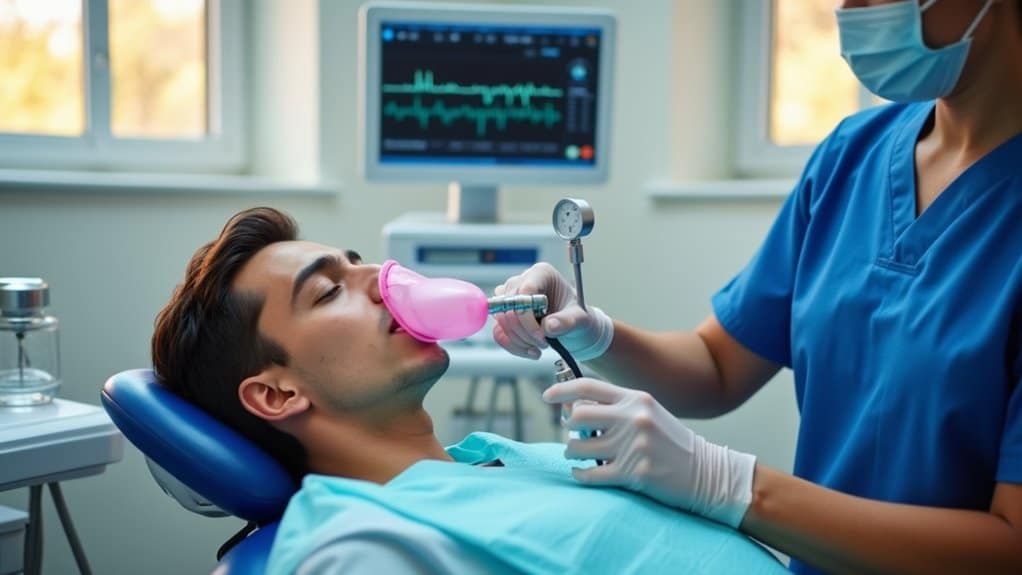
The administration of nitrous oxide requires precise techniques and monitoring to safeguard both safety and efficacy. Understanding the pharmacokinetics of nitrous oxide enables proper titration, starting with 100% oxygen for 1-2 minutes before introducing the gas. You’ll need to take into account medication interactions, particularly with other anesthetic agents, as nitrous oxide’s low potency often requires combination therapy. Most patients achieve adequate analgesia within 2-3 minutes of administration. According to studies by Babl et al., administration in non-fasting children has demonstrated a strong safety profile.
The correct technique involves maintaining flow rates of 5-7 L/min for adults and 3-5 L/min for children, while using fitted nasal hoods for ideal delivery. During maintenance, continuous monitoring guarantees proper gas mixtures, typically 30-50% nitrous oxide with oxygen. Modern delivery systems include twelve safety features to prevent adverse events during administration.
The emergence phase requires a return to 100% oxygen, capitalizing on nitrous oxide’s rapid offset properties for quick recovery.
Safe Delivery Systems and Equipment Requirements
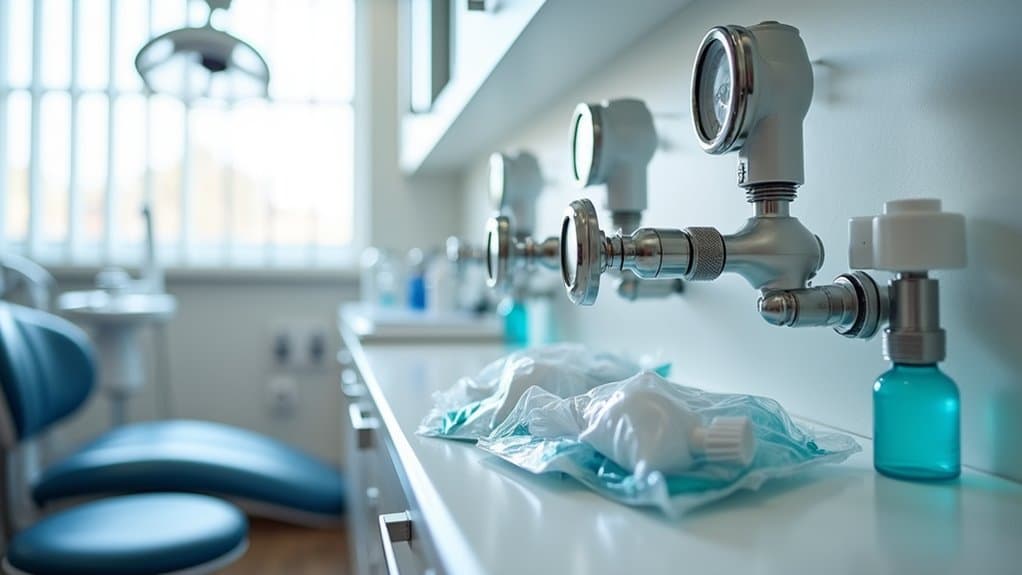
Safe and effective nitrous oxide administration depends on specialized delivery systems that meet stringent regulatory requirements. You’ll need equipment featuring digital flow meters for precise gas titration and integrated waste scavenger systems that comply with OSHA/NIOSH standards for environmental safety protocols. The adjustable digital meter on Nitrouseal units allows customized flow control for each patient’s needs. Modern delivery options include telescoping arm systems for optimal positioning and patient comfort.
Proper nitrous oxide delivery requires advanced systems with precise digital monitoring and integrated safety features to meet crucial regulatory standards.
Your delivery system must include glass tube displays for visual monitoring and adjustable needle valves to maintain ideal nitrous/oxygen ratios. The system’s pain management capabilities make it suitable for both hospital and in-office procedures. Equipment maintenance requirements include regular calibration certification and compliance with CDC infection control guidelines.
You’ll also need continuous supply manifolds with automatic cylinder changeover capabilities to prevent interruptions during procedures. To guarantee workplace safety, you must implement active capture systems for exhaled gases and maintain proper pressure regulation.
All operators must complete mandatory training programs to demonstrate equipment proficiency and emergency response readiness.
Clinical Applications and Treatment Protocols
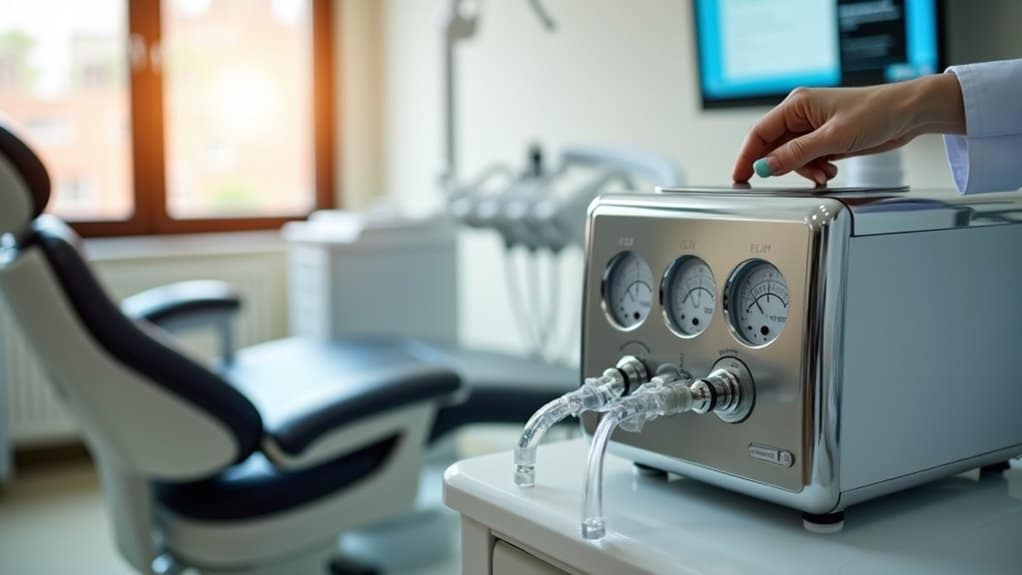
You’ll receive nitrous oxide through a calibrated delivery system that maintains precise gas mixtures, typically starting at lower concentrations and adjusting based on your response.
Your medical team will continuously monitor essential signs while following strict safety protocols, including proper ventilation and scavenging systems to protect both patients and staff. Key vitals monitoring ensures patient safety throughout the entire procedure. As a fast-acting agent, nitrous oxide can provide rapid relief compared to traditional anxiety treatments.
Treatment sessions typically last 30-60 minutes, during which you’ll remain conscious and responsive while experiencing anxiety relief and mild sedation. Medical professionals have been safely using nitrous oxide as sedation since the late 18th century.
Optimal Dosage and Timing
Mastering nitrous oxide administration requires precise dosage control and strategic timing throughout dental procedures. You’ll need to implement dose titration based on individual patient responses while maintaining a patient-centered approach that considers medical history and anxiety levels. During treatment, providers often observe patients experiencing calming and euphoric effects that help reduce dental anxiety.
Begin with lower concentrations and adjust up to 50% maximum during intense stimulation phases, always combining with local anesthesia when needed. The mixture must maintain at least 30% oxygen at all times to ensure patient safety. Monitor critical signs continuously, particularly oxygen saturation and respiratory rate, adjusting concentrations in response to procedural demands. Maintain consistent delivery throughout the required treatment duration, avoiding unnecessary extension beyond procedure completion. Conclude with 3-5 minutes of 100% oxygen administration to guarantee proper recovery and elimination of residual nitrous oxide.
This strategic approach guarantees optimal therapeutic benefit while minimizing potential side effects and maintaining patient safety.
Medical Team Safety Protocols
While implementing nitrous oxide sedation protocols, medical teams must adhere to thorough safety measures that protect both patients and staff. You’ll need to maintain proper treatment room ventilation and utilize scavenging systems to minimize occupational exposure risk.
Regular equipment checks, including pin-index safety systems and flow meter calibration, are essential for safe gas delivery.
Your team should perform continuous patient monitoring, including oxygen saturation, respiratory rate, and hemodynamic parameters. Guarantee mask integrity and minimize removal during procedures to prevent ambient gas accumulation.
It’s critical to follow OSHA-recommended practices for waste anesthetic gas management, even though no formal N2O standard exists. Implement emergency response protocols for adverse reactions, and maintain proper documentation of all safety measures and monitoring procedures.
Patient Monitoring and Safety Guidelines
You’ll need to maintain continuous monitoring of essential signs, including oxygen saturation, heart rate, and blood pressure when administering nitrous oxide for anxiety management.
Before initiating treatment, you must verify all equipment safety features, including proper gas connections, functioning alarms, and intact scavenging systems.
Your emergency response preparedness should include immediate access to reversal agents, resuscitation equipment, and clear protocols for managing adverse reactions.
Vital Sign Tracking Protocol
Three essential components form the foundation of safe nitrous oxide administration: baseline measurements, real-time monitoring, and post-procedure tracking. For ideal respiratory rate optimization and management of intraoperative hemodynamic changes, you’ll need to maintain strict adherence to established monitoring protocols.
- Document pre-procedure crucial signs, including respiratory rate, blood pressure, and SpO₂, establishing your baseline reference points
- Monitor breathing patterns continuously through reservoir bag pulsation while maintaining oxygen saturation above 95%
- Adjust nitrous concentration in 10% increments, never exceeding 50% unless medically indicated, while ensuring minimum 30% oxygen content
- Track post-procedure recovery by confirming essential signs return to within 20% of baseline, maintaining constant supervision until discharge criteria are met
Stay vigilant for signs of oversedation or respiratory depression throughout the procedure.
Equipment Safety Verification Steps
Before initiating nitrous oxide administration, performing thorough equipment safety verification guarantees desirable patient outcomes and reduces adverse events. You’ll need to validate cuff pressure by ensuring the N2O reservoir bag maintains proper inflation during oxygen delivery. Check the nasal mask’s seal thoroughly to prevent gas leakage. This provides relaxation and comfort for patients during dental procedures.
Conduct oxygen flow verification using a calibrated flowmeter to confirm N2O exhaust airflow exceeds 45 LPM. You must verify that N2O/O2 flow rates align with prescribed concentrations, never exceeding 50% N2O. Position auxiliary exhaust hoods within 10 inches of the patient’s nose and mouth, ensuring unobstructed airflow. Always assign two qualified staff members for continuous patient monitoring. These systematic checks help maintain safety standards and optimize treatment effectiveness while minimizing environmental exposure risks.
Emergency Response Readiness Plans
Building upon established equipment protocols, thorough emergency response readiness guarantees patient safety during nitrous oxide administration. You’ll need comprehensive monitoring systems and incident reporting procedures that align with regulatory compliance oversight to safeguard rapid response to adverse events.
Monitor vital signs continuously and maintain proper ventilation rates (45 LPM), while keeping mask seals secure to prevent gas leakage.
Position auxiliary exhaust hoods within 10 inches of the administration area when exposure readings exceed 25 ppm.
Implement immediate oxygen therapy (100% for 3-5 minutes) if patients show signs of hypoxia or disorientation.
Document all incidents, including exposure levels above OSHA limits, patient reactions, and recovery duration metrics.
Your facility must maintain calibrated monitoring devices and train staff to recognize emergency indicators while following established mitigation protocols.
Benefits and Therapeutic Effects
The therapeutic benefits of nitrous oxide for anxiety management extend far beyond its traditional dental applications. Through neurotransmitter modulation and brain connectivity optimization, you’ll experience rapid symptom relief within minutes of administration, with effects lasting up to two weeks post-treatment. As a colorless and odorless gas administered through a specially designed mask, nitrous oxide provides immediate comfort for patients. Researchers discovered that a single inhalation session with 25% concentration showed remarkable improvements in treatment-resistant depression patients.
At a 25% concentration, nitrous oxide works as an NMDA receptor antagonist, similar to ketamine, binding to glutamate receptors in your brain. This mechanism proves particularly effective for treatment-resistant cases, showing significant improvement even if you’ve failed multiple antidepressant trials. You’ll maintain full motor control during treatment while experiencing minimal side effects. Research shows that 85% of patients experienced significant clinical improvement after just one treatment session.
The therapy’s quick onset distinguishes it from traditional antidepressants, offering relief in hours rather than weeks. Clinical trials consistently demonstrate its effectiveness, particularly in severe cases where other treatments have fallen short.
Recovery Process and Aftercare Recommendations
Once nitrous oxide administration ends, you’ll experience a remarkably swift recovery process that typically spans just 5-10 minutes. Healthcare providers will monitor your critical signs and assess your responsiveness while following established patient screening protocols to safeguard your security during this period.
You’ll regain normal cognitive function rapidly, allowing you to drive and resume daily activities after receiving medical clearance.
Post-procedure hydration is essential to prevent dizziness and promote quicker recovery.
You can take your regular medications immediately and don’t need to follow any fasting restrictions.
While you’ll recover quickly, you should avoid strenuous activities until you’re fully alert.
Special considerations apply for children, elderly patients, and those with chronic respiratory conditions, who may require additional monitoring. Your healthcare provider will adjust the aftercare recommendations based on your individual health status.
Frequently Asked Questions
Can I Drive Myself Home After Receiving Nitrous Oxide Treatment?
While nitrous oxide dosage effects dissipate quickly, you should wait 15-30 minutes after treatment before driving. Though nitrous oxide administration safety protocols indicate most patients recover rapidly through normal breathing, it’s crucial to confirm you’re completely alert.
You’ll need to demonstrate steady balance and coordination before operating a vehicle. If you experience any lingering dizziness or disorientation, arrange alternative transportation for your safety.
How Much Does Nitrous Oxide Sedation Typically Cost for Dental Procedures?
You’ll typically pay between $25-$100 per appointment for nitrous oxide sedation during dental procedures, with the average primary-hour cost ranging from $80-$150. In urban areas, you might face higher rates of $150-$225 for the initial hour.
Most clinics charge either a flat rate or hourly fee (around $58/hour). Since insurance rarely covers nitrous oxide, you’ll need to plan for out-of-pocket expenses. It’s the most cost-effective sedation option available.
Will My Health Insurance Cover Nitrous Oxide Anxiety Management Treatments?
Your health insurance likely won’t cover nitrous oxide for anxiety management, as it’s typically considered an elective comfort measure. Most dental plan coverage explicitly excludes stand-alone sedation services unless they’re bundled with medically necessary procedures.
Due to anxiety treatment limitations, you’ll probably need to pay out-of-pocket, with costs ranging from $100-$500+ per session. It’s best to check your specific policy details and consider requesting pre-authorization before proceeding.
Can I Eat or Drink Before Receiving Nitrous Oxide Treatment?
You’ll need to follow specific food intake requirements before your nitrous oxide treatment. Most dental office protocols recommend eating a light meal 2 hours before your appointment, such as toast or jelly.
You can have clear fluids until 2 hours pre-procedure, but avoid heavy meals and caffeine to reduce nausea risk. While strict fasting isn’t typically required for nitrous oxide alone, you should confirm specific guidelines with your provider.
How Many Nitrous Oxide Sessions Are Needed for Treating Depression?
Based on current clinical evidence, you’ll typically receive a single one-hour session using 50% nitrous oxide for initial treatment of depression. Studies show this ideal dosage level can provide symptom relief lasting several weeks.
While some administration guidelines investigate weekly sessions for 4 consecutive weeks, the effectiveness of multiple treatments is still under investigation. Research indicates that even one session can produce rapid improvements in treatment-resistant depression symptoms.