
Store your Suboxone prescription in a locked, airtight container at temperatures between 59-86°F, with 77°F being ideal. Keep it in a cool, dark place away from moisture and direct sunlight to maintain stability. Use child-resistant packaging and consider adding silica gel packets for moisture control. Always maintain your medication in its original pharmacy packaging within a secure lockbox or safe. Proper storage techniques can considerably impact your medication’s effectiveness and safety.
Essential Temperature and Environmental Controls
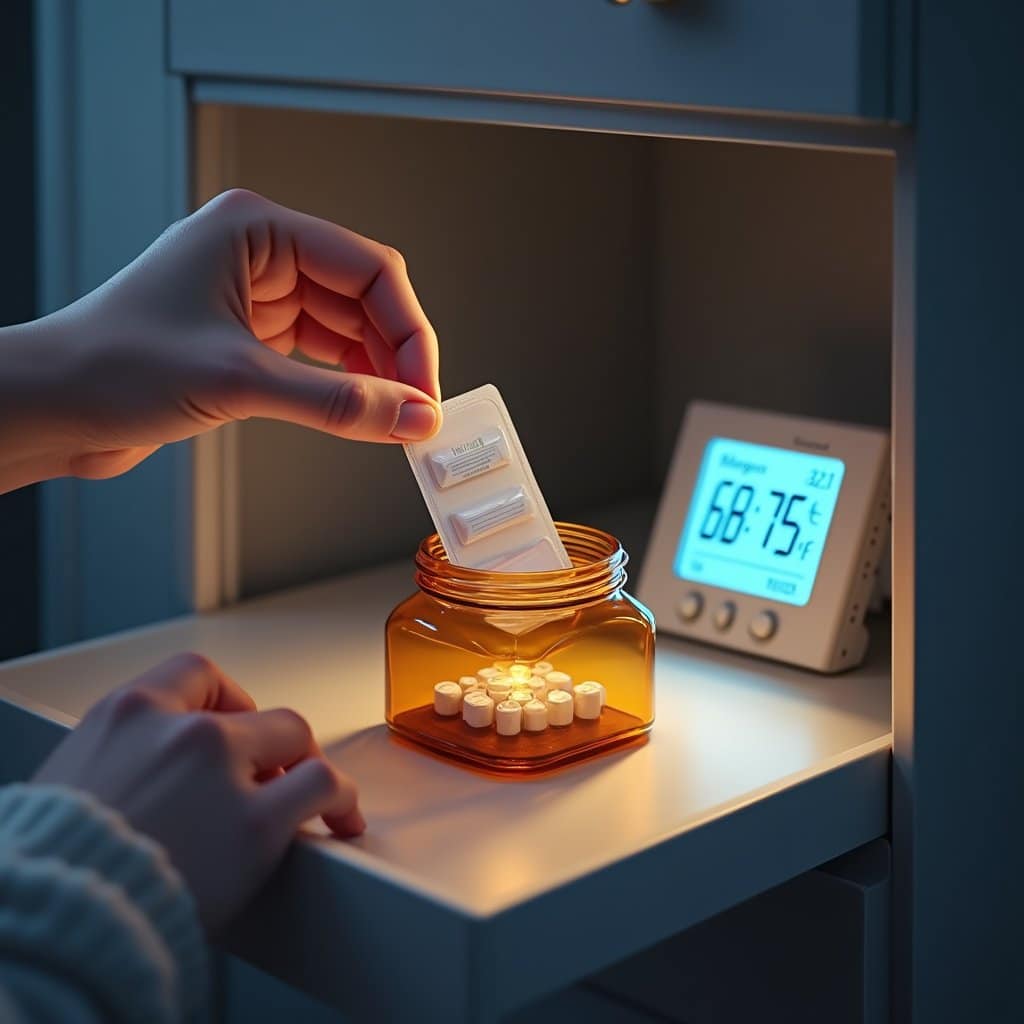
When storing Suboxone, maintaining proper temperature and environmental conditions is fundamental for preserving the medication’s effectiveness. Keep your medication at temperatures between 59°F and 86°F, with 77°F being the FDA-recommended ideal storage temperature. Never expose strips to temperatures above 86°F, as this compromises the active ingredients. Storing in a cool, dark place helps maintain medication stability over time. Similar to controlled substance medications like Sublocade, proper storage is essential to maintain effectiveness.
To maintain ideal humidity ranges, don’t store your medication in bathrooms or kitchens where moisture levels are high. Implement moisture absorption precautions by using airtight containers and keeping strips away from direct heat sources and sunlight. Original packaging provides the best protection for maintaining medication quality.
You’ll need to monitor your storage area regularly for temperature fluctuations and avoid leaving medication in cars, especially during hot weather. If you notice any signs of dissolution, texture changes, or discoloration, dispose of the affected strips properly.
Selecting the Right Storage Container
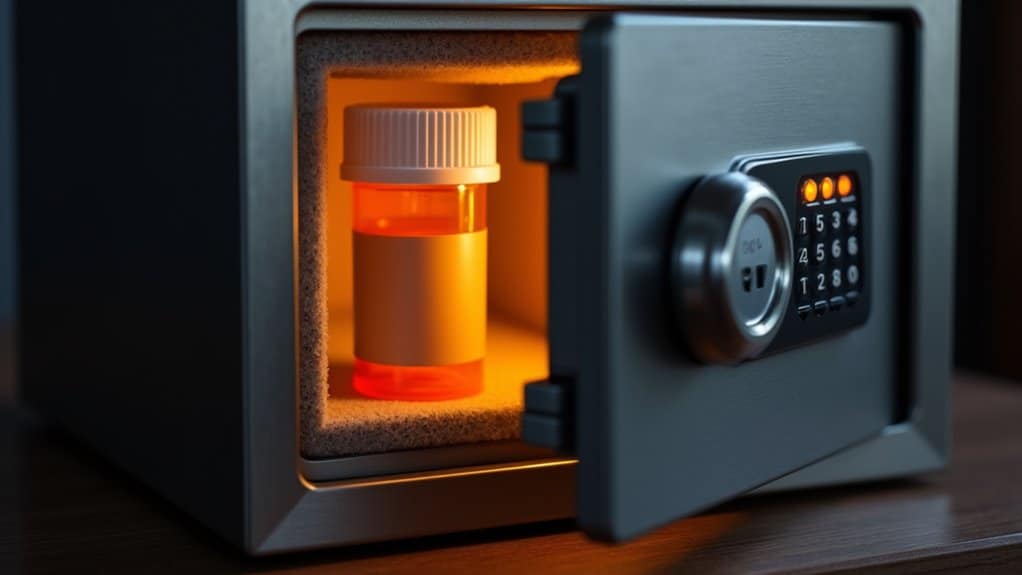
The right storage container serves as your medication’s initial line of defense against environmental threats. When storing Suboxone, prioritize airtight packaging solutions that meet controlled substance compliance requirements while protecting your prescription’s integrity.
Proper storage containers protect Suboxone from environmental damage while ensuring compliance with controlled substance requirements and maintaining prescription safety.
Choose non-reactive containers made of glass or medical-grade plastic with child-resistant locks, ensuring proper security for this Schedule III medication. Store medication in a locked storage box to prevent unauthorized access and accidental ingestion.
Select opaque or dark-colored containers with UV protection, and always include silica gel packets in humid environments.
Maintain strips in their original pharmacy-dispensed blister packs whenever possible to preserve stability.
Use travel-friendly options with secure seals and crush-resistant features when you’re on the go.
Remember that proper storage extends beyond just the container it’s an essential part of maintaining your medication’s effectiveness and safety.
Security Measures to Prevent Unauthorized Access
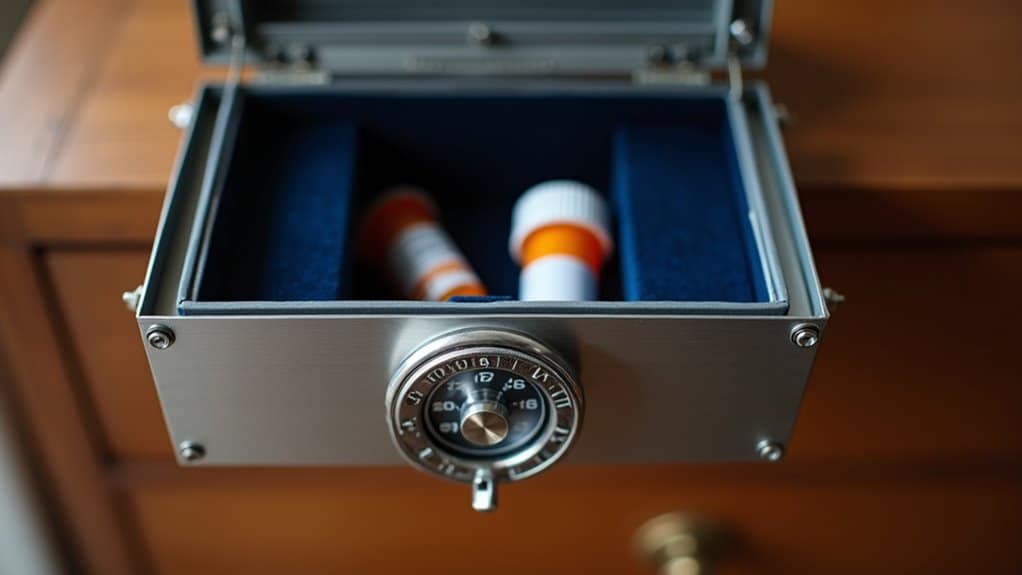
Securing your Suboxone prescription requires multiple layers of protection to prevent unauthorized access and potential misuse. You’ll need to implement both physical barriers and security monitoring systems to safeguard your medication effectively. Since accidental exposure to children can lead to serious medical emergencies, proper storage is critical.
| Security Layer | Purpose | Implementation |
|---|---|---|
| Primary Lock | Immediate protection | Lockbox or safe |
| Location Control | Unauthorized entry detection | Out-of-sight placement |
| Container Security | Tamper prevention | Original packaging only |
| Access Restriction | Usage control | No sharing or transfers |
| Disposal Protocol | Residue protection | Secure empty containers |
Always store your medication in DEA-compliant locked containers, and avoid easily accessible areas like medicine cabinets or countertops. You’ll need to maintain constant vigilance by returning medications to secure storage immediately after use. If you detect any security breaches or missing medication, report them to your healthcare provider immediately.
Proper Handling and Daily Management
Proper handling of Suboxone requires five essential management practices that guarantee both safety and treatment effectiveness. Successful prescription management depends on your commitment to following these protocols carefully.
Safe and effective Suboxone treatment relies on following essential protocols with consistent dedication to proper medication management.
- Track your medication use daily, recording times and doses in a dedicated log to ascertain adherence to your prescribed schedule.
- Store films in their original packaging until use, and maintain an organized system for counting remaining doses.
- Follow proper disposal protocols by flushing unused medication when take-back programs aren’t available, and never share your prescription with others.
- Monitor your symptoms and any side effects, keeping detailed notes for your healthcare provider during check-ups.
Your dedication to medication tracking and proper handling supports not merely your treatment success but also maintains the security and accountability required for controlled substances.
Legal Requirements for Schedule III Medications
Schedule III medications like Suboxone require strict adherence to federal storage regulations that protect both you and your prescription. You’ll need to store your medication in a locked, steel cabinet measuring at least 11″ wide, 15″ high, and 6″ deep. The storage unit must have tamper evident seals and can’t have glass panels that reveal its contents.
Your storage location must comply with DEA registration requirements and maintain detailed logging procedures for access and administration. You’re required to implement double-locking systems and keep your medication separate from other drugs. Proper security requires restricting key access to minimize potential theft risks. If you’re storing Suboxone in a facility, only authorized personnel like prescribers, pharmacists, and registered nurses should have access.
Remember to report any theft or loss immediately to proper authorities and maintain thorough records of all medication handling.
Safe Disposal Methods and Guidelines
When you’re ready to dispose of unused Suboxone, you’ll need to follow specific guidelines since it’s a Schedule III controlled substance. Your safest option is to use authorized drug take-back programs at local pharmacies or law enforcement locations, which guarantee proper disposal and prevent environmental contamination. You can easily find nearby disposal locations by checking www.rxdrugdropbox.org online.
If take-back programs aren’t available, you must follow home disposal methods by mixing the medication with unpalatable substances and sealing it in a container before placing it in household trash, but never flush Suboxone as it’s not on the FDA’s approved flush list. Be sure to scratch out personal information on the prescription label to protect your privacy and prevent potential misuse by others.
Drug Take-Back Programs
A convenient and secure method for disposing of unused Suboxone is through drug take-back programs, which operate at authorized collection sites nationwide. You’ll find these programs at law enforcement facilities, pharmacies, and healthcare locations. To locate the nearest disposal site, you can use online disposal locators or call SAMHSA’s National Helpline at 1-800-662-4357.
When participating in take-back programs, follow these essential steps:
- Remove all personal information from medication containers
- Keep medications in their original professional packaging
- Check site-specific guidelines for liquid medications
- Verify operating hours, as some locations offer 24/7 access
These DEA-regulated programs guarantee proper disposal while protecting both the environment and public safety. You won’t need an appointment, and your privacy remains protected throughout the disposal process. Participating in these programs helps prevent prescription drug abuse since studies show most unauthorized users obtain medications from friends and family members.
Flushing Guidelines and Safety
The FDA-approved flushing method serves as a critical alternative when drug take-back programs aren’t accessible for Suboxone disposal. While concerns about waste water pollution exist, the FDA prioritizes preventing accidental overdoses and misuse over environmental impact in regards to this medication.
To properly flush Suboxone, remove the sublingual film from its foil packaging. Flush only the film immediately, ensuring it’s completely gone. Don’t flush the foil pouch instead, dispose of it through regular trash or recycling. Keep all packaging materials out of reach of children and pets.
If you’re unsure about disposal methods, consult your healthcare provider or pharmacist. They can provide current guidelines and may offer alternative disposal options. Always check www.fda.gov/drugdisposal for the most up-to-date flushing instructions.
Home Disposal Methods
Safe disposal of Suboxone at home requires following specific protocols to protect both people and the environment. Before considering home disposal methods, check your local community disposal programs for authorized collection sites.
If you must dispose of Suboxone at home, follow these essential steps:
- Mix unused medication with unpalatable substances like coffee grounds or cat litter in a sealed, non-recyclable container
- Keep controlled substance logs to track disposal dates and quantities for your records
- Never crush or alter tablets unless specifically instructed by your healthcare provider
- Place the sealed container in household trash, ensuring it’s not visible or accessible to others
Remember to maintain all safety precautions during the disposal process, and don’t flush Suboxone unless explicitly directed by FDA guidelines. Always prioritize take-back programs when available in your area.
Key Storage Mistakes to Avoid
Proper storage of Suboxone requires vigilance against common mistakes that can compromise your medication’s safety and effectiveness. Never store your medication in humid spaces like bathrooms or kitchens, as moisture monitoring is essential for maintaining drug stability. Keep your strips in their original childproof containers, away from direct sunlight and extreme temperatures.
Don’t leave medications in hot cars or freeze them, as temperature fluctuations degrade the active ingredients. Implement proper inventory tracking and rotate your stock to make certain you’re using strips before their expiration dates. You’ll need a locked storage container to comply with DEA regulations and prevent unauthorized access.
Avoid storing in syringes for extended periods, as this considerably reduces medication concentration. Always maintain strip integrity by preventing bending or tearing, which can affect sublingual absorption.
Best Practices for Travel and Transport
When traveling with Suboxone, you’ll need a tamper-evident, lockable container that meets TSA requirements and keeps your medication secure throughout your trip. Medical examiner clearance must be kept with your prescription during all travel. For vehicle transport, store your prescription in a locked compartment away from direct sunlight and extreme temperatures, while keeping it readily accessible for potential law enforcement inspections. Since Suboxone is a Schedule III substance, proper documentation from your prescribing healthcare provider is essential during transport. Random drug testing may occur up to six times in your first year of employment, so always maintain proper storage during work hours. Always maintain your medication in its original, labeled container and attach any required documentation directly to the package to guarantee smooth passage through security checkpoints.
Secure Travel Container Tips
Traveling with Suboxone requires strategic container choices that balance security, accessibility, and compliance with transportation regulations. Select containers that offer discrete carrying methods while enabling discreet access techniques during security checks.
- Use TSA-approved lockboxes for your primary medication supply, keeping it in your carry-on baggage to maintain control and prevent loss. Always bring documentation from providers to verify your legitimate prescription needs. Private screenings can be requested if you prefer discussing medication details away from other travelers.
- Transfer daily doses to small, airtight pill organizers that align with your dosing schedule – but always keep the original prescription bottle nearby
- Invest in moisture-resistant travel pouches or cases that protect your medication while remaining inconspicuous during transit
- Label all containers clearly with your name and dosing information, using opaque materials when possible to maintain privacy while still allowing verification
Consider insulated options for temperature-sensitive formulations, though standard tablets typically don’t require special thermal protection. Storing medication without the original prescription label can result in serious legal consequences if encountered by law enforcement.
Vehicle Storage Guidelines
Safe storage of Suboxone in vehicles requires specific precautions beyond standard travel containers. You’ll need to protect your medication from direct sunlight exposure and maintain proper humidity regulation during transport. Store medications in the car’s cabin using sealed, insulated pouches rather than the trunk or glove compartment where temperature fluctuations are extreme.
For short trips, place your medication in a locked bag on the passenger seat for easy access while maintaining security. Never leave Suboxone in your vehicle for extended periods, as prolonged exposure to heat and humidity can compromise its effectiveness.
If you’re traveling for multiple days, plan to transfer your medication to appropriate storage facilities at your destination, such as a hotel room safe or climate-controlled environment.
Call Now and Start Your Recovery Today
Frequently Asked Questions
Can I Store Suboxone in a Weekly Pill Organizer?
No, you shouldn’t store Suboxone in a weekly pill organizer. While you may want to keep medication organized, pill organizers don’t provide the necessary protection that Suboxone requires.
To maintain proper storage, you’ll need to keep your Suboxone in its original packaging, which is specifically designed to protect against moisture, light, and temperature changes. The original container also includes essential child-resistant features that pill organizers lack.
What Happens if My Suboxone Accidentally Gets Wet?
If your Suboxone gets wet, don’t try to use it. Water exposure can considerably diminish the medication’s effectiveness and potentially make it unsafe.
To prevent accidental exposure, you’ll need to dispose of wet films or tablets properly – don’t flush them or throw them in regular trash. Follow proper disposal guidelines by mixing them with coffee grounds or cat litter in a sealed container before placing in household trash.
How Long Can Suboxone Remain Effective After the Package Is Opened?
Once you’ve opened your Suboxone package, you’ll need to maintain proper temperature conditions (68-77°F) and controlled environment storage to enhance its effectiveness.
While the medication remains viable through its labeled expiration date, you should keep it in its original packaging and reseal it carefully after each use.
For ideal potency, store your opened Suboxone in a dry, temperature-controlled space away from light and moisture, checking regularly for any visible changes.
Should I Refrigerate Suboxone During Hot Summer Months?
No, you shouldn’t refrigerate Suboxone during summer months. Instead, focus on maintaining room temperature storage between 59°F-86°F (15°C-30°C).
Keep your medication in a cool, dry place and avoid direct sunlight. If you’re concerned about heat, store it in an air-conditioned room or a temperature-controlled space.
Using the original packaging or an airtight container in a dark, climate-controlled area will better preserve your medication than refrigeration.
Can I Cut Suboxone Strips in Advance for Later Use?
You shouldn’t cut Suboxone strips in advance for later use. Cutting Suboxone strips exposes them to air and moisture, which can affect their stability and potency.
While splitting Suboxone doses may be part of your prescribed treatment plan, it’s best to cut strips only when you’re ready to take them. If you need smaller doses, discuss this with your healthcare provider they can prescribe lower-strength strips that better match your needs.