
The key difference comes down to authorization and oversight. Prescription amphetamines like Adderall® and Dexedrine® are FDA-approved, legally obtained through a licensed provider, and used to treat conditions like ADHD, narcolepsy, or obesity under medical supervision. Illegal stimulants aren’t medically authorized. They’re made in clandestine labs with unknown purity, boosting your harm risk. Both, though, carry real addiction potential. Understanding when legal use crosses into misuse can protect you, and there’s more you’ll want to know.
Key Takeaways
- Prescription amphetamines are FDA-approved and legally obtained through a licensed healthcare provider, while illegal stimulants have no medical authorization.
- Prescription versions treat medical conditions like ADHD, narcolepsy, and obesity, whereas illegal stimulants are used for recreational abuse.
- Prescribed amphetamines produce controlled, milder effects when used as directed, unlike the intense effects sought from illicit stimulants.
- Illegal stimulants like methamphetamine are made in clandestine labs with unknown purity, adulterants, and heightened harm risk.
- Even prescribed amphetamines become illegal through misuse, taking higher doses, using others’ pills, or selling and sharing them.
What is the difference between prescription amphetamines and illegal stimulants
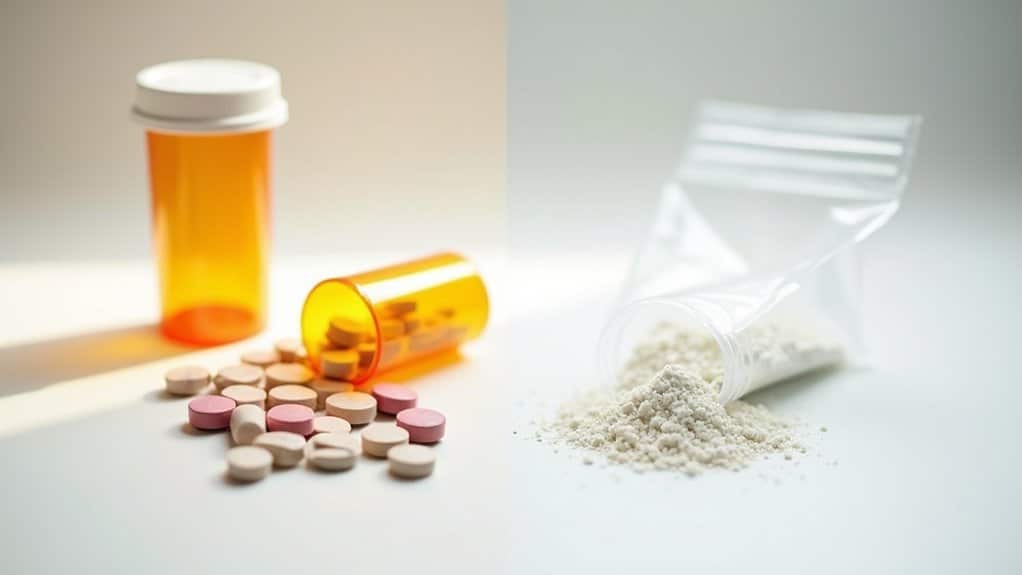
The difference between prescription amphetamines and illegal stimulants comes down to purpose, oversight, and safety, though both act on the central nervous system. Prescription amphetamines like Adderall® and Dexedrine® are FDA-approved and legally obtained through a healthcare provider to treat conditions such as ADHD, narcolepsy, and obesity. When you use them as prescribed, they produce milder, controlled effects under medical supervision. Illegal stimulants like methamphetamine, by contrast, serve no medical purpose in their street form and are used solely for recreational purposes. You can’t verify their contents. Illicit versions often contain unknown mixtures of drugs, binding agents, caffeine, sugar, or even fentanyl. That lack of purity and oversight makes them far more dangerous, and misusing prescription stimulants to get high is equally illegal. Amphetamine types and uses vary significantly between legal prescriptions and illegal formulations. While prescription options can enhance focus and manage health conditions, illicit varieties lead to unpredictable health consequences.
What are prescription amphetamines used for
Prescription amphetamines treat several well-defined medical conditions, and doctors prescribe them only when the benefits outweigh the risks. If you’ve been diagnosed with attention deficit hyperactivity disorder (ADHD), your provider may prescribe drugs like Adderall® or Dexedrine®, both FDA-approved to improve focus and reduce impulsivity. These prescription stimulants also treat narcolepsy, helping you stay awake when your body can’t regulate sleep on its own. In some cases, doctors prescribe them to manage obesity when other approaches haven’t worked. Amphetamine salts effects vary from person to person. Some gain concentration and energy, while others face insomnia or anxiety, so consulting a healthcare provider to monitor effects and adjust dosages is essential.
Because these medications carry a high potential for misuse, they’re classified as Schedule II controlled substances. Your prescription can’t be refilled automatically, and you’ll need ongoing medical supervision. If you use them as directed, the effects stay mild and therapeutic, supporting your health rather than harming it.
What makes a prescription amphetamine legal

A prescription amphetamine is legal when you obtain and use it properly, not because of the drug itself. Legal amphetamines like Adderall® and Dexedrine® are FDA-approved to treat conditions such as ADHD and narcolepsy. To use them legally, you need a prescription written by a licensed healthcare provider for a legitimate medical reason. These medications are Schedule II controlled substances, meaning they carry high abuse potential but have accepted medical uses. Your prescription can’t be refilled, so you’ll need a new one each time. The moment you step outside these boundaries, taking someone else’s pills, using them to get high, or boosting performance, you’re breaking the law. Even a legally prescribed drug becomes illegal when it’s diverted, misused, or possessed without proper authorization.
What are illicit stimulants and how do they differ
Illicit stimulants are drugs that exist solely for recreational abuse, with no medical authorization behind them. Unlike prescription amphetamines, you won’t find these drugs prescribed for ADHD or narcolepsy, and methamphetamine has no legitimate use in its street form. Illegal amphetamines are often clandestinely manufactured, mixing drugs, binding agents, caffeine, and sugar with unknown purity. That uncertainty puts you at serious risk.
| Feature | Prescription Amphetamines | Illicit Stimulants |
|---|---|---|
| Purpose | Medical treatment | Recreational abuse |
| Purity | FDA-regulated | Unknown, often adulterated |
| Source | Pharmacist-dispensed | Clandestine labs |
| Legality | Legal with prescription | Illegal to make, sell, possess |
| Potency | Milder when used correctly | More intense, harm-inducing |
Methamphetamine generates more dopamine efflux than amphetamine, producing prolonged, intense effects. If you’re struggling, compassionate professional treatment can help.
When does prescription use cross into illegal use

Prescription use crosses into illegal use the moment you use amphetamines outside your doctor’s instructions. Taking a higher dose than prescribed, using someone else’s pills, or crushing tablets to get high all cross into illegal use. So does selling or sharing your medication, even with a friend who has ADHD. Understanding the amphetamine vs methamphetamine distinction matters here: your prescribed Adderall® is FDA-approved, misusing it carries real risks, and nonmedical use is linked to later illicit stimulant use like meth and cocaine. The legal line isn’t about the substance itself, it’s about authorization and intent. If you’re taking more than directed or using stimulants to boost performance rather than treat a diagnosed condition, you’ve entered illegal territory.
Why do both carry addiction risk
Both prescription amphetamines and illegal stimulants carry addiction risk because they act on the same reward pathways in your brain. Whether you’re taking Adderall® or using methamphetamine, these common amphetamines increase dopamine, reinforcing the behavior and driving you to seek more. Medical uses of amphetamines include the treatment of attention deficit hyperactivity disorder (ADHD) and narcolepsy. These medications can improve focus and alertness in patients who struggle with these conditions.
Several factors contribute to this shared risk:
- Dopamine flooding trains your brain to crave the drug, making it harder to stop.
- Tolerance builds over time, so you need larger doses to feel the same effect.
- Nonmedical use of prescription pills substantially raises your likelihood of using illicit stimulants.
- Chronic use can rewire reward circuits, leading to dependence and withdrawal.
If you’re struggling, know that addiction is a treatable medical condition, and professional support can help you recover.
How does Villa Behavioral Health help with stimulant misuse
Villa Behavioral Health helps with stimulant misuse by providing care tailored to your needs, whether you’re struggling with prescription amphetamine drugs or illicit stimulants like methamphetamine. Recovery from stimulant misuse is possible, and Villa Behavioral Health can guide you through it. Because stimulant addiction can damage your brain and cardiovascular system and even trigger psychosis, professional treatment matters.
At Villa, you’ll begin with a thorough assessment to understand your usage patterns and any co-occurring conditions. From there, you’ll work through evidence-based therapies designed to address both the physical and psychological aspects of dependence. You’ll also learn coping strategies to manage cravings and prevent relapse.
You don’t have to face this alone. With compassionate, clinically grounded support, Villa Behavioral Health helps you rebuild a healthier, substance-free life.
Prescribed or Not, the Pattern Is What Matters
Where the pills came from matters less than whether you can stop taking them. Villa Behavioral Health treats stimulant misuse through therapy programs that address cravings and relapse prevention, plus dual diagnosis care for the depression or anxiety often underneath. Verify your insurance or call (833) 302-2533 to speak with our admissions team confidentially.
Frequently Asked Questions
Can You Overdose on Prescription Amphetamines Even When Taking Them Correctly?
Overdosing while taking prescription amphetamines exactly as directed is rare, but it’s not impossible. Your individual sensitivity, existing heart conditions, or interactions with other medications can raise your risk. Even at therapeutic doses, you might experience concerning effects like rapid heartbeat, high blood pressure, or agitation. If you notice these symptoms, contact your healthcare provider right away. They’ll adjust your dose or monitor you to keep you safe.
How Long Do Amphetamines Stay Detectable in Drug Tests?
Amphetamines typically stay detectable in your urine for one to four days after use, though this varies based on your dosage, frequency, metabolism, and hydration. Blood tests detect them for a shorter window, usually up to 24 hours, while hair follicle tests can reveal use for up to 90 days. If you’re taking prescription amphetamines as directed, you can inform the testing administrator about your legitimate medical use.
Is It Safe to Drink Alcohol While Taking Prescription Amphetamines?
Combining alcohol with prescription amphetamines isn’t safe. Amphetamines are stimulants while alcohol’s a depressant, so they mask each other’s effects, you might not feel how intoxicated you actually are, raising your risk of alcohol poisoning. This combination also strains your cardiovascular system, potentially causing dangerous heart rhythm changes and increased blood pressure. If you’re prescribed amphetamines, talk with your healthcare provider about alcohol use so you can protect your health.
Can You Develop a Tolerance to Prescribed ADHD Medications Over Time?
Yes, you can develop a tolerance to prescribed ADHD medications like Adderall® or Dexedrine® over time, meaning your usual dose may feel less effective. This is a known aspect of these Schedule II stimulants. If you notice diminished effects, don’t adjust your dose on your own. Instead, talk with your healthcare provider, who can safely reassess your treatment plan and make any necessary adjustments to support you.
What Are the Withdrawal Symptoms When Stopping Stimulant Use?
When you stop stimulant use, you’ll likely experience withdrawal symptoms as your body readjusts. You might feel intense fatigue, depression, and increased appetite. You could also notice disturbed sleep, vivid dreams, difficulty concentrating, and strong cravings. Anxiety, irritability, and a low, flat mood are common too. These symptoms vary depending on how long and how heavily you’ve used. If you’re struggling, please reach out to a healthcare provider for supportive, professional guidance.