
Suboxone detox requires an extensive, medically-supervised approach for safety. You’ll need a detailed medical assessment before starting a personalized tapering schedule that gradually reduces your dose over several weeks. Managing withdrawal symptoms involves both prescription medications and self-care strategies. Building a strong support network of professionals, peers, and family members greatly improves your chances of long-term recovery. The path to freedom from Suboxone involves careful planning, professional guidance, and dedicated support systems.
Understanding Suboxone: Medication Basics and How It Works
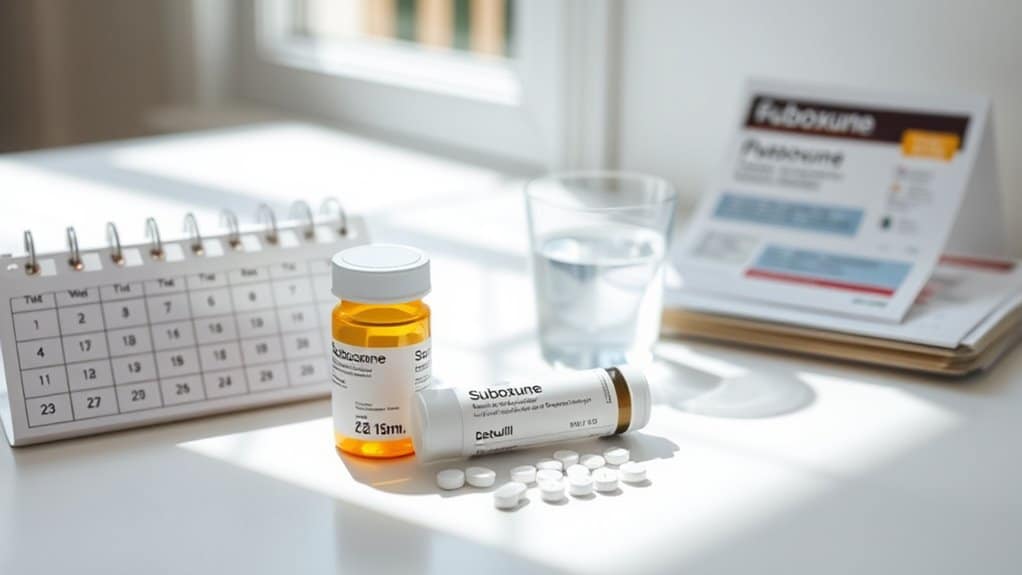
Although commonly known as a treatment for opioid dependence, Suboxone is actually a combination medication containing two active ingredients: buprenorphine and naloxone.
Buprenorphine, a partial opioid agonist, attaches to the same brain receptors as other opioids but produces milder effects while reducing withdrawal symptoms and cravings. This suboxone mechanism allows you to function normally without the intense highs and lows of full opioids.
Naloxone, the second component, serves as a deterrent to misuse. If you attempt to inject Suboxone, naloxone blocks the euphoric effects and can trigger withdrawal.
Be aware of potential medication interactions with sedatives, benzodiazepines, alcohol, and certain antidepressants, which can cause dangerous respiratory depression. Always disclose all medications to your healthcare provider before starting Suboxone treatment.
The Medical Assessment: Why Professional Supervision Is Essential
Before beginning Suboxone detoxification, an extensive medical assessment becomes the foundation of your safe recovery process. This evaluation allows healthcare providers to identify your unique risk factors and develop a personalized detox plan that minimizes complications.
Your doctor will review your complete medical history, including opioid use patterns, previous withdrawal experiences, and co-occurring conditions. They’ll evaluate potential complications like cardiac issues, liver dysfunction, or psychiatric disorders that could influence your detox approach.
Laboratory testing provides essential baseline measurements of your comprehensive health status, while psychological screening helps identify underlying mental health needs requiring simultaneous treatment.
Professional supervision isn’t just recommended, it’s critical for monitoring important signs, managing withdrawal symptoms, and adjusting medications as needed. This medical oversight greatly reduces the dangers associated with unsupervised detox and dramatically improves your chances of successful recovery.
Creating a Personalized Tapering Schedule
A personalized tapering schedule forms the cornerstone of effective Suboxone detoxification, balancing your body’s adjustment needs with minimized withdrawal symptoms. Your physician will design a plan customized to your individual needs, considering factors like dosage history, metabolism, and support systems.
| Tapering Phase | Duration | Reduction Rate | Key Considerations |
|---|---|---|---|
| Initial | 2-4 weeks | 10-25% | Establish stability initially |
| Middle | 4-8 weeks | 5-10% | Slow down if symptoms intensify |
| Lower Doses | 6-12 weeks | 2-5% | Smallest possible reductions |
| Final | 2-4 weeks | Micro-dosing | Consider alternate-day dosing |
Various tapering techniques may be employed based on your response. Some patients benefit from percentage-based reductions while others do better with fixed-amount decreases. Keep in mind that successful tapering prioritizes comfort over speed, your path deserves patience and flexibility.
Managing Withdrawal Symptoms: Medications and Coping Strategies
Even with the most carefully designed tapering schedule, you’ll likely experience some withdrawal symptoms during Suboxone detoxification.
Your healthcare provider may prescribe specific medications for withdrawal relief, including clonidine for anxiety and blood pressure, over-the-counter medications for gastrointestinal distress, and sleep aids for insomnia.
Effective coping techniques extend beyond medication. Stay hydrated, maintain proper nutrition, and establish a consistent sleep routine.
Exercise, even light walking, can stimulate endorphin production and reduce symptom intensity. Mindfulness meditation, deep breathing exercises, and hot baths may also provide significant comfort.
Consider joining support groups where you’ll find understanding from others with similar experiences.
Building Your Support Network for Long-Term Recovery Success

Successful recovery from Suboxone dependence relies heavily on establishing a strong support network that extends well beyond your detoxification period. Research consistently shows that social connection greatly improves long-term sobriety outcomes. You’ll need multiple sources of support as you navigate your recovery path.
Consider incorporating these essential connections into your recovery plan:
- Support groups like SMART Recovery or Narcotics Anonymous provide peer validation and practical strategies from those who understand your experience.
- Recovery mentors or sponsors offer personalized guidance, accountability, and a lifeline during challenging moments.
- Professional counseling relationships help address underlying issues and develop healthy coping mechanisms.
Your support network represents a critical safety net during vulnerable periods. When cravings or life stressors threaten your progress, these connections become crucial resources that provide practical assistance and emotional reinforcement throughout your recovery path.
Frequently Asked Questions
How Does Suboxone Detox Affect Pregnancy?
Suboxone detox during pregnancy requires careful medical supervision to minimize risks to you and your baby.
Abrupt discontinuation can cause fetal distress and increased complications. Your doctor may recommend continuing maintenance therapy, as the risks of untreated opioid addiction often outweigh controlled fetal exposure to buprenorphine.
If you do detox, it’s typically safest during the second trimester.
Your newborn will need monitoring for neonatal withdrawal symptoms after delivery, but specialized care can effectively manage these challenges.
Can I Drive or Work During Suboxone Detox?
During Suboxone detox, your ability to drive and work may be compromised.
Withdrawal symptoms like fatigue, poor concentration, and anxiety can affect driving safety, potentially putting yourself and others at risk.
Work considerations should include possible sick leave or modified duties, especially during the acute phase.
You’ll need to discuss your specific situation with your healthcare provider, who can help create a personalized plan balancing your recovery needs with daily responsibilities.
Will My Insurance Cover Suboxone Detox Treatment?
Most insurance plans now cover Suboxone detox treatment under mental health and substance use disorder benefits.
You’ll need to verify your specific coverage by calling your insurance provider’s member services number. Ask about in-network treatment options, preauthorization requirements, and potential copays or deductibles.
Many treatment facilities also offer insurance verification services and can help navigate coverage questions.
If you’re underinsured, ask about sliding scale fees or payment plans to guarantee you receive the care you need.
How Long Will Suboxone Show up on Drug Tests?
Suboxone detection varies depending on the type of drug test used.
In urine tests, Suboxone metabolites typically remain detectable for 7-14 days after your last dose.
Blood tests can detect it for up to 24 hours, while saliva tests show results for 1-3 days.
Hair tests have the longest detection window, up to 90 days.
Your individual metabolism, dosage, and duration of use will influence how long Suboxone remains in your system.
Are There Natural Alternatives to Medical Suboxone Detox?
Natural alternatives to medical Suboxone detox exist, but they’re not as effective as medical supervision.
You might consider herbal remedies like valerian root or passionflower for anxiety symptoms, while detox diets rich in antioxidants may support your liver function.
However, these approaches can’t prevent potentially dangerous withdrawal symptoms.
For your safety, don’t attempt to detox from Suboxone without medical oversight.
The evidence strongly suggests that tapering under healthcare supervision offers your best chance for successful, comfortable recovery.